No items found.

Archive

Thank you! Your submission has been received!
Oops! Something went wrong while submitting the form.

The Dollars Before the Fight: Economic Fortitude

By focusing on increasing trade in key industries beyond national security and developing both domestic and international friendly trading blocs, the US can shape the operational environment and build economic fortitude.

See More >

What is a "will to fight?"

A country’s “will to fight” stems not solely from its military capabilities but from its people. Ukrainian defense against Russia has continually demonstrated how a smaller population can resisit a larger adversary through its “will to fight.” But what is “will” made of? A key part of whether a population continues to engage in a conflict or support another country in conflict is whether its people have both the means and desire to continue - and whether the economy can withstand the war itself. 

In “The Dollars in the Fight: The Security Risks of Economic Compellence during a Conflict,” I discussed the risk of economic compellence during conflict. Yet, the foundations for economic compellence during a conflict begins well before the conflict itself. According to the Joint Chiefs of Staff JP 5-0, an adversary may seek to “shape” the operational environment prior to kinetic action. In other words, the preparation for fighting and winning an armed conflict begins well before the conflict itself. 

Economic shaping occurs pre-conflict. Examples of economic shaping before a conflict include developing a state’s defense capabilities and creating essential goods supply chains independent of an adversary, thereby decreasing economic reliance. For example, prior to World War II, Germany was deeply concerned about its reliance on foreign iron ore, leading to forced expansion of domestic mining. The goal of economic shaping is to ensure a country has the necessary financial conditions and supplies before a conflict. If the conflict causes shortages of either defense materials or essential goods, a population’s will to fight may decrease. 

In addition to contributing to preparation for a conflict, economic shaping can be a key element of deterrence. While discussing applying Cold War logic to modern-day challenges, former INDOPACOM Commander Admiral (ret.) Phillip Davidson said, “Deterrence is only effective if the adversary believes a combat credible opponent force exists, with the capability,…capacity,…and will to fight and win.” Strategic calculations of another countries’ economic ability and willpower to engage in protracted conflict are part of deterrence. Therefore, high economic fortitude can help ensure that a conflict never happens in the first place. 

Economic fortitude vs. economic resiliency

“Economic fortitude” is the ability to withstand economic pressures during a conflict. I differentiate “economic fortitutde” from “economic resiliency” as the difference between the ability to “withstand” ongoing economic pressure vs recover from a disruptive event. These two concepts are often conflated but deal with different time frames (e.g., a multiyear war vs a  hurricane). The concern for economic fortitude is simple: during a conflict, an adversary could economically compel other countries to either capitulate or cease supporting allies and partners. Japan’s attack of Pearl Harbor after the US instituted its oil embargo is a classic example of this.

There are several ways to measure economic fortitude. First, it would include reliance on imports for essential and defense industry commodities (weighted by allies and partners) and a population’s ability to withstand loss of goods. A second metric would be the ability to withstand potential supply chain disruptions for key industries. These tiered levels of suppliers refer to the supplier itself (Tier 1), suppliers’ supplier (Tier 2) and the suppliers’ suppliers’ supplier (Tier 3). 

For example, in 2024, Hurricane Helene severely damaged a saline solution plant in the United States, which led to a national shortage. This caused a national IV solution shortage (Tier 1) and medications relying upon saline (Tier 2). In this event, US medical community demonstrated a lack of economic fortitude.

For the US, building economic fortitude at home means ensuring the vitality of supply chains, ranging from access to rare earth minerals to consumer goods. In some ways, the US is already aggressively pursuing increasing its economic fortitude through the Department of Defense (DOD) and the Department of Commerce (DOC). The DOD Office of Strategic Capital’s (OSC) mission is to develop and implement “strategies and partnerships to accelerate and scale private investment in critical supply chain technologies needed for national security.” Recent Executive Orders have also focused on modernizing and expanding the capacity of the US defense industrial base  and accelerating drone research and production. Most of these initiatives focus on how to grow and support the US defense industrial base. However, properly measuring economic fortitude would require analysis beyond the defense sphere to examining supply chain connections to allies and partners.

For allies and partners, economic fortitude could include increasing domestic production – spurring domestic reserves or ensuring access to friendly supply chains – allowing for disentanglement with an adversary.

As the US strives to revitalize its economy, the development of economic fortitude should start now. The US and its allies and partners need to ensure they have sufficient means to avoid adversary economic compellence. By focusing on increasing trade in key industries beyond national security and developing both domestic and international friendly trading blocs, the US can shape the operational environment and build economic fortitude. 


Emma Campell-Mohn


The views expressed in this piece are those of the author and do not reflect the official policy or position of the US Air Force, the US Department of Defense, or the US government.

No items found.

Ukraine and Credible Deterence

To stop the invasion, the United States should have challenged three crucial Russian assumptions earlier in 2022.

See More >

This past year the Institute for Future Conflict launched its first annual essay contest, open to undergraduate students at Colorado State University, CU Boulder, Denver University, the United States Air Force Academy, and University of Colorado-Colorado Springs.

The prompt asked students and cadets: Explain what – if any – actions the United States could have taken, beginning in July 2021, that would have successfully deterred Russia’s invasion of Ukraine. We are proud to publish the last winner of this contest today.


Could the US Have Deterred Russia’s Invasion of Ukraine?

By the summer of 2021, US intelligence agencies were warning that Russia was preparing for a large-scale invasion of Ukraine. These warnings grew over the following months and by early 2022, the signs were clear: Russian troops massing at Ukraine’s borders, military exercises used as cover, and increasingly aggressive rhetoric from the Kremlin. Despite clear indications of Russia’s intentions, the United States failed to deter Vladimir Putin from launching a war that would become the most violent conflict on European soil since World War II.

The United States did act by issuing stern diplomatic warnings and threatening sanctions. Once the war was underway, the United States gradually increased military assistance to Ukraine. All of these measures were too cautious, too late, and ultimately not credible enough to shift Putin’s calculus. He believed the invasion would be fast and decisive, that Kyiv would fall in days, and that the West would respond with indignation, not intervention.

To have had a real chance at stopping the invasion, the United States should have challenged those assumptions earlier. Three measures stand out: exposing the falsehoods behind Russia’s intelligence assessments of Ukraine; imposing serious sanctions before the invasion; and accelerating US military aid to Kyiv in a way that would have shown significant Western commitment.

Changing Putin’s Calculus

Much of Putin’s confidence rested on a mistaken belief that Ukrainians, especially in the east and south, would welcome Russian forces as liberators. That belief wasn’t just a hunch, it was based on flawed intelligence delivered by Russia’s Federal Security Service (FSB), which had told the Kremlin that support for President Volodymyr Zelensky was weak and that Ukrainian forces would fold under pressure.

As extensive reporting from the Washington Post later confirmed, Russian intelligence significantly underestimated both the strength of Ukrainian national identity and the readiness of Ukraine’s armed forces. The United States and its allied intelligence agencies were aware of Russia’s internal assessments and knew how wrong they were. Ukrainian civil society had been mobilizing since 2014. Polling showed strong support for national independence and increasing distrust of Moscow. Even many Russian-speaking Ukrainians had come to view Russia as a threat rather than a brotherly protector.

The United States could have done more to challenge Russia’s assumptions. It could have declassified this intelligence and shared it as coordinated public campaigns in Kyiv, Moscow, and Europe. This would have directly undermined the narrative of Ukrainian weakness. Unlike the public warnings issued starting in November of 2021, which alerted the world but failed to compel decisive NATO action, an earlier, targeted information campaign would have been backed by verifiable intelligence and framed to influence specific Russian decision makers. By carefully timing the release of this intelligence and linking it to mobilization indicators, the US would have created credible doubt among Russian military elites and key business leaders about the feasibility of a rapid invasion. Even if Putin himself remained unconvinced, this hesitation would have bought Ukraine valuable preparation time, and the approach would have been more credible than the broad warnings issued later.

Tie Sanctions to Mobilization Milestones

The Biden administration made clear in late 2021 that if Russia invaded Ukraine, the US would respond with sweeping economic sanctions. That warning came true after the tanks crossed the border.

There was sufficient evidence of Russia’s intentions prior to the moment of invasion to impose sanctions. A more specific form of phased sanctions should have been tied to Russian mobilization milestones. For example, freezing assets as troops gathered near the border or limiting technology exports as exercises ramped up. A major read line could have been established by denying Russia’s access to the Society for Worldwide Interbank Financial Telecommunication (SWIFT). The US and its European partners eventually did this, but only after Russia invaded.

Would these early sanctions have triggered retaliation? Probably. Russia could have retaliated with cyberattacks and reduced energy exports to Europe. But these asymmetric actions were already happening, with or without early sanctions. More importantly, the risk of short-term retaliation should be weighed against the long-term catastrophe of full-scale war. If credible costs had been imposed early, targeting not only Russia’s financial system broadly but also the business elites whose wealth and influence depend on Putin, it is probable that Russia would have reassessed the risks of invasion. General economic restrictions do not significantly affect Putin, but sanctions directed at these key power holders could have generated internal pressure on him in a way that broad measures have failed to achieve.

Arming Ukraine Faster

Prior to Russia’s invasion in January of 2022, the US had begun supplying Ukraine with Javelin anti-tank missiles, ammunition, and other equipment. But the aid was slow, incremental, and largely quiet, as Reuters later reported, significant shipments were metered out and delayed, with Ukrainian officials describing them as arriving “six, nine months later, when the war has already changed.” It didn’t send the message that the West was fully committed to Ukraine’s defense, nor did it seriously complicate Russia’s invasion plans. In fact, this silent supply may have reinforced the misperception that Ukraine would be left to fend for itself.

A stronger deterrent would have looked very different. The US could have front-loaded lethal aid months earlier, moving high-profile weapon systems like Javelins and Stingers in bulk, scaling up joint training programs, and involving NATO partners in overtly building Ukrainian defense capacity. In fact, NATO allies had already demonstrated a capacity and willingness to provide substantial support. Programs such as the NATO Comprehensive Assistance Package show that Allied nations were prepared to enhance Ukraine’s defense capabilities before the full-scale invasion. Just as important as the aid itself would be advertising its size and scale. News footage of deliveries, and coverage of training exercises would have sent a clear signal to Russia that Ukraine would not be an easy target

The plausibility of this strategy was echoed by NATO leadership. Secretary General Jens Stoltenberg has argued publicly that deterrence failed in Ukraine because support came too late to change Russia’s risk assessment. The lesson, he notes, is the “importance of providing support to partners sooner than later, as it was important to support Ukraine.”

This assistance might not have made Ukraine invulnerable, but it could have made the high costs of invasion clearer and the outcome less secure. That degree of uncertainty might have been enough to deter or at least delay Russia’s invasion.

Credible Deterrence

Deterrence only works when it rests on credible threats, and credibility depends not just on what the US says it will do but on what it does. In this case, the gap between words and action left space for Putin to gamble, which he did. For example, in 2014, when Russia annexed Crimea, the United States and its allies issued strong statements of opposition but took limited concrete action, signaling to Moscow that the costs of aggression would be manageable. This historical precedent shows the importance of aligning deterrent threats with credible measures.

Avoiding early confrontation with Russia did not avoid conflict, it only postponed it. Russia’s invasion of Ukraine has already created the very crises that earlier threats were meant to prevent: massive civilian displacement, economic turmoil, and a war that shows no clear signs of ending.

At the end of the day, Putin’s decision was rooted in ambition and strategic paranoia. None of these three steps guarantee that he would have changed his mind. But deterrence isn’t mind control, it is about altering risk calculations. In the months leading up to February 2022, the United States missed key chances to do just that.

The US could have challenged Putin’s assumptions by publicly countering bad FSB intelligence; by imposing drastic mobilization-based sanctions; and publicly arming Ukraine quickly. The lesson from February 2022 is that deterrence must be swift and proactive, not reactive.

Alan He is a cadet third class at the United States Air Force Academy.

No items found.

No Shortcuts Left: Deterring Russia's Invasion in 2022 was Impossible

After a decade of failed responses, there was little the United States could do in 2022 to change Putin's calculus.

See More >

This past year the Institute for Future Conflict launched its first annual essay contest, open to undergraduate students at Colorado State University, CU Boulder, Denver University, the United States Air Force Academy, and University of Colorado-Colorado Springs.

The prompt asked students and cadets: Explain what – if any – actions the United States could have taken, beginning in July 2021, that would have successfully deterred Russia’s invasion of Ukraine.

Over the next few weeks we are proud to publish the four winners of the contest.

On 24 February 2022, the world awoke to find that Russian troops had crossed the border into Ukraine. Despite efforts by the United States and the EU to deter the Russian invasion, President Vladimir Putin gave the order anyway, launching a war that has now dragged on for over three years. Eight months after the invasion, the US Department of Defense issued a new National Defense Strategy focused on integrated deterrence. The new strategy aimed to fill gaps that allowed Putin to believe he could successfully invade Ukraine without interference from NATO.

What Failed and How

A strategy of integrated deterrence requires the United States to anticipate the actions that adversaries are likely to take, then make those actions so difficult that our adversaries decide not to proceed. At the start of 2022, the action in question was the potential invasion of Ukraine by the Russian military. Unfortunately, by the time the United States made any attempt to deter the Russian government, the decision had already been made, and the United States was out of time. The decision to proceed with the invasion was first made in February 2021 when exercises began on the Ukrainian border. Over the next few months, any doubt Putin had remaining in his mind was alleviated as actions by the international community amounted to nothing more than empty threats. No significant military action was made. By April 2021, Ukrainian intelligence reports indicated up to 110,000 Russian troops were stationed at the Ukrainian border. By this point, Putin was sound in his decision to proceed, and deterrence had failed. The only question became how much longer he could afford to extend the buildup and how much he could get out of NATO before the invasion.

By July 2021, deterring the invasion would have been impossible. There were already enough Russian troops on the border to justify an immediate invasion order should any attempt be made at military action by NATO. All diplomatic efforts had resulted in a negligible effect. The United States declassified and released intelligence on Russia’s observed troop build-up and invasion plans up to the invasion in 2022. They even identified a mismatch in military strength between the Russian invasion force and Ukraine’s standing military. Russia’s invasion size failed to meet the standard three-to-one ratio and instead pressed forward with fewer Russian troops than Ukraine had on active duty. Still, the only overnight military solution to stall 100,000 Russians flooding into Ukraine would have been a nuclear one. Even if NATO had promised military support to Ukraine that summer, it likely would have prompted Putin to simply launch the invasion earlier.

Economic sanctions were not going to sway Putin either. Sanctions were a failed response to the 2014 invasion of Crimea it was too little, too late for 2022 as well. Therefore, as of July 2021, there was no action that the United States or its allies could have taken that would have convinced Putin to call off the attack. All of Putin's incentive structures and past experience encouraged him to invade Ukraine.

Putin has had an abiding interest in Ukraine, stretching into the Cold War. In 1989, Vladimir Putin was a young KGB officer stationed in Dresden, as the Berlin Wall collapsed. While the Soviet Union would take another two years to totally collapse, the fall of the Berlin Wall remains a symbol of its demise. For Putin, it was an embarrassment, the empire he had served was gone. Putin’s actions in Ukraine in 2014 and 2022 indicate a desire to rebuild the fallen USSR and return Russia to its former glory, a quest he has been on for over 30 years.

Missed Opportunities

Deterrence is a long-term strategy. In the case of today’s Russo-Ukrainian war, successful deterrence would have required actions at least as far back as 2014. Eight years before the full invasion of Ukraine, Russian forces launched a small-scale invasion of the Crimean Peninsula. Russian “little green men” took over Crimean government buildings, replacing Ukrainian flags with Russian flags. Vladimir Putin officially claimed the territory as under Russian control. While NATO provided some resistance through sanctions and statements against the invasion, Russia got away with very little punishment. The sanctions did not cripple the economy, and Russia still holds control of the Crimean Peninsula  today. Had the United States been more aggressive, those operators could have been defeated before Russia claimed the territory. When the “little green men” first arrived in Crimea, Russia denied any connection to them. The United States could have leveraged that claim to justify supporting the Ukrainian military in removing the operators from the peninsula. Russia would have then had to choose between continuing to disavow any tie to the men or starting a war with the United States over a small piece of territory. While the Russian response cannot be guaranteed, a war with NATO would devastate Russia even worse than the war with Ukraine has. The risk would be too great and would likely deter further Russian action. By directly challenging Russia’s attempt to take Crimea, the message would have been sent that the United States would protect state sovereignty, even if it meant using force to defend non-allied nations.

This deterrence position could have been further solidified by the US Navy intervening to halt early Chinese attempts at island building in 2012, and conducting bombing raids in Syria in 2013 instead of allowing Russia to undercut a supposed “red line.” If Putin’s first invasion attempt in 2014 had failed and there was a real risk of the US military getting involved, then Putin would have had an entirely different calculus.

Conclusion

If the United States is going to deter its adversaries, then it must build roadblocks to prohibit them from achieving their goals. . In the Russo-Ukrainian War, deterrence failed long before troops were sent to the border for an exercise in February 2021. To summarize, deterring Putin would have required the United States to take actions far earlier in the conflict by maintaining its self-appointed role as the global police. The United States needed to investigate Chinese island building in 2012, uphold red lines in Syria in 2013, and remove disavowed Russian operatives in Crimea in 2014. Through these efforts, the United States would have placed itself in firm control of the world order and established fear in its adversaries, forcing any adversary to think twice before trying to alter the international status quo. It would have forced Putin to seriously consider the possibility of World War III in his calculus for invading Ukraine –  a war that would almost certainly result in a loss. His reconsiderations might have included saving his regime and possibly his life.


Ryan McCauley is a graduate of the United States Air Force Academy with a Bachelor of Science in Military and Strategic Studies.

No items found.

2025 IFC Christmas Book List

Our experts and fellows recommend their favorite books of 2025

See More >

Gen Gregory Martin

The Rose Code by Kate Quinn

The hidden history of Bletchley Park and the extraordinary accomplishments of very compartmented team members in their code breaking endeavors.  Imagine what could be done today if we could marry-up the intimate knowledge of our adversaries plans with intrusive, deceitful, and deadly misinformation.

The Book of Lost Names by Kristin Harmel  

A story about the cooperative leadership of Southern Frenchmen in acceding to the German dictates while other country persons establish guerrilla network to move other endangered French citizens to safety during WWII.  

Gen Sam Barrett

Planning for Protraction: A Historically Informed Approach to Great-power War and Sino-US Competition by Iskander Rehman

As the saying goes, amateurs talk tactics while professionals talk logistics, and nothing is more logistically complex than fighting a protracted war—the most likely outcome if shooting starts between the US and China. Such a conflict will not be short and sharp. This book should be on every US planner’s nightstand, covering everything from the likelihood of lesser adversaries to take advantage of a conflict between the two great powers to the strain that wartime production will put on the American industrial sector. 

Maj Jake Alleman

On Grand Strategy by John Lewis Gaddis

Recent history shows that US planners and policymakers often lack strategic vision, leading to scenarios where leaders congratulate themselves on near-perfect tactical victories while losing the war. This primer clarifies the role of grand strategy as the connective tissue for planning across time, space, and scale, helping us to remember the need to balance a sense of direction with sensitivity for our surroundings.

Ender’s Shadow series by Orson Scott Card

A parallel series to Ender’s Game, the Shadow series follows one of Ender’s commanders as he navigates the conflicts on Earth after the rules based international order falls apart. The geopolitical dynamics are alarmingly prescient to our current age—revisionist actions by Russia and China, Indian nationalism, American isolationism—and will leave readers thinking not just "what if," but "when."

Maj Jacob Draszkiewicz

On China by Henry Kissinger

Having served as National Security Advisor and then Secretary of State under Richard Nixon and Gerald Ford, Henry Kissinger draws on decades of firsthand experience in foreign policy and US-China relations. In this book, Kissinger explains how China’s history and culture have influenced its strategic outlook both past and present. On China will provide readers with a better understanding of how China’s culture and history continue to shape its decision making on the global stage.

Exorbitant Privilege: The Rise and Fall of the Dollar by Barry Eichengreen

In this 2011 book, Barry Eichengreen explains how the US dollar became the world’s dominant currency and remains the preferred global reserve currency. Eichengreen describes how the dollar’s unique advantages matter for geopolitics, global markets, and economic stability. The Exorbitant Privilege gives readers a deeper understanding of the United States’ economic leverage and how the dollar’s privilege can help shape and impact foreign policy.

Lt Col Joseph Bledsoe III

Autocracy, Inc. The Dictators Who Want to Run the World by Anne Applebaum

Autocracy, Inc. cuts through the noise and explains how modern authoritarian networks actually operate across borders. Applebaum’s analysis gives readers a clear framework for understanding the geopolitical shifts that defined the mid-2020s, from digital repression to great power competition. This is a timely guide for anyone trying to make sense of how democracies can defend themselves in an increasingly illiberal world.

Matt Gallagher 

Beer in the Snooker Club by Waguih Ghali

A 1964 novel about postcolonial, post-revolution Egypt that manages to be both political and anything but at once. The young narrator Ram Bey is honest, brave, confused—and very, very funny.

Zone Rouge by Michael Jerome Plunkett

The long, dark tail of war fills the alluring world of Zone Rouge, blighting the earth and shaping lives more than a century after the murderous Battle of Verdun.

The Fraud by Zadie Smith 

An excellent historical novel about Victorian England and the nature of storytelling itself by one of our greatest living writers.

Things That Are Funny on a Submarine But Not Really by Yannick Murphy. 

David ‘Dead Man’ Sterling's voice is that of most any decent junior service member's, disgruntled yet capable, representing America across the reaches of the globe in all our might and absurdity. This very fine novel that transcends the military-civilian divide because of its sharp humor and humanity.

Dr. Chad Mello

AI Snake Oil: What Artificial Intelligence Can Do, What it Can't, and How to Tell the Difference by Arvind Narayanan and Sayash Kapoor

A balanced, no-nonsense look at AI that cuts through the hype. It’s a very accessible read, giving you a solid framework for judging real capabilities versus marketing claims, and making it clear where AI’s limits actually are. The authors walk through real-world domains such as education, hiring, medicine, finance, criminal justice, showing how misplaced trust in AI is already affecting people’s lives, and why the real risk isn’t rogue machines but what powerful, largely unaccountable tech companies and institutions are doing with these tools.

Superagency: What Could Possibly Go Right with Our AI Future by Reid Hoffman and Greg Beato 

Taught at Wharton and Stanford, this book is an accessible and upbeat read for anyone. Where many recent books lean heavily on caution and risk, this one will leave you with a hopeful, concrete picture of how human ingenuity and AI can be steered toward better outcomes rather than dystopian ones.

Aspen Blair

Ocean: Earth’s Last Wilderness by David Attenborough and Colin Butfield

This book focuses on some of the most unexplored ecosystems on our planet, detailing the creatures who reside in them and how we can best protect them as the climate continues to change. The unknown is intrinsically fascinating to humans, and this book explores just that. The book includes several photographs as well, which really ties everything together.

Do Androids Dream of Electric Sheep? by Philip K. Dick 

As AI continues to advance, blurring the lines between reality and fraud, this book is even more prevalent than before. It explores what makes someone uniquely human and the implications of AI intertwining in our everyday lives. This book was written in 1968, and it is astounding to think these fears still exist 55 years later.

No items found.

Failed Deterrence: What the United States Should Have Done Prior to Russia's Invasion of Ukraine

To deter Russia, the United States should have provided more defensive weapons to Ukraine, increased its presence in the region, and amplified separatist movements within Russia.

See More >

This past year the Institute for Future Conflict launched its first annual essay contest, open to undergraduate students at Colorado State University, CU Boulder, Denver University, the United States Air Force Academy, and University of Colorado-Colorado Springs.

The prompt asked students and cadets: Explain what – if any – actions the United States could have taken, beginning in July 2021, that would have successfully deterred Russia’s invasion of Ukraine.

Over the next few weeks we are proud to publish the four winners of the contest.

Introduction

Russia’s invasion of Ukraine in 2022 is the bloodiest conflict in Europe since World War II; it threatens European stability and risks global nuclear escalation. Between July 2021 and February 2022, integrated deterrence by the United States against Russia was poorly executed. It failed to effectively raise the costs of invasion and to reinforce the United States’ commitment to European peace and stability. To effectively deter Russia, the United States should have deployed a three-pronged approach: provide more defensive weapons to Ukraine, increase US presence in the region, and amplify separatist movements within Russia.


A Ukrainian “Porcupine Strategy”

Vladimir Putin believed that his forces would quickly annihilate Ukraine’s defenses, estimating a timeline of two days for control of Kyiv and ten days for all of Ukraine. William Burns, then-CIA Director and US ambassador to Russia from 2005 to 2008, testified before the House Intelligence Committee shortly after the invasion that one of Putin’s four false assumptions that prompted the war was the weakness of Ukraine. The United States should have provided Ukraine with more defensive weapons leading up to the invasion. This would mirror the porcupine strategy in the Indo-Pacific that aims to increase the perceived cost of war in order to deter a superior adversary. It is important to note that Taiwan’s porcupine strategy has been in development for over a decade since 2008. Due to the inherent complexity of a porcupine strategy, it would have been unrealistic for its complete implementation in Ukraine within six months. However, even an initial defensive build-up would signal the augmentation of current and future Ukrainian capabilities, complicating Russian decision calculus and creating doubt in a successful invasion.

Since the invasion, the United States has provided $66.5 billion in military assistance to Ukraine. If they had front-loaded a significant portion of that amount starting in July 2021, not only would that have deterred Russia and prevented the significant loss of life, but the level of US Department of Defense stockpile depletion would also have been significantly lower.

Two months before February 2022, the White House wavered in providing Ukraine with Javelins, counter-artillery radars, sniper rifles, small arms, and other equipment, believing that it was “too provocative.” Any action to deter Russia incurs some risk, but as the invasion in February has shown, inaction can lead to the same consequences as a perceived provocation. Jens Stoltenberg, NATO’s former chief, has highlighted this inaction: “We should have provided Ukraine with much more military support much earlier.”

Putin had sufficient reason to think that the United States would not get involved. When Russia illegally annexed Crimea in March 2014, the United States refused to provide any lethal aid, worried about the risk of uncontrollable escalation. Inaction in 2014 thus incentivized the 2022 invasion by a lack of US dedication to the region. If the US had increased its supply of defensive capabilities to Ukraine, it would have broken this dangerous precedent while signaling its commitment to regional stability.


Anchoring US Presence in Ukraine

The United States was not just inactive; in one respect, it cleared the way for Russia’s invasion. On February 14, 2022, the United States announced the closing of its embassy in Kyiv and removed the majority of military advisors.  Even when Nazi Germany threatened France in World War II, the United States refused to close its embassy in Paris and then moved it to Vichy to continue operations. By closing its embassy and removing personnel, the United States signaled to Russia a lack of commitment in the region and a lack of confidence in the Ukrainian armed forces. It also made Russia’s risk calculation easier by removing the possibility of American deaths in the invasion.

Secretary of State Antony Blinken said that these withdrawal measures were “absolutely necessary” because of the “distinct possibility, perhaps more real than ever before, that Russia may decide to proceed with military action.” This announcement came a few weeks after President Biden commented that a US response would depend on the scale of the Russian invasion, stating, “it’s one thing if it’s a minor incursion.” Amid fear of an invasion, these actions and comments sent a message of resignation rather than deterrence, further emboldening Russia to invade.

The United States should have maintained a presence in Ukraine to showcase its dedication to regional stability and to cause a wrinkle in Russian strategic considerations. With the eventual reopening of the US embassy in May 2022, despite the safety concerns of an ongoing war, the United States accepted the risks of having US personnel in a country at war. If the United States was eventually going to accept the current risks, then it should never have abandoned the area.

Keeping US personnel in Ukraine during the invasion would complement the previous point of sending more defensive assets to Ukraine, communicating US dedication, and increasing the credibility of the Ukrainian armed forces. If the United States had stayed, it could have bolstered the Ukrainian military through training programs and military advisors. As of May 2024, over 30 countries have trained around 127,000 Ukrainian soldiers, with the United States accounting for 16%. If the United States had committed to that level of training before the invasion, the reputation of the Ukrainian military would have been augmented, further diminishing Russian confidence in a quick victory.


Diverting Russian External Ambitions through Internal Strife

Prior to the invasion, the United States should have amplified the separatist movements in Russia to divert attention away from Ukraine. Through the signaling of potential domestic dilemmas, Russia would have been less likely to pursue external ambitions due to the risks of deploying security forces abroad for longer periods of time. This is historically rooted in the concept of Prometheism, a covert Polish program between World War I and II. It sought to augment Polish security by redirecting Soviet attention away from external ambition by supporting national independence movements within the Soviet Union.

The threat of Russian separatism has always been present. Later, in February 2023, five regions rallied to sign the “National Online Referendum on Self-Determination of National Republic,” resulting in over 5.634 million people voting to secede from the Russian Federation. Separatism has plagued Russia since the fall of the Soviet Union, evident through multiple conflicts such as the Chechen Wars. Gennady Chufrin, a prominent Russian economist, has warned that “one of the most prominent [threats to Russia] is that of separatism, which could result in the Russian Federation being transformed into a loose federation or even the disintegration of the Russian state." Separatist sentiments in Russia stem from three main causes: unjust distribution of tax revenues, historical differences, and religious diversity.

The separatist slogan, “Stop Feeding Moscow,” has become increasingly popular in Ural, Siberia, and Yakutia, driven from receiving disproportionately less from the government than they contribute in taxes. In areas inhabited by Muslim ethnic groups, the idea of seceding into a unified state is common. The Siberian Battalion is a Russian unit fighting within the Armed Forces of Ukraine (AFU). The unit includes ethnic Tartars, Yakuts, Siberians, and Buryats who claim to fight for the “self-determination of the peoples of Russia” and to claim independence from Moscow. All of this shows an abiding reservoir of resentment towards Moscow, even apart from foreign support. To respond to these various movements, in 2024, the Kremlin proposed legal action against the “Anti-Russian Separatist Movement,” particularly concerned with regionalists pursuing self-governance.

While the war in Ukraine has augmented these secessionist movements, the United States should have amplified these sentiments before the invasion through covert operations, financial support, and the magnification of the issue in international media. The Kremlin has attempted to weaponize secessionist movements in the United States. By using one of Russia’s own coercion techniques, the United States would avoid choosing an insufficient deterrence strategy due to a mirror-image misperception, which is the tendency to view other countries through the lens of one’s own culture and perspectives.

Conclusion

To effectively deter Russia from invading Ukraine in 2022, the United States needed to diminish Russia’s confidence in a quick victory against Ukraine, augment US dedication to the region, and create domestic diversions to Russia’s external ambitions. This should have been accomplished by supplying more defensive weapons to Ukraine for cost-imposition on Russia, maintaining and increasing US presence in the region, and amplifying secessionist sentiments and prominence within Russian borders.

Emilia Dobek is a cadet second class at the United States Air Force Academy.

The views expressed are those of the author and do not reflect the official policy or position of the US Air Force, the US Air Force Academy, the Department of War, or the US government.

No items found.

Meeting Steel with Steel: How the US Could Have Deterred Russia’s Invasion of Ukraine

If the United States hopes to deter the threats of tomorrow, it must clearly communicate its capabilities and commitment to raising the costs of aggression for its adversaries.

See More >

This past year the Institute for Future Conflict launched its first annual essay contest, open to undergraduate students at Colorado State University, CU Boulder, Denver University, the United States Air Force Academy, and University of Colorado-Colorado Springs.

The prompt asked students and cadets: Explain what – if any – actions the United States could have taken, beginning in July 2021, that would have successfully deterred Russia’s invasion of Ukraine.

Over the next few weeks we are proud to publish the four winners of the contest.

In February 2022, Vladimir Putin made the decision to invade Ukraine. This decision relied on risk calculus, historical precedent, and the actions of the United States. The United States failed to deter Russia in three ways: it limited Ukraine’s capability to respond to Russian encroachment; it was reluctant to follow through on its own threats; and it communicated to Russia in word and deed that Ukraine’s defense was not a high-level US priority.

To successfully deter Russia,­­ the United States should have increased its funding and supply of weapons to Ukraine. It should have de-classified intelligence of Russian aggression to signal U.S. support and develop specific Ukrainian capability to resist. Finally, rather than waiting for invasion, the United States should have threatened severe sanctions on key aspects of Russia’s civilian sector. All these actions would have simultaneously increased Ukraine’s defense capabilities while clearly communicating the United States’ intent to actively raise Russia’s cost of invasion. The overall effects would have deterred Russia from invading Ukraine.

Putin adheres to Lenin’s adage, “Probe with bayonets. If you encounter mush, proceed; if you encounter steel, withdraw.” Between July 2021 and February 2022, the United States presented Russia with a “mush” of deterrence half-steps and thus Russia proceeded in February 2022. If the United States hopes to deter future aggression by Russia, China, or other adversaries, it must address its mistakes and choose to meet steel with steel.

Met with Mush: How the US Failed to Deter Russia

Outlined simply, deterrence requires that the United States take or threaten action that raises the perceived costs of invasion above the perceived benefits for Russia. The United States failed to deter Russia’s 2022 invasion because it failed to adequately employ various instruments of national power to fulfill the three elements of deterrence: capability, credibility, and communication.

Capability is a deterrer’s capacity to affect the accomplishment of an aggressor’s objectives. Credibility is the perceived probability that a deterrer will fulfill a threat if an aggressor does not meet its demands. Thus, the strength of a state’s capability typically bolsters its credibility.

To justify the kinds of steel-deterrence actions I am recommending for the United States to implement between July 2021 and the invasion, it is important to have some background on US influence in the region. In 2008, following the Russian invasion of Georgia, the United States chose not to enact sanctions on Russia, and drew down US military presence in Europe despite earlier threats. While these choices were understandable given domestic economic concerns, they weakened the United States’ capability. In 2014, after Russia’s annexation of Crimea, the United States pursued targeted sanctions against Russia, and established multinational NATO deployment initiatives. However, these sanctions were not painful enough to deter Putin and NATO deployments only deterred Russia from action against NATO countries, of which Ukraine is not a member. Overall, actions following Russian aggression after incidents in 2008 and 2014 did little to increase Ukrainian capability or to increase the credibility of the United States to deter future action.

Along with these missed opportunities, consistently low funding and supply of weapons have been another shortcoming across US administrations. For example, President Obama supplied $600 million in military assistance, but none of this aid included weapons. President Trump broke with this decision in 2018 by supplying Javelins, however only 210 were supplied and their use was restricted to training and storage facilities while almost $400 million in security assistance was held up for political reasons. Only in December 2021—when it became clear Putin was planning an invasion—did the US provide an additional $200 million in security assistance. This contributed to a total of $2.7 billion provided between Russia’s 2014 and 2022 encroachments.

To its credit, after Russia’s 2022 invasion, the Biden administration allocated over $180 billion in security assistance, increasing aid to more than 66 times what it was over the previous 7 years. Although this aid has been critical to Ukraine’s success so far, it came too late to deter Russia from invasion. From a Russian perspective, security assistance levels prior to 2022 indicated Ukraine had little capability to resist Russia’s advances and that it was improbable the United States would become as involved in Ukraine’s defense as it did. If the United States had allocated even $3-5 billion for weaponry to aid Ukraine in July of 2021, then it might have deterred Russia’s invasion.

The third element of deterrence, communication, is critical for the success of the other two elements of deterrence. If a state has both the capability and credibility to support its demands but the aggressor misunderstands or is unaware, it is unlikely the aggressor will be deterred.

Across administrations, the United States failed to adequately communicate its capability and credibility to deter Russian aggression towards Ukraine. Comments from President Biden and other officials on multiple occasions painted a picture for Putin that the United States was either unclear of what its role in Ukraine should be or uncommitted to Ukraine’s defense. Furthermore, in the final hours preceding invasion, the United States’ decision to close its embassy in Ukraine and offer to evacuate President Zelensky signaled to the world it believed Ukraine would quickly fall to Russia. This essentially gave Putin the green light.

Overall, the United States failed to increase Ukrainian capability, demonstrate the credibility of its threats, and communicate its intentions to Putin. These failures after 2008, 2014 and prior to 2022 convinced Putin the United States did not plan to show up to the fight, leaving an open path ahead for Russia to conquer Ukraine. With a prior string of deterrence failures, deterring Russia in July 2021 was no easy task. To do so, the U.S. would need to have taken more aggressive action to increase capability and overshadow faltering U.S. credibility in Russia’s eyes.

Forging Steel: Taking Steps to Deter Russia

The United States’ failure to deter Russian aggression across the three elements of deterrence was foreseeable and preventable. Let us return to July 2021. Earlier this spring, Russian troops and equipment massed on the Ukrainian border in their greatest numbers since 2014. United States President Biden offered Ukraine “unwavering support” in the face of Russian aggression. Additionally, President Zelensky has just announced Ukraine’s intention to pursue closer relations with the European Union, riling Russia. At this moment in time, what actions should the United States take to successfully deter a Russian invasion of Ukraine?

First, breaking from previous failures to deter Russia, the United States should immediately increase aid to Ukraine to a figure near $3-5 billion elevating its supply of weaponry. This security assistance should include several thousand Stinger and Javelin systems, one to two dozen Howitzers, a dozen HIMARS and thousands of small arms, all without restrictions on their use in combat beyond existing international law. These actions would sharply contrast with previous actions in the face of Russian aggression, increasing US credibility and Ukrainian capability to raise the costs of invasion above an acceptable level for Russia.

Second, the United States should communicate its willingness to support Ukraine more clearly. Increased security assistance for Ukraine along with weapons is a good start. To supplement this, the United States should assign a General as its Senior Defense Official in the US embassy and send more defense officials and military trainers to Ukraine to engage with their forces, rather than pulling its personnel out.

Third, the United States should use the declassification of intelligence to communicate US commitment and increase Ukraine’s tactical and operational capability in preparation for Russian aggression. In reality, the U.S. approach of declassifying intelligence drew increased awareness to Russia’s preparation for invasion and limited their element of surprise. I recommend a similar declassification, the difference being that beyond increasing global awareness, the intelligence community should specifically prepare Ukraine to defeat a Russian invasion. This would include helping Ukraine use U.S. provided intelligence to develop TTPs and courses of action. This action by the intelligence community would increase Ukraine’s operational capabilities and decrease Russian odds of success.

Finally, America should threaten the use of heavy sanctions to target the civilian populace and key industries required to wage war. Among the most important targets are Russia’s energy sector, and the SWIFT banking system. The resulting internal economic pressure will raise the costs of invasion for Russia, constituting a more effective deterrent.

The Implications of Deterrence

Unfortunately, the United States repeatedly attempted to avoid escalation at the cost of effective deterrence. Had current approaches been undertaken earlier, they would have deterred Russia. Instead, the United States tried to avoid escalatory action, only to be forced into a cycle of continuous escalation after the conflict began.

The United States cannot deter the world’s aggressors without demonstrating a willingness to incur risk. If the United States hopes to successfully deter the threats of tomorrow, it must clearly communicate its capabilities and commitment to raising the costs of aggression for its adversaries. Regardless of the current Trump administration’s push for an end to the conflict in Ukraine, it remains critical that the United States learn why it failed to deter Russia’s invasion in the first place. Ukraine matters – not just for the sake of defending the life and liberty of its people – but because understanding and correcting US deterrence failures is critical to deterring authoritarian ambitions globally, in Eastern Europe, the Indo-Pacific, or wherever America’s next adversary arises.


Brayden Whatcott is a cadet first class at the United States Air Force Academy.

The views expressed are those of the author and do not reflect the official policy or position of the US Air Force, the US Air Force Academy, the Department of War, or the US government.

No items found.

Outlining the Future Air Force: Mapping Future Concepts and Organizations

The Air Staff and the Joint Staff are drafting concepts of future warfare in a world where Airmen must fight just to get airborne.

See More >

Dr. Elena Wicker


In 2023, the United States Air Force released the executive summary of its newest future operating concept, outlining six key “fights” supported by modernization focused in seven “operational imperatives.” This document identifies changes to the future character of war and proposes solutions for overcoming those challenges. For example, adversaries’ ability to project combat power over long distances means that Airmen must “fight to get airborne,” since no base will be a sanctuary. This is not the only future concept in development; every service and the Joint Staff are trying to solve critical future challenges. The content of these documents is critical, but so is the structure and process that produces that content.

Future concept development is worthy of close examination for a few reasons. First, these documents have the potential to reshape the armed forces. Concept documents influence requirements for acquisitions and technology development, inspire new force designs, and drive doctrinal change. Not all military innovation is positive either. Second, modernization and innovation are necessary but uncomfortable processes whose success and impact are moderated by bureaucratic structures and processes. The shape of the bureaucracy producing future-focused documents can influence the text, format, and impact of the final draft.

Rather than examine the text of the future concept, this article will explore the organizations, bureaucracies, and communities that are responsible for producing those texts. There are many actors working toward Air Force modernization, but this complex organizational topography creates real challenges for integrating diverse efforts into a single modernized force. This article describes the history of Air Force futurism and the offices that produce its capstone documents. While we must closely examine the ideas contained in these documents, we must also understand the bureaucratic crucible that those ideas had to survive. Only by understanding their structure and influence can we begin to understand the pressures and politics that forge the Air Force’s visions of the future.


Driving Documents

The documents of the US Air Force can take a wide variety of forms: memoranda, budgets, doctrine, instructions, directives, reports, or assessments. Organizational and operational change is driven by ideas of what the future will look like and the problems that must be solved. On the operational side, these ideas are captured in “future concepts,” documents that lay out a vision of the future character of warfare. There is an important note here on military language: in standard English, a “concept” is defined as “something conceived in the mind,” but for the US armed forces, a concept is a specific type of document that contains ideas for the future of the organization.

Every service and the Joint Staff produce concept documents. These organizations also publish future operating environments, strategies, vision statements, doctrine, and hundreds of other documents. These future-focused documents often appear in clusters. For example in the 2010s, the Air Force Strategic Environment Assessment 2014-2034, combined with the vision of Global Vigilance, Global Reach, Global Power expressed by Gen Mark Walsh, drove the development of the 2015 Air Force Future Operating Concept. The Air Force also published a Strategic Master Plan and a strategic framework in the same year. Future-focused documents tend to build upon and support one another.

Concepts are not always published by one service or the Joint Staff. Historically, they have also been co-published by service partnerships. The Army and the Air Force have worked together in a variety of ways to understand and prepare for the future, with one of those partnerships resulting in a quiet but influential 50-year multi-service doctrine initiative. The most well-known historical future concept is AirLand Battle, described by General Donn Starry in Military Review as “the unifying idea which pulls all these emerging capabilities together so that, together, they can allow us to realize their full combined potential for winning.” According to Starry, the AirLand Battle concept would not work without the Air Force: attacking follow-on echelons behind the forward line of troops required Air Force capabilities. While AirLand Battle was the driving concept, the changes proposed within it were enabled by a new organization. In the 1970s, the Chiefs of Staff of the Army and Air Force had established a “Dialogue” between the services’ doctrine organizations, eventually establishing a joint directorate – the Air Land Forces Application (ALFA) – to develop concepts and doctrine. By the 1990s, ALFA expanded to become the Air Land Sea Application (ALSA) and in 2022, achieved its most recent expansion into the Air Land Sea Space Application Center (ALSSA).

For fifty years, ALSSA has published multi-service tactics, techniques, and procedures (MTTP) publications today, most notably brevity and joint fires doctrine. These documents lay out procedures and wording that allow members of the U.S. military to communicate with one another, regardless of their branch of service. ALSSA publications are given titles that match each service’s doctrine, so many do not realize the source of that guidance. For example, ALSSA’s Brevity publication is published as Army Techniques Publication (ATP) 1-02.1, Air Force Tactics Techniques and Procedures (AFTTP) 3-2.5, as well as a Space Force, Navy, and Marine Corps designation.  For over fifty years, ALSSA has continued a legacy of multi-service partnership in document development.

The concrete impact of concept documents is shown in the number of other processes that they influence. Specifically, concepts inspire requirements, documents, and capability development. They can be used to develop new force designs and new organizational structures. Successful concepts are often transformed into the next version of operations doctrine. In 2025, the network of documents is slowly building. The Air Force released the doctrine note on “agile combat employment” while also pursuing seven operational imperatives, announced by Secretary of the Air Force Frank Kendall in 2022. The next year, the six key “fights” future concept was revealed to the public. The Air Force has published its Case for Change and described a reinvigorated focus on “reoptimizing for great power competition,” through people, readiness, power projection, and capability development. As this set of driving documents continues to build, it is important to understand where these documents come from.


Staffs and Organizations

Like the other services, the organizational landscape of Air Force modernization is complicated. Responsibilities for proposing, understanding, and conducting military modernization are spread across the service. When a complex network of driving documents is laid across this innovation topography, the resulting matrix begins to illuminate how bureaucratic and organizational structure matter for military modernization.

Several futures responsibilities sit in the Air Force Staff, as laid out in US Code, Title 10. Within the A5 section of the Air Staff are the operational concept drafters: the people who write the theoretical underpinnings of the Air Force’s understanding of the future. The future concept writers sit in the Pentagon, in the Plans and Requirements section. Since December 2023, HAF A5/7 has been led by Lt Gen David Harris. The Air Force has published several future concepts and contributed to more, including AirLand Battle and others.  

In order to see a future concept realized, the service must identify and acquire the necessary items and equipment. On the Air Staff, there are a few different sections that contribute to the identification of these requirements. In 2024, the Secretary of the Air Force established the Integrated Capabilities Office as a Secretariat-level office. Later that same year, the Air Force stood up the Integrated Development Office, or IDO. This office was a partnership between the requirements and acquisitions communities in Air Force Materiel Command (AFMC). AFMC is an institutional major command responsible for “delivering integrated materiel capabilities to the warfighter.” In the same announcement, the Air Force described the provisional status of the Integrated Capabilities Command (ICC) – an organization intended to accelerate modernization efforts. The intent of these changes is to bridge the requirements and acquisitions communities, speeding and streamlining cumbersome processes. By 2025, the ICC is expected to lead Air Force modernization prioritization. Organizations dedicated to integrating capabilities exist in the Air Force Staff, in major commands, and in new commands being stood up. There are several actors working to advance modernization goals, but this complex landscape makes coordination difficult.

One of the most critical elements of a future concept is understanding future technology. This is another space where many actors pursue the same objectives. The understanding and incorporation of emerging technology is a space in which the Air Force has led among the services. Tracing its roots back to the Air Force Office of Scientific Research, the Air Force Research Laboratory (AFRL) conducts cutting-edge research in support of Air Force missions. The AFRL has a Center for Rapid Innovation and it also “powers” AFWERX, which describes itself as the “innovation arm” of the Department of the Air Force. For research and analysis, the Air Force supports two federally funded research and development centers: the Aerospace Corporation and Project Air Force in the RAND Corporation. It also funds a university-affiliated Research Center at Howard University, the Research Institute for Tactical Autonomy. Research and analysis for emerging technologies consists of its own wide network of organizations, centers, and laboratories.

The risks of complex organizational topographies are worth noting. Ideas and designs developed in isolation risk misalignment when brought back together and integrated. In 2018, the Chief of Staff of the Air Force called for the implementation of a new planning process, titled the Air Force Warfighting Integration Capability (AFWIC). The intent of this process was to span organizations and help break down barriers that had historically created challenges for Air Force modernization. It is unclear how successful this effort was, but a similar approach is being pursued in the new Integrated Capabilities Office. As the ICO director described at an event, the purpose of the office is to approach future technology in an entirely new way.

Not only is intra-service innovation critical, so is inter-service. Most critically, all service concepts and adaptations must be able to work together when brought together as a joint force. The Joint Staff are developing the Joint Warfighting Design – the joint future concept – and the Air Force “six fights” should hypothetically contribute to this development. As former Gen CQ Brown wrote in 2020, the Air Force must Accelerate Change… Or Lose.


Power and Politics

Theoretically, documents published about the future contain the service’s best ideas about how to win a future war. In reality, bureaucracy, politics, and institutional power play a real role in the text of those final publications. While documents contain ideas about winning future wars, the text of those documents is shaped by the bureaucratic politics of the organizations that produce those ideas. This article first lays out the web of documents driving change and modernization, then describes the many organizations and staffs charged with envisioning the future of the Air Force. There are many documents playing different roles and functions. They describe visions, set standards for training, and develop our understanding of the implications of trends and emerging technologies. The landscape of organizations that produce them is extremely complex. In the Pentagon, the Air Staff and the Joint Staff are drafting concepts of future warfare. Elsewhere, the identification and drafting of requirements, emerging technology, funding, and resource distributions are being closely considered and, in some areas, redesigned. The integration of all of these concepts, requirements, and other modernization efforts is a real challenge for all of the military services.

Bureaucratic structure creates areas of responsibility, channels for the application of influence, and delegates organizational power. Through these structures, we can begin to see the network of organizations working toward the future of the Air Force. But process and structure are not everything – actors and informal relationships also drive a great deal of change.  Modernization is shaped by a web of documents, overlaying a distributed organizational topography, within which actors negotiate relationships and cultures – all of which combine to shape the future of the Air Force.

Dr. Elena Wicker is a national security analyst at Johns Hopkins Applied Physics Laboratory.

The views expressed are those of the author and do not reflect the official policy or position of the US Air Force, the US Space Force, the Department of War, or the US government.

No items found.

Bolstering Efforts to Preserve and Digitize Assad Regime Archives Will Help Syria and Benefit US National Security

Learning from the failures and success in Syria.

See More >

Michael Brill

In February 2024, the History and Public Policy Program, previously at the Woodrow Wilson International Center for Scholars, released the first of several batches of digitized Iraqi records. The Saddam Files collection was provided by Pulitzer Prize-winning journalist Steve Coll, who obtained the records in a settlement with the Pentagon. In the early months of 2024, the collapse of Bashar al-Assad’s Baʿth Party regime in Syria and the similar availability of its own internal records to researchers by the end of the year would have seemed implausible. However, the demise of the Assad regime was an illustrative example of the Niccolo Machiavelli quote, “Wars begin when you will, but they do not end when you please.” Among the members of the “Axis of Resistance,” Syria was the only one that had an antagonistic relationship with Hamas, which had supported the Arab Spring uprising against the regime in 2011 that ultimately toppled it in December of last year. Even though Assad was no longer a friend of Hamas, Israel’s devastation of Hezbollah and Iran, combined with Russia’s focus on Ukraine, made Syria’s the weakest link of the Axis. Thus, the unexpected departure of an enduring opponent of US foreign policy in the Middle East created the greatest opportunity for US engagement in Syria in more than half a century.

Reset in the Gulf

After meeting President Ahmed al-Sharaa during his Middle East trip in May 2025, President Donald Trump directed his administration to lift longstanding sanctions on Syria in order to facilitate the country’s reconstruction after a decade and a half of war. In addition to sanctions relief, US policy can and should do more to help preserve Syria’s historical patrimony, bolster efforts to locate the missing and dead, support Syria’s transitional justice commission, and lay the legal groundwork for the future prosecution of Assad and high ranking members of his regime. Preserving the archives of the Assad regime’s political, security, and military institutions is essential for all these initiatives and more.

Along the way, the US should expand efforts to secure and digitize Assad regime documents in order to benefit US national security through a rare inside view of a former adversary. As Uğur Ümit Üngör explains, [T]he Mukhabarat archives offer an unprecedented opportunity to study the anatomy of a 21st-century authoritarian regime in the Middle East.” He adds, “This archive will yield some of the most counterintuitive yet poignant historical insights about how this regime established a veritable Gulag prison system, or tortured people en masse, or set up sectarian militias, or used chemical weapons.” Syrian civil society groups and Western-backed Non-Government Organizations (NGOs), including Commission for International Justice and Accountability (CIJA), the Syria Justice and Accountability Centre, Syrians for Truth and Justice, and the Syrian Network for Human Rights have been trying to accomplish this task for years, expanding their work on former regime documents since last December. They have the experience and expertise for scaling up these efforts with greater support for them and Syria’s interim government. Despite many differences, US experience in Iraq in handling the archives of Saddam Hussein’s regime can inform present actions in Syria, with the benefit of the support this time not coming from an occupying army. In Iraq and elsewhere, the Defense Intelligence Agency and Department of Defense contractors have digitized tens of millions of pages of documents from former adversary regimes. A glance at US-Syrian relations demonstrates why Assad regime archives should be of interest to academic researchers, intelligence and military officials, and political leaders alike.

The United States and Syria Through the Looking Glass

For several decades the United States and Ba’thist Syria drifted between engagement and confrontation in theaters across the Middle East. When Syria was a Soviet ally, President Hafez al-Assad was a subject of Secretary of State Henry Kissinger’s shuttle diplomacy to deescalate conflict with Israel. In the 1980s, US relations with Iraq under Saddam Hussein warmed due in part to their shared antagonism toward the Islamic Republic of Iran, but also its Syrian ally, described by Ronald Reagan in his diary as “the bad boy of the Middle East.” The United States and Syria subsequently clashed in Lebanon, but by the end of the decade, suddenly found themselves on the same side in a different regional conflict. Saddam’s invasion of Kuwait and the culmination of the feuding between the Syrian and Iraqi Baʿth party branches led Assad to send Syrian troops to join the US-led coalition to expel the Iraqi occupiers from the small Gulf monarchy. During the 1990s, Assad remained teasingly close yet aloof from the Arab-Israeli peace process. After the 9/11 terrorist attacks, Syria, by then under Hafez’s son Bashar, narrowly avoided inclusion in the Bush administration’s infamous “Axis of Evil” and even cooperated with the Central Intelligence Agency’s extraordinary rendition program. However, the reproachment was short-lived and the regime was later accused of supporting the armed insurgency against the US occupation of Iraq following the 2003 invasion. In 2005, following the assassination of Lebanese Prime Minister Rafiq al-Hariri, the Bush administration threw its political weight behind the Cedar Revolution and pressured Syria to withdraw its forces from Lebanon. After the outbreak of the Arab Spring in 2011, the Obama administration called on Assad to step aside, although it was ultimately the first Trump administration that struck the regime in 2017 and 2018 over its repeated use of chemical weapons.

The United States would benefit from insights afforded by official Syrian documents from each stage of this shared history, which remains incomplete. They will also yield counterfactual takeaways, such as underestimating regime resilience in 2011 and the failure to deter its chemical weapons use in 2013 and later. In addition to providing a fuller historical picture of US-Syria relations over the last several decades, the preservation and digitization of Assad regime documents will assist the US law enforcement community and its European counterparts in maintaining existing efforts to hold the perpetrators of former regime atrocities accountable. Greater attention to this issue will also benefit the Organization for the Prohibition of Chemical Weapons as it works to document and eliminate Assad’s chemical weapons arsenal. In all these issues and more, there are echoes of the US experience in Iraq in 2003.

The Road to Damascus from Baghdad

The Syrian Baʿth of the Assads outlived their old rival Iraqi Baʿth of Saddam Hussein by more than two decades. Whereas Hussein was toppled by external force in the form of the 2003 US-led invasion, the Assads collapsed after its regional external supporters, Iran and Hezbollah, were distracted and degraded by the war that engulfed the Middle East after Hamas’s October 7, 2023, attack on Israel. Russia’s invasion of Ukraine reduced the direct military support it was able to provide its longstanding Assad regime ally as well.

Most policymakers and observers alike had assumed that the Assad regime brutally won its pyrrhic victory of survival in a divided Syria. However, with the benefit of hindsight, the regime can be described as collapsing gradually, then suddenly, to paraphrase Ernest Hemingway’s novel The Sun Also Rises. During the final unraveling, Syria’s rebel groups swept through the cities of the country’s heartland and into Damascus in less than two weeks, roughly half the duration of US military operations that reached Baghdad and toppled Saddam’s regime in 2003.

Despite the different geopolitical circumstances and the decades between them, one of the commonalities between the collapse of Saddam and Assad’s respective regimes was the vast quantities of administrative documents left behind. The Baʿth Party bureaucrats of both regimes documented virtually everything. Although Saddam’s regime was never fully integrated into the world of mobile phones and the internet, Assad’s produced digital and physical documents detailing their utilization and surveillance of both technologies, something Saddam’s undoubtedly would have done as well had it remained in power longer into the twenty-first century. At the same time, in the era of digital transformation, the Assad regime appears to have been technically inept in significant ways, more comfortable with its traditional systems of binders and filing cabinets than electronic databases. In both Iraq and Syria, as the regime collapsed, members of the party and security services took or burned what documents they could, although limited time and immense volume of material made the systematic destruction of archives impossible.

However, perhaps the most significant divergence between Iraq and Syria was the initial capacity of the armed groups that assumed control in the aftermath of regime collapse. In Syria, Hayat Tahrir al-Sham (HTS), the largest rebel group whose leader Ahmed al-Sharaa is now the country’s interim president, fielded a force that was a small fraction of the US military troops sent to Iraq in 2003. As understaffed as that American force was, which was unable to prevent the collapse of the Iraqi state, it nevertheless had much greater manpower, along with special units dedicated to searching for and securing the archives of the former regime, capacities lacked by HTS in Syria.

The work of the Iraq Survey Group in collecting, triaging, and studying these records was a coordinated US government initiative. It enjoyed political backing from the administration of President George W. Bush due to the importance placed on finding evidence of Iraq’s reconstituted Weapons of Mass Destruction programs and ties to al-Qaeda, along with atrocities and human rights violations. The political interest in the records waned relatively quickly, although the digitized Iraqi records uploaded to the Pentagon’s Harmony Database have continued to be utilized by the US government intelligence, law enforcement, and legal communities up to the present day. Their use in human rights violation and immigration investigations is directly analogous to Syria today, where most cases relate to events that are much more recent, such as the 2024 federal indictment in California of Samir Ousman al-Sheikh, who oversaw the infamous Adra prison between 2005 and 2008.

Securing archival documents of the Assad regime was relatively low on the list of immediate priorities for HTS and Syria’s Interim government. This was especially true since the rebels exceeded their own expectations with how quickly they advanced to Damascus. Now that they are stretched thin, the realities of attempting to govern a country ravaged by nearly a decade-and-a-half of armed conflict, where some 90 percent of the remaining population live in poverty, has proven difficult. Despite the welcome news of sanctions relief and foreign investment, the resurgence of sectarian violence in various regions of Syria has only compounded Ahmed al-Sharaa’s governance challenges. Given these circumstances, a Syria Survey Group was not a realistic expectation.

Assad Regime Archives

Since 2011, NGOs and Syrian civil society groups have been at the forefront of efforts to document the atrocities of the Assad regime and its allies, along with the Islamic State and other armed groups. And beginning in 2012, CIJA, a non-profit funded by Western governments, smuggled out of Syria, indexed, and digitized some 1.1 million pages of Assad regime documents. The organization aided human rights investigations and legal proceedings against perpetrators of atrocities, even authoring a series of its own studies based on Assad regime documents, published between July and December 2023. These reports documented the Assad regime’s strategy of violently confronting the initial protests of 2011, the inner workings of the Shabiha militia, a key instrument of repression, and the siege of Homs in 2023.

The work of CIJA was still ongoing when the Assad regime collapsed in December 2024. The group was thus opportunely situated for the expanded role of securing and preserving archival documents, numbering quickly into tens of millions of pages spread across hundreds of facilities. When the Assad regime was in power, CIJA had to smuggle documents its teams obtained outside Syria for digitization and preservation.

In the chaos of the collapse of the Assad regime, United Nations officials, human rights experts, war crimes investigators,  NGOs such as Amnesty International, civil society groups like the Syrian Network for Human Rights, informed observers, and scholars have all called for the preservation of official documents. All these groups value the evidence of atrocities for the purpose of chain of custody for legal proceedings. In contrast to when the Assad regime was still in power, archival preservation efforts were now also relevant for historical memory and future transitional justice initiatives. These objectives were complicated by the deliberate destruction of documents by regime personnel and the upheaval of war, along with Syrian civilians who rushed to abandoned prisons and security service facilities, hoping to find imprisoned family members alive or confirm the fate of the more than 100,000 people disappeared inside the regime’s prison system.

The First Rough Draft of History

Advances in cellphone camera technology since 2003 Iraq created more opportunities for journalists and news outlets to report on former regime documents in Syria over the last several months. Combined with the absence of a large Syrian force with the capacity to physically secure vast quantities of documents in place, journalists and private individuals were the best equipped parties for ad hoc digitization efforts in the initial weeks following the collapse of the Assad regime. Along with authoring the "first rough draft of history," journalists acquired and wrote about archival sources. In so doing, they created the outlines of potentially much larger digital archives while highlighting research subjects of interest to academic, intelligence, and law enforcement audiences.

The Washington Post wrote about surveillance and repression from Branch 322 of the General Intelligence Directorate in Aleppo; New Lines Magazine revealed Israeli-Russian mediation to curb Iran and Hezbollah’s military presence in Syria, along with the depth of Israeli telecommunications infiltration of the Assad regime; Moroccan media reported on ties between the Assad regime and the Polisario; journalists with the Jerusalem Post wrote about documents retrieved from abandoned Syrian Army border posts in the Golan; and the Sunday Times analyzed documents from four security facilities in Homs, including the Air Force Intelligence branch, reporting on Assad’s Stasi-like apparatus. Similar to 2003 Iraq, journalists had to be watchful for forged documents as well.

Other subjects to receive attention in this genre of articles were the Assad’s regime surveillance of journalists, the surveillance of Syrians living abroad in Turkey and the Gulf countries; Ahmed al-Sharaa’s file from the Palestine Branch; acrimonious relations between the Assad regime and Hamas; missing American journalist Austin Tice; the perceptions of the security services during the final rebel assault; the internal operations of Saydnaya prison, the disappearance of Christians by the regime, the placement of the children of prisoners in orphanages; Iran’s abandoned bases, the 4th Republican Guard Division commanded by Maher al-Assad; the Assad regime’s reaction to Israel’s exploding pagers attack against Hezbollah; and Iranian embassy documents on the US Marshall Plan-like ambitions the Islamic Republic had for post-war Syria.

Conclusion

On the one, hand publicizing the evil atrocities executed under the Assad regime might put Syria back into the public eye and put more pressure on Russia to extradite Assad from his current opulent living in "Russia's Beverly Hills" to justice. On the other hand, responding to the initial wave of news stories based on internal Assad regime documents, scholars cautioned that those “accessing the archives must adhere to rigorous ethical standards. They should avoid sensationalizing one of the most painful periods in Syria’s modern history or misrepresenting the content for academic gain.” And as valuable as the emerging works of journalists based on documents have been, they have been decentralized and subject to what records specific journalists and news outlets have been able to copy or take pictures of, as opposed to a coordinated research project. Together though, they highlight the need for the United States and the international community to strengthen coordinated efforts to preserve and digitize the archives of the Assad regime, to the benefit of all parties. The easiest and most practical step for doing so entails supporting the work of NGOs and Syrian civil society groups, in coordination with the interim government. In addition to the immediate considerations of securing Syria’s historical patrimony, finding the dead and missing, holding perpetrators of atrocities accountable, and facilitating transitional justice efforts, similar to the digitized archives of Saddam’s regime, Assad regime archives will likely be of interest to the US intelligence, law enforcement, and academic communities for decades to come.

Michael Brill is a Ph.D. Candidate in the Department of Near Eastern Studies at Princeton University, Lecturer in Middle East Studies at Smith College, and a Non-Resident Fellow at the Institute for Future Conflict. In 2024-2025, he was a Global Fellow in the History and Public Policy Program at the Woodrow Wilson International Center for Scholars, The views expressed in this piece are those of the author and do not reflect the official policy or position of the US Air Force, the US Department of Defense, or the US government.

No items found.

Institute of Future Conflict 2026 Threat Horizon Report

We asked our military fellows what the most pressing issue facing American national security would be over the 2026 fiscal year.

See More >

The only thing as important as winning the last war is winning the next one. At the Institute of Future Conflict, we focus on understanding oncoming threats, identifying solutions for them, and ensuring our future leaders will conquer them. As our motto states, Omnes Somniant Sed Non Aequales—all men dream, but not equally. The few that dream and predict with precision become the strategists who shape tomorrow’s battlefields.

In our inaugural Threat Horizon report, we asked our military fellows the following question: what is the most pressing issue facing the national security community over the 2026 fiscal year? Our Fellows are specialists drawn from across the Air and Space Forces. They are mentored by academics, industry experts, and retired senior leaders. In this report, they responded with topics covering silicon to soldiers, from Ukraine’s trenches to the high heavens of space. 

Most importantly, we promise our audience follow-through. In one year’s time for our second Threat Horizon report, not only will we provide a look at what’s coming in 2027, but we will also assess how our 2026 predictions fared and reflect on what reality offered instead. We will be wrong about some threats, right about others, and ready for both.

Major R. Jake Alleman

IFC Fellow, Class of 2025

Cyberspace Operations Officer, USSF

Precision at Scale: The Industrialization of Influence Operations

The war against American minds will open a new front in 2025.  The convergence of China’s massive personal data collection efforts with AI capabilities will create an unprecedented national security threat in the next year: automated social engineering at scale. Countering this threat requires an extensive overhaul of defensive training for US government personnel to recognize and react to industrialized influence operations.

China is responsible for some of the most significant data breaches in history. In 2014, they breached Office of Personnel Management networks and stole personnel files of 4.2 million active and former government employees and security clearance information on 21.5 million people. As part of their digital dragnet efforts, Chinese hackers infiltrated every major US telecom operation and siphoned off data for years, theoretically collecting data on every American with a cell phone.

They have our personnel files. They have our communications. But they’re also harvesting our digital footprints to complete the picture. TikTok is the most widely used PRC-based data collection tool, building profiles on its 1.59 billion global users (roughly 135.79 million from the US) from “information that [the users] provide, information from other sources, and automatically collected information.” The PRC-based AI company DeepSeek has an estimated 125 million global users, with an enormous market inside the US. Since Chinese law requires companies to provide their data to the government on request, the CCP likely has access to all commercial data as well.

This data collection has been ongoing for years. What has changed is AI’s ability to perform social engineering—cyberattacks using psychological manipulation to trick or coerce people into giving up sensitive information or performing actions that compromise security. Historically, social engineering meant choosing between scale (Nigerian Prince emails) or precision (targeted CEO fraud). AI now chooses both.

Personal data has become precision munitions. The result transforms social engineering from an art into an assembly line. Once trained, an AI agent can engage on this new front en masse 24/7, 365, learning from its failures and iterating to find the most successful tactics for any category of target at silicon speeds. Personal information uploaded to Chinese apps, old security clearance questionnaires, text messages between family members—imagine an attack that can leverage all of this. Determining what’s real from what’s fake becomes unlikely, if not impossible.

Current DoD security theater does not inspire confidence. A one-hour cyber refresher course with minimal social engineering coverage was already insufficient. In this new environment, it will be like trying to stem a flood with a sieve when we need seawalls. To protect their people—and the security interests they represent—US government agencies need to prioritize anti-social engineering training.

The PRC has gathered human intelligence through breaches. They’ve collected signals intelligence through telecom infiltration. Now they’re poised to weaponize artificial intelligence to turn our own data against us. The war against American minds is about to go industrial, and we’re still drilling with wooden shields.


Major Joseph “Paveway” Bledsoe

IFC Fellow, Class of 2025

F-15E Fighter Pilot, USAF

The Airpower Paradox: Enforcing a Ukrainian Peace

The most significant national security challenge for the coming fiscal year will not be a new conflict, but the fragile task of enforcing a potential ceasefire between Ukraine and Russia. Should hostilities pause, the international community will demand a robust enforcement mechanism. In this context, US and NATO airpower will be presented as the primary tool—a seemingly clean, decisive, and standoff solution. However, this reliance on airpower alone is a strategic trap, creating a paradox where the very instrument of enforcement could become the catalyst for a wider war.

An air-centric enforcement strategy would likely involve establishing a No-Fly Zone (NFZ) over designated Ukrainian territories, enforced by NATO combat air patrols operating from allied bases. The mission would be to deter or destroy any Russian military assets violating the terms of the agreement. On the surface, this plays to overwhelming Western strengths, leveraging superior western platforms to dominate the airspace and provide persistent surveillance.

The problem with this strategy lacks ground-level credibility and possesses an extremely high potential for miscalculation. An NFZ is not a passive shield; it is an act of continuous aerial combat. Every Russian sortie near the line of demarcation, every surface-to-air missile system activation, and every drone flight would become a tactical decision with strategic, even nuclear, implications. Who determines hostile intent? What are the rules of engagement when a Russian aircraft is escorting a “humanitarian” convoy? A single shoot-down, whether accidental or deliberate, could collapse the peace and trigger a direct NATO-Russia conflict—the very outcome many have spent years trying to avoid.

Furthermore, airpower alone cannot verify complex ceasefire terms, such as the withdrawal of specific ground forces or the disarmament of militias. It cannot build trust or separate intertwined populations. This creates a hollow enforcement shell where violations can occur under the cloud cover of a radar screen, breeding resentment and inevitably leading to a resumption of conflict. The central challenge for the next year, therefore, will be resisting the alluringly simple solution of applied airpower and instead focusing on the messy, difficult, but ultimately more stable work of building a peace that doesn't solely depend on a pilot’s trigger finger at 30,000 feet.


Major Jacob Draszkiewicz

IFC Fellow, Class of 2026

C-17A Pilot, USAF

A New Era of Air Defense: America’s Golden Dome and the European Sky Shield Initiative

In recent years, we have seen a proliferation of drone warfare on the battlefields of Ukraine and in the Israel-Hamas war. The US homeland has also become subject to drone incursions. This year, the congressional Subcommittee on Military and Foreign Affairs found that in 2024 there were over 350 drone incursions at 100 different military installations. Most recently, in September, NATO countries Poland and Romania also reported drone incursions, with 19 Russian drones entering Poland’s airspace, prompting Warsaw to invoke NATO’s Article 4, requiring emergency consultations. The increased use of low-cost drones is quickly becoming a preferred tool in hybrid warfare. Not only can drones be used to deliver low-cost kinetic strikes, but they are also effective in surveillance and information gathering, disrupting civilian infrastructure, and inciting public fear and political tension. Moving forward, low-cost hybrid drone warfare, complemented by advancements in artificial intelligence, poses a real and immediate challenge to air defense in the US and our European allies. This has sparked a renewed effort to review current air defense system capabilities and modernization efforts to effectively and efficiently counter drones and other threats.

America’s Golden Dome

Earlier this year, President Trump issued Executive Order 14186 stating, “The threat of attack by ballistic, hypersonic, and cruise missiles, and other advanced aerial attacks, remains the most catastrophic threat facing the United States.” Although drones are not explicitly mentioned, the broader message regarding increased aerial and space-based threats from next-generation strategic weapons underscores the urgent need to overhaul our existing missile defense capabilities with a next-generation missile defense shield. Specific details regarding the Golden Dome initiative are limited, but the Congressional Budget Office estimates the cost to be between $161 billion and $542 billion. America’s Golden Dome initiative could become our generation’s Manhattan Project and demand an unprecedented collective effort by US private defense contractors to develop new technologies and capabilities. The Golden Dome initiative should focus on all domains and threat levels, including counter-drone capabilities. We should use this opportunity to design multi-layered defense architecture that includes modernizing our small unmanned aerial system (sUAS) and drone defense capabilities.

European Sky Shield Initiative

Since its inception in 2022, the European Sky Shield Initiative (ESSI) has aimed to bolster NATO’s integrated air and missile defense capabilities. Originally led by Germany, the initiative now includes over 20 NATO members, including Poland. The ESSI has quickly become NATO’s collective effort to reinforce and modernize Europe’s air defense. Although this effort is a step in the right direction, the ESSI remains more of a concept than a reality. Germany has made the most progress with its US-approved $3.5 billion deal to purchase Israel’s advanced Arrow 3 missile defense system. Signed in 2023, the deal is the largest defense sale for Israel and provides Germany with a battle-tested air defense system that has showcased its effectiveness in Israel’s robust Iron Dome and in countering Iranian ballistic missiles. However, the Arrow 3 system is less effective against low-flying projectiles like drones and will likely take several years before it is fully operational and integrated into Germany’s air defense. Additionally, Germany and Poland’s current layered air defense systems rely heavily on the US Patriot system, which is neither the most cost-efficient nor practical for countering drones.

Hybrid drone warfare poses a significant challenge to US national security both at home and abroad. Modernizing air defense systems that are cost-effective and efficient is critical to countering the evolving threats posed by hybrid drone warfare. The Golden Dome and ESSI initiatives provide the guiding frameworks to address these challenges and maintain a strategic defensive posture at all levels. 


Lt Col Melissa “Sharpie” McLain

IFC Fellow, Class of 2023

Intelligence Officer, USAF

Cognitive Combat Training

Foreign Malign Influence (FMI) and propaganda are not new forms of warfare. What has changed since the mid-to-late 2000s is the technology available to broadcast these messages; the amount of time users spend captivated by these technologies; and the surgical precision to curate the messages to trigger the audiences’ emotions across multiple mediums in the attention economy. Cognitive manipulation is the next 'big threat' to our way of life and National Security. 

Adversaries leverage these new technologies and platforms at a speed, scale, and an incredibly affordable price-point to export their mass media manipulation tradecraft to US citizens. These narratives exploit openness in the US democratic system, Americans’ way of living, and the freedoms provided by the US Constitution. Adversaries masterfully craft emotionally charged social media content, driving wedges, sowing chaos and confusion on critical issues. For example, leading up to the Foreign Aid Package approval in April 2024, Russian actors flooded the media with carefully curated content to polarize decision makers and American support. These narratives ranged from comparing US involvement in Ukraine to Vietnam and Afghanistan, while at the same time creating media to amplify the border crisis within the US. These narratives trigger strong emotions like shame and anger, dampening senior decision makers’ initiative to reframe the narrative, while stoking concern amongst citizens of all generations. At the same time, Russian actors amplified border crisis incidents with partially fabricated video content showing increased crime rates as well as food and job shortages. The border crisis narrative stoked chaos within the population, driving citizens into a feeling of scarcity, which triggered survival responses and fueled a distrust in governmental decisions. The change in technology now affords the adversary the ability to incessantly target and shape the subconscious thoughts of individual US citizens.

In response to this problem, we investigated what skills need to be developed to thwart the threat from FMI and propaganda proliferation on media platforms. The answer resulted in developing a concept like the risk management process foundational to Operational Security (OPSEC) but with a twist. Instead of protecting mission critical information Cognitive Security (COGSEC) strives to protect the cognitive processes of the individual from cognitive manipulation.

COGSEC refers to practices, methodologies, and efforts made to safeguard cognitive processes ranging from awareness, perception, sensemaking, all the way to decision making. Misinformation and disinformation fueled by addictive social media design to capture attention pose the most significant threats to cognitive security and global stability, with increased calls for education programs to better prepare the 21st century workforce to build resiliency against dis- and misinformation. Media literacy and critical thinking programs have emerged as a promising avenue for building out such resiliency, but the research community has yet to reach consensus on key tenets of successful media literacy programs, and the efficacy of such curriculum has proven difficult to assess. To address this research gap, we developed Wellness and Independence in the Social Media Era (WISE), which is a human factors-based educational program that equips individuals with Cognitive Security skills to recognize and mitigate the effects of disinformation. WISE is an experiential-based curriculum that educates participants to identify, systematically evaluate, and counter disinformation in their environment.

The Wellness and Independence in the Social Media Era (WISE) education program equips students with Cognitive Security skills, providing frameworks and toolkits for how to deliberately think through controversial topics commonly steeped in dis- and misinformation. The ‘attention economy’ we live in today profits from the time users spend on a given social media application, thereby motivating the designers to leverage human factors principles for bad purposes, namely addictive design features referred to as ‘dark patterns’. By recognizing how ‘dark patterns’ use HF-principles and the associated cognitive consequences, the WISE program developers created a holistic approach beyond media literacy skills to include metacognition, emotional intelligence, civil discourse, and storytelling.


Major Matthew “Niner” Smokovitz

IFC Fellow, Class of 2026

Space Operations Officer, USSF

The Commercial Sky is the New High Ground

In February 2022, commercial satellite images from Maxar Technologies showed Russian armor massing on Ukraine’s border—and then driving toward Kyiv. These images were available to journalists, allies, and civilians alike. Moscow lost the element of surprise not because of classified intelligence, but because of commercial space. That moment revealed something profound: the commercial sky has become the decisive high ground of modern security.

Ukraine makes this reality clear. Its forces rely daily on commercial satellites for imagery, communications, and targeting. Without them, Kyiv would be blind. In early 2025, when the US briefly paused Maxar’s imagery support, Ukrainian drone strikes and artillery fire faltered almost immediately. Analysts called the pause “catastrophic,” linking it to battlefield failures and rising casualties. Commercial partnerships are not supplemental—they are essential. But dependence cuts both ways. Starlink sustained Ukraine’s communications when Russian cyberattacks crippled national networks. At the same time, Moscow struck Starlink ground terminals and jammed uplinks. Commercial space became both shield and target, lifeline and liability.

Taiwan is the next test. Its defense hinges on spotting Chinese amphibious forces early and striking them fast. Without overhead visibility, Taipei cannot match Beijing’s tempo. In such a conflict, the US and its allies would lean on commercial radar satellites—able to see through clouds and darkness—and on commercial communications constellations to sustain dispersed forces across the Pacific. Beijing understands this. It is building jammers, lasers, and cyber tools aimed not only at US military satellites but also at the commercial networks Washington depends on. By targeting or intimidating these providers, China could fracture US power projection without firing a shot.

The trend stretches beyond Europe and Asia. In the Persian Gulf, shipping firms now buy satellite imagery to monitor Iranian naval movements. Non-state actors purchase the same data. Strategic awareness—once reserved for nation-states—is now for sale. This democratization of transparency reshapes deterrence and complicates escalation control.

Commercial space is also a legal challenge. Under the 1967 Outer Space Treaty, states remain responsible for the companies they license. But what happens if a Chinese laser blinds a US-licensed satellite over Taiwan? Or if US commercial imagery directly enables a Ukrainian strike? These gaps create uncertainty adversaries can exploit.

Equally critical is corporate power itself. In Ukraine, Maxar and Starlink shaped battlefield outcomes through boardroom decisions as much as battlefield actions. When corporations hold veto authority over wartime support, national security collides with private incentives.

Other disruptive technologies—artificial intelligence, hypersonic weapons, electronic warfare—matter deeply, but none matches the immediacy of commercial space. AI requires integration into command systems. Hypersonic missiles are costly and scarce. Electronic warfare is powerful but geographically bound. By contrast, commercial constellations already span the globe, already outpace state systems in transparency, and are already accessible to allies, adversaries, and civilians alike.

This is why commercial space is the defining national security trend of 2025—and why it will remain decisive in 2026. It democratizes awareness, accelerates targeting, and gives corporations unprecedented influence over the tempo of war. No other domain hands so much power simultaneously to militaries and markets.

The path forward is clear. The Pentagon must lock in commercial partnerships with wartime guarantees, secure data pipelines against disruption, and build surge-launch capacity now. Failure would mean ceding the high ground—not through lack of weapons, but through lack of vision. In the contests ahead, the victor will not be the side with the most satellites, but the side that best controls the shared, conditional, and contested sky of the commercial high ground.


The views expressed are those of the author and do not reflect the official policy or position of the US Air Force, the US Space Force, the Department of War, or the US government.

No items found.

2024 IFC Christmas Books

Our experts and fellows recommend their favorite books of 2024

See More >

Gen Gregory Martin

Churchill’s Ministry of Ungentlemanly Warfare:  The Mavericks Who Plotted Hitler’s Defeat by Giles Milton

This is a fascinating book about England's effort to create a team that would innovate special weapons for unconventional forces. The aim was to undermine, harass, and degrade Nazi abilities.

The Rose Code by Kate Quinn

This is a novel that keeps readers on their toes. The Rose Code involves a variety of characters in both their professional (classified) settings and their personal relationships as they strive to break Nazi military codes. The style of presentation can be a bit of a whirlwind - moving backwards and forwards over a seven-year span - but it is the whirlwind helps the reader feel like they are in the action. This book gives the reader a front row seat to one of history’s most exciting use of military intelligence on a global scale.

Maj Katie McCarty

The Coming Wave: AI, Power, and the 21st Century's Greatest Dilemma by Mustafa Suleyman

Suleyman is a co-founder of AI research lab DeepMind and the current CEO of Microsoft AI. When Bill Gates is asked which book best unpacks the stakes surrounding the future of artificial intelligence, this is the book he recommends. It is not overly technical and provides a forecast of how important the fusion of AI and biotechnologies will be. Those serving in the profession of arms need to be aware of this coming reality and be prepared for it.

Maj Joseph W Bledsoe III

The Icarus Syndrome: The Role of Airpower Theory in Evolution and Fate of the U.S. Air Force by Carl Builder

In this 2010 book, Carl H. Builder investigates the relationship between the history of the US Air Force and its contribution to air power theory. Builder begins with an overview of the crisis of values within the Air Force, then works backwards into where the institution veered off track. In addition to his diagnostic analysis, Builder offers a prognosis of how these wrong turns might be corrected. The Icarus Syndrome will be of great interest to US Air Force professionals, military and aviation historians, and institutional psychologists.

The General’s War: The Inside Story of the Conflict in the Gulf by Michael Gordon and Bernard Trainor

This account of the war in the Persian Gulf takes readers behind the scenes at the Pentagon and White House to provide portraits of the top military commanders. Gordon and Trainor discuss what worked and what did not.

Aviators, The: Eddie Rickenbacker, Jimmy Doolittle, Charles Lindbergh, and the Epic Age of Flight by Winston Groom

This is the story of three extraordinary heroes who defined aviation at the dawn of military air power. Groom cleverly interweaves their tales, taking the reader on adventures through the first and second World Wars. The daring military raids and survival-at-sea feats of courage will appeal to fans of Unbroken, The Greatest Generation, and Flyboys. Each pilot set aside the comforts of home to return to combat in the skies. Doolittle, a brilliant aviation innovator, lead the daring Tokyo Raid as retaliation for Pearl Harbor. Lindbergh, hero of the first solo flight across the Atlantic, flew combat missions in the South Pacific. Rickenbacker, a World War I flying ace, bravely held his starving crew together as sharks circled their raft in the remote regions of the Pacific. Groom's interwoven presentation helps readers track commonalities - from broken homes to Medals of Honor, from fame to loss - and offers them as exemplars of the Greatest Generation.

Masters of Chaos: The Secret History of the Special Forces by Linda Robinson

Robinson follows US Special Forces from their first post-Vietnam combat operations in Panama, El Salvador, Desert Storm, Somalia, and the Balkans to their recent trials in Afghanistan and Iraq. She witnessed their secret sleuthing and unsung successes in southern Iraq, and recounts here for the first time the dramatic firefights of the western desert. Robinson's blow-by-blow story of the attack on Ansar al-Islam's international terrorist training camp has never been told before.

Maj R. Jake Alleman

How to Win an Information War: The Propagandist who Outwitted Hitler by Peter Pomerantsev

Part biography, part historical account of the propaganda fight during World War II, this book follows the efforts of the UK’s top propagandist (Sefton Delmer) as he and his team fought over the airwaves against Goebbels and the Nazis. Readers will struggle alongside the Brits as they learn that it is not appeals to morality or ideals that make effective propaganda, but targeting fears and vulnerabilities. Pomerantsev has recently applied these lessons in his 2019 book This Is Not Propaganda: Adventures in the War Against Reality, which includes analysis of Russia's propaganda tactics against Ukraine and its own citizens. 

Thinking in Time: The Uses of History for Decision Makers by Richard Neustadt and Ernest May

Written during the Cold War, this book reflects on several major historical events (e.g. the Cuban Missile Crisis, the Korean War, the 1976 health crisis) and how the knowledge—or lack thereof—of history had a major impact on managing each crisis. The key is to apply historical knowledge correctly. While these examples are dated, the concepts are timeless. These include the importance of assessing the historical context for all players; validating key presumptions; recognizing the inertia present in organizations; and cautions against overreliance on historical analogy.

I Contain Multitudes: The Microbes Within Us and a Grander View of Life by Ed Yong

Yong has written an approachable introduction to the microbiomes that make up the human body. He presents fascinating tidbits about how we function as organisms, while framing how little we still know about these systems. He also hints at how bioengineering is poised to reshape this world as we know it. The ramifications extend from individualized health plans to highly targeted weaponized viruses.

The Moon Is a Harsh Mistress by Robert Heinlein

Every Christmas reading list needs some fiction and this is one of Heinlein's best! This science fiction classic includes political and physical dilemmas of human settlement on the moon. It also includes orbital warfare, artificial intelligence, and the perils of finding oneself on the wrong end of a gravity well from someone with an ax to grind. Not bad for a book written in 1966.

Matt Gallagher 

The Ukraine by Artem Chapeye and I Will Die in a Foreign Land by Kalani Pickhart 

Sometimes by design, sometimes by oversight, so many discussions around the ongoing Russo-Ukrainian War strip agency from the people most affected by the ruin and destruction being waged upon them. Good literature can help remedy that. Chapeye's fervent dispatches from his own pre-war country reveal how a one-time pacifist became a soldier for Ukraine when Putin's missiles started landing. Pickhart's novel centers on Ukraine's 2013 Maidan social revolution, following a wide cast of everyday people in Kyiv trying to make the best of things under quite difficult circumstances.

The Great Gatsby by F. Scott Fitzgerald

The best American novel ever written is a story of two discontented war veterans connecting and trying to make sense of a country they once fought for but no longer understand. If you haven't read it since high school and mostly remember it being about rich jerks partying too much, pick it up again and read it through a veteran's prism.

The Storm Is Here by Luke Mogelson 

As the events of January 6, 2020, at the US Capitol become memory-holed by many, this first-hand chronicle of that day by one of America's greatest living war correspondents attains even more relevance. After all, the matter of domestic extremism isn't going away no matter who is in power. Mogelson visited the Air Force Academy in 2023 as the Jannetta Lecture speaker.

For Rouenna by Sigrid Nunez 

Perhaps best known for her superb, National-Book-Award-winning novel The Friend, this earlier book by Nunez (published in 2001) captivated me. As much about what it is we owe one another as friends, citizens and human beings as it is about the lifelong trauma carried by a nurse who served in Vietnam, I believe For Rouenna shows a moral, honest way forward for people impacted by the Global War on Terror.

What We Tried to Bury Grows Here by Julian Zabalbeascoa 

Set over the course of the Spanish Civil War, and told from the perspectives of civilians, soldiers, priests, kids and revolutionaries, all the superlatives apply to What We Tried to Bury Grows Here: beautiful, haunting, vivid, charged with an assured antifascist creed that manages to never eclipse the story or characters. And the writing! There's a hypnotic quality to it, elegant and subtle in how it brings you into this world and all its many tragedies and struggles.

Gen David Stilwell

Field of Gourds: A Guide to Intellectual Rebellion by Robert Fisher

This is not a mainstream philosophy book, it is a father's instruction to his daughters on the importance of critical thinking. It is the single best document on epistemology (the study of knowledge) that I have come across. The conversation with Fisher's dog Bella takes some getting used to, but it works.

Gen David Scott

Stranger in a Strange Land by Robert Heinlein

This is a 1961 science fiction novel that tells the story of Valentine Michael Smith, a human who returns to Earth only after being born and raise on Mars. The title "Stranger in a Strange Land" is an allusion to Exodus 2:22 and explores the trials of humanity longing for a homeland.

The Stand by Stephen King

This is a novel on the way the world ends. A computer error in a Department of Defense laboratory causes a plague to leak out and spread through millions of people through interpersonal contact. The day after is a world without any institutions and missing 99% of its previous population.

A Higher Call by Adam Makos

Makos tells the story of chivalry in the skies during World War II. A German fighter ace, Franz Stigler, encountered an American B-17 pilot Charlie Brown in the skies above Berlin after a bombing mission, Stigler intercepted Brown's "Flying Fortress," which was heavily damaged with many of the crew wounded. Stigler demanded Brown's surrender and what happens next is the focus of Makos' well-researched tale.

No items found.

Air Defense in the Age of Small Drones

Rethinking Air Defense after Ukraine's Operation Spiderweb

See More >

Keith L. Carter

Jen Spindel


Ukraine’s Operation Spiderweb reinvigorated debates about the utility of small drones and the futility of defending against them. Ukraine loaded first-person view (FPV) and remotely piloted small drones onto transport vehicles infiltrated into Russia, remotely opening the crates carrying the drones to target Russian airfields as far as 4,000 km away from Ukraine. The operation involved 117 drones and attacked Russian strategic bombers including the Tu-95, Tu-22M3, and Tu-160, as well as the A-50 surveillance plane. US Air Force Chief of Staff David Allvin called the operation a “wake-up moment” because “seemingly impenetrable locations, maybe, are not.”

Operation Spiderweb was as much a logistical success as it was a successful demonstration of small drone capabilities. Planning for the operation began 18 months prior, and it relied on in-depth knowledge of Russian cargo and transportation routes. But the operation was a clear example of precision strike with fairly unsophisticated and comparatively cheap weapons. What does Operation Spiderweb mean for the future of air defense? We outline how the United States and allied air forces should fundamentally rethink the risks and opportunities posed by small drones.

First, while Operation Spiderweb used small drones at unprecedented scale, it is not the first time that cheap weapons have “outsmarted” more technologically advanced ones. During the 2020 war in Nagorno-Karabakh, Azerbaijan retrofitted old Soviet planes to be flown remotely and used them as an autonomous Wild Weasel to bait Armenian air defense into firing. This revealed the location of Armenian air defense systems, and allowed Azerbaijan to use its modern drones to target these locations. In 2023, the US panic over Chinese spy balloons floating over the country show the dilemma of responding to lower-tech airborne threats. The balloons used US internet providers to communicate, but posed a response dilemma: what sort of damage might occur if the United States shot down the balloons while they were over populated areas? Harkening back to the WWI, the United States used F-22s as high tech ballon busters to shoot down the Chinese balloons off of the US coastline, but the slowness and non-traditional flight paths of the balloons posed problems for US air defense systems that expect to defend the homeland with fighter jets and missiles. As with Operation Spiderweb, these incidents represent the dilemma explained by General Bryan Fenton, the commander of US Special Operations Command: “Our adversaries use $10,000 one-way drones that we shoot down with $2 million missiles. That cost-benefit curve is upside down.” The future of air defense will have to reckon with this dilemma.


The Vulnerabilities of Traditional Air Defense

The first air defense vulnerability revealed by Operation Spiderweb is the devastating capability of drones to target and destroy air assets on the ground. Russian planes were parked, as normal, at their air bases, ready for takeoff. Airfields, airplanes in the open, and stationary targets are more difficult to protect. Site hardening for protection is a possible solution but entails tradeoffs. While air forces could harden airport and plane storage, and could keep more planes inside protected warehouses, this increases the time needed to get a plane ready to take off. Radars specialized to detect small drones is also an option, but even if there were better radar detection, the traditional response of using sophisticated weapons to shoot down small drones does not scale up. In a drone swarm, where hundreds or thousands of drones are sent to a target, there are not enough missiles to target each drone. And even if there were, the monetary cost of such missiles and the ability for the United States or allies to produce the missiles the scale needed is a limiting factor.

Current air defense technologies and strategies were not designed to face slower-moving small drones; they were made to quickly identify, track, and fire upon fast-moving targets. The Shahed-136 loitering munition, for example, flies at a maximum of 120 miles per hour, and can move in often unpredictable patterns. The “hard kill” air defense solution of firing on these weapons is incredibly difficult because of the size and speed of the target – small drones can often look like birds on radar because they fly slow and low.


Rethinking Air Defense

While traditional air defense like the Patriot missile system (or its Russian counterpart, the S-400) are overkill for small drones, both Ukraine and Russia have turned to surprising options to counter the new drone threat. World War II-era anti-aircraft guns have found new life in Ukraine. Both sides have been using S-60 anti-aircraft guns since 2022, and Ukraine has fitted the Zastava M75 anti-aircraft gun (also of WWII vintage) with thermal and daylight sights. Should the United States and its allies turn to similar, lower cost and lower tech, anti-drone solutions? Will flak, most likely with AI enhanced targeting and firing solutions, have a renewed moment in the sun?

Against drone swarms flak may have numerous benefits over more advanced air defense. First, as was the case with B-17 and B-29 bombers facing flak in WWII, you don’t need a bullseye to cause damage to a drone. Flak fell out of favor because of advances in airplane speed and the thickness of airplane skin. Drones do not have this; they are in many ways more similar to early planes than they are to more modern fighters and bombers. Flak can penetrate and disable small drones, and does not require the accuracy of Patriot missiles. Against a drone swarm, enough flak could disrupt the swarm; against FPV, flak can cause piloting difficulties and damage that would prevent the drone from reaching its target. Even if flak does not directly damage the drones, enough of it in the air can make it difficult for the drone to identify ground targets.

A second benefit to flak is its cost relative to the drones it will be targeting. Flak is much cheaper than modern air defense systems, and goes a long way toward solving the cost-benefit curve mentioned by General Fenton. Self-propelled anti-aircraft guns like the ones used in Russia and Ukraine are mobile, easy to set up, and easy to learn. They could be more readily deployed to protect forward areas where US and allied troops are operating, and would be able to defend the coastal homeland.

Flak does not have to be delivered from older WWII systems. BAE Systems, for example, produces the TRIDON Mk2 40 mm anti-aircraft gun. As BAE explains, the TRIDON is the modern evolution of a system first used in 1936, and can be used against drones and cruise missiles as well as ground-based targets. Rather than pack the most advanced technology into an expensive system designed to target adversary jets and bombers, the TRIDON is a relatively simple defensive weapon that fills the gap in air defense and is highly in demand in Ukraine and Europe. United States arms producers should consider this type of mid-range type anti-aircraft gun as an integral component of a modern integrated air defense system, as its capabilities are essential for defending against small drones and drone swarms.

A return to old weapons is not the only way to rethink air defense. Rather than focusing on a hard kill strategy – being the best at shooting things out of the sky – modern air defense needs to think about layered prevention. This would require leveraging cyber and communications technology to interfere with drone communications. After all, both Operation Spiderweb and the 2023 Chinese balloon incursion relied on local cell phone networks. A layered prevention strategy would first involve using cyber capabilities to interfere with drone command and control. This does not require taking every single drone offline every time, but rather interfering enough to make the remote pilot or algorithm unable to accomplish its goals. Drones could be disabled, or their communications could be interfered with to cause them to fly to a benign location.

The second arm of layered prevention would require tracing signals to identify where the pilots are located. Both Russia and Ukraine have used cellphone signals and acoustic sensors to triangulate where drone operators are. This strategy obviously works best when two sides are fighting in close proximity, but companies in the United States and abroad are working on ways to broaden the use of cellphones as both jammers and detectors. Signals identification is an appropriate place for sophisticated and advanced technologies. When paired with flak defense, it would allow the United States to have an active defense against drones and the ability to locate the drone operators.

What seems certain is that the hype about drones is not overblown. Successful drone usage does require logistical and infrastructure support; without the months of planning and knowledge of Russian transportation, Operation Spiderweb would not have been successful. But Ukraine disabled one third of Russia’s strategic cruise missile carriers, and targeted Russian air bases as far away as Olenya in Murmansk (1900 km) and Belaya in Urkutsk (4000 km) all with FPV and small drones. Recent reports attribute nearly 90% of front-line casualties in the war in Ukraine to FPV and short-range drones. To defend against these weapons, the United States needs to be willing to fundamentally re-think air defense by realizing the limits of sophisticated systems designed to target missiles and jets, and understanding the real threats posed by drones that many once dismissed as inconsequential to the future of war.


Jennifer Spindel is assistant professor of political science at the University of New Hampshire.

Keith L. Carter is associate dean of the Naval War college at the Naval Postgraduate School.


The views expressed are those of the author and do not reflect the official policy or position of the US Air Force, the Naval War College, the US Navy, the Department of War, or the US government.
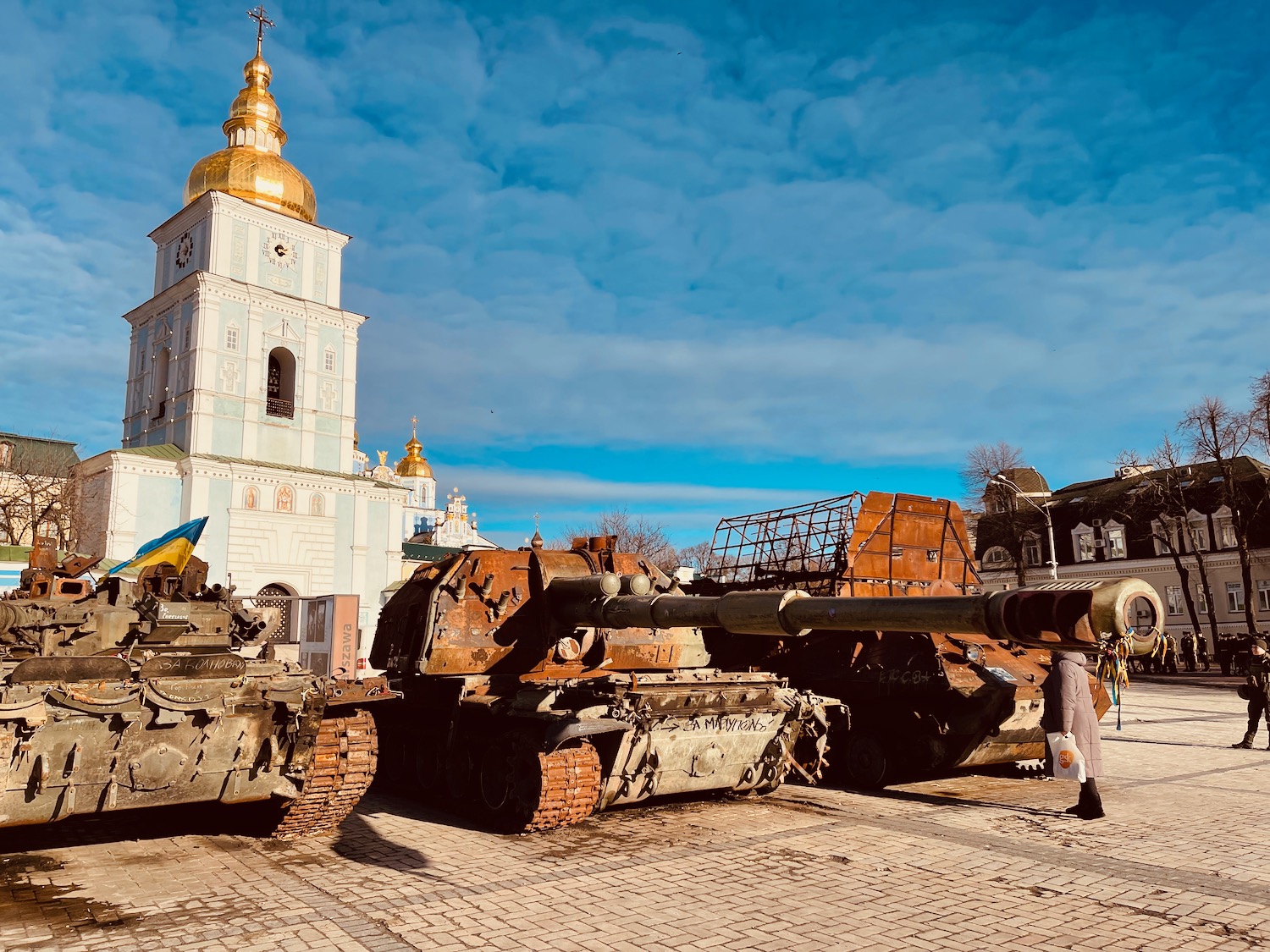
No items found.

Now Open: Dick and Rosalie Bush Fellowship in Economic Warfare

The IFC is seeking qualified candidates for the full-time, on-site position of Bush Fellow for Economic Warfare.

See More >

United States Air Force Academy

Dick and Rosalie Bush Fellowship in Economic Warfare 

Institute for Future Conflict 

This is a civilian 1099 position that works for a 501(c)3 non-profit that supports the Air Force Academy. 

Institute for Future Conflict 

The Institute for Future Conflict (IFC) is dedicated to creating and cultivating flexible warfighters who are prepared to prevail in conflict no matter what form it may take in the future. The IFC does this by working across all three major units at the United States Air Force Academy (USAFA) to develop warfighters in the classroom, on the training ground, and through athletic competition. The United States Air Force Academy, located just north of Colorado Springs, Colorado, awards the Bachelor of Science degree as part of its mission to educate, train, and inspire men and women to become officers of character, motivated to lead the United States Air Force in service to our nation. 

Economic tools, such as sanctions and export controls, are increasingly used as instruments of national power. These tools are used in conjunction with or in place of military activities. To prepare future officers for the world into which they are about to commission, cadets need to understand the mechanics and impacts of these economic tools. This sabbatical or post-doctoral fellow should have expertise in both the historical use of economics as an instrument of power as well as modern applications with particular focus on interactions involving Russia, Iran, North Korea, and/or the People’s Republic of China. 

Overview

The IFC is seeking qualified candidates for the full-time, on-site position of Bush Fellow for Economic Warfare, who will work within the IFC and be attached to the Department of Economics and Geosciences, teaching a 1-1 course load. 

We are seeking a highly skilled sabbatical or post-doctoral fellow to provide support for the major units contributing to cadet development at the United States Air Force Academy, primarily teaching and conducting research for the Dean of Faculty but also supporting cadet training events organized by the Commandant of Cadets and Athletic Director. As part of their duties, the Bush Fellow will support economics courses and may design special topics courses unique to their area(s) of expertise. The Bush Fellow will contribute to cadet military training events, integrating economics as an instrument of power into military training scenarios as part of institution-wide exercises and events so cadets better understand the how “whole of government” tools are used in integrated deterrence. 

The contract is for one year with an option to renew for a second year. The Bush Fellow will work with the Institute for Future Conflict along with the Department Head of Economics and Geosciences or a person delegated by this position. Compensation for this position is commensurate with experience but is estimated to be between $75,000 and $85,000 per year. 

This is a 1099 independent contractor position and does not include benefits. The individual will provide progress reports as necessary to the IFC Senior Advisor, the Department Head or delegated person, and the Fox Senior Fellow to demonstrate progress towards achieving the requirements of the position. 

Desired Areas of Focus 

Applicants should have demonstrated expertise in international political economy, international trade, and/or economics as an instrument of national power. This may include 

Sanctions as a tool to deter adversary action, counter adversary aggression, and advance U.S. interests in both competition and conflict. 

Trade restrictions in the context of national defense for protecting domestic technology and tradeoffs between interdependence and nationalism. 

Defense industrial base revitalization incentivized through public policy as way to prepare the United States for future conflict. 

Weaponized interdependence as global powers exert influence through infrastructure development and other partnerships to reshape the global economic system. 

Responsibilities 

• Understand, uphold, and promote the standards, core values, and priorities of USAFA and the IFC 

• Establish good working relationships with administration and faculty along with USAFA permanent party in the major units responsible for cadet development 

• Teaching: The fellow will teach one course per semester. The expectation is one of these courses will be an economics course; the second course may be in an area of the fellow’s specialization. As applicable, specialized lessons or guest speaker engagements may be available to expand influence on a broader variety of academic disciplines. 

• Training: The fellow will work with IFC’s Senior Fellow for Wargaming as well as Cadet Wing leadership to integrate learning experiences into training and exercises to illustrate how economic tools may be used to shape global engagements. 

• Research: The fellow will be expected to maintain an active research agenda, which will be demonstrated by publications and presentations. The fellow will be expected to publish at least four pieces, or two per year, which may include shorter policy focused applications on platforms such as the IFC’s website, Future Conflict. 

Knowledge, Skills, and Abilities 

• A flexible and adaptable leadership style, able to positively influence strategic and tactical initiatives with keen attention to detail, to effectively lead teams and lift the performance of others 

• Interpersonal skills adept at building, cultivating, and stewarding relationships with internal and external stakeholders and the ability to connect people and resources 

• Motivated and organized professional who values working with committed colleagues in a fast paced collaborative environment to solve problems and manage multiple tasks concurrently

• Excellent written and oral communication skills are required, along with strong social skills, instincts, judgment and integrity 

• A strong work ethic, a commitment to high performance and teamwork and a proven ability and desire to reach increasingly aggressive goals 

Qualifications 

• PhD in Economics or related fields such as Public Policy with demonstrated research on topics pertinent to the IFC and this fellowship’s charter. Applicants with degrees not in Economics must have a minimum of 18 credit hours of graduate work in economics for accreditation requirements. ABD candidates will be considered. 

• Experience teaching and conducting research in university-level environments 

• Experience applying economic tools to various disciplines is preferred 

• The selected candidate will be subject to a background investigation pursuant to award of a security clearance. A valid driver’s license is required to initiate this process and necessary to attain access to the Air Force Academy military installation and the IFC offices. US citizenship is preferred. 

Applications Instructions 

Applications should include a curriculum vitae, copies of graduate transcripts, statement of teaching philosophy, a written research sample, and three letters of recommendation. Send complete packages in a single PDF file to Mr. Dave Scott (David.Scott@afacademy.af.edu) and Dr. Gregory Johnsen (Gregory.Johnsen@afacademy.af.edu) no later than December 31, 2025.

No items found.

Seller Beware: The Damage of Techno-Nationalism in Sino-Russia Military-Technological Cooperation

China's goal of achieving indigenous technological innovation encourages opportunistic behavior, which in turn damages its relationship with security partners.

See More >

Dr. Elliot Ji


Since 1949, Soviet technologies have enabled China to jump-start advanced weapons research and development (R&D) with a weak military-industrial base. Soviet or Russian experts have helped China with the atomic bomb, rockets, submarines, surface-to-air missiles (SAMs), and just about every military aircraft, from jet fighters to drones. As the Chinese economy grew, China gradually advanced from a buyer to an equal collaborator and sometimes a supplier of defense technology. By buying and copying Russian technologies, China could overcome significant hurdles in the weapons R&D process and obtain the much-needed military capabilities to compete with the United States. In return, Russia could expect Chinese support, such as cash and basic arms, during events like the war in Ukraine. This has helped Russia alleviate the financial strain from its stagnated economy due to international sanctions. Over the past decade, China and Russia have signed formal treaties and agreements to enable R&D collaboration in civilian and military applications, including several recent unspecified “high-tech weapon” programs.

While it appears that the two “no limit” partners enjoy a harmonious relationship in defense technological collaboration, deep R&D collaboration between the two is easier said than done. For democratic nations, trust, transparency, and institutionalization safeguard military technology-sharing and are necessary for a productive, sustainable military technological collaboration. Institutionalization, the construction of formal rules, procedures, and protocols for the two parties, is particularly difficult for Russia and China to accept. I argue that both Russia and China’s strong desire to keep technological innovation indigenous, a practice constituting techno-nationalism, has constrained and will continue to limit the effects of long-term weapons R&D productivity. The Chinese political imperative of achieving indigenous technological innovation encourages opportunistic behavior, damaging the prospects of trustful and sustainable technological collaborations with its security partners.

In more than seven decades, China and Russia have collaborated most in the military aviation-aerospace industry. This area shows that the collaboration lacks mutual investment of R&D resources and is often one-sided in favor of China. The long-term, high-sunk-cost effort to institutionalize joint R&D faces significant challenges because of China’s opportunistic behavior. These include several violations of Russian intellectual property (IP) and short-term partnerships that cease immediately as Chinese indigenous systems become available. Furthermore, once China finishes indigenizing the systems it once relied on Russia to acquire, it becomes less incentivized to open itself up to Russian scientists since these Chinese innovations must be guarded by the Chinese state. Institutionally, this discourages deep collaboration on the fundamental R&D that created the advanced capabilities that China sought, including advanced metallurgy and novel materials. The result is likely a military-techno symbiosis at the lower end of the value chain, such as the production of low-tech parts and basic electronics, but a break at the higher end, including material science, metallurgy, and advanced electronics. As such, long-term, sophisticated R&D collaboration will likely remain a challenging goal for the two countries.


The One-sided Collaboration

Since the collapse of the Soviet Union, China has ordered aircraft, jet engines, air defense systems, sensors, and missiles from Russia worth over $30 billion.  Between 2001 and 2010, China spent an enormous amount purchasing Russian arms, accounting for well over half of China’s foreign-made weapons. The purchases peaked in 2005 but began dropping shortly after as China ramped up its indigenous R&D capacity. While the number of arms transferred has waned since 2015, the sophistication of the technologies transferred to China has remained high. From 2015 to 2020, Russia sold several cutting-edge systems that filled critical gaps in Chinese capabilities, like the S-400 air defense system, the Su-35 flankers, the 3M-45E anti-ship missile, and two major types of military engines, the D-30 and AL-31.

The track record of transferring military technology to China is large in volume but transactional in nature. Unlike the Soviet assistance in the 1950s, when the Soviet Union supplied not only manufactured products but also all the know-how, today’s Russia seems to sell only completed products, components, and spare parts to China. Concerns about Chinese IP thefts have obstructed cooperation for the sophisticated technologies that China struggles with, including submarine technology. The Russian worries are well-founded. Russia has accused China of committing over 500 cases of IP theft against them. In response, Russia is offering less sophisticated “export models” or declining to sell the most sensitive technologies, such as rocket engines and submarine technology. Russian experts have found their Chinese counterparts secretly replacing original Russian parts with unsuccessful Chinese imitations and then seeking Russian assistance to solve the problem or bypassing Russia to obtain Soviet weapons through Ukraine.

China’s approach of “introduce, digest, absorb, and re-innovate 引进, 消化,吸收,再创新” has repeatedly resulted in copying Russian technology for a domestic version and continuously seeing access to foreign innovation. Two leading scholars on the Chinese military have cleverly categorized the way the Chinese military aviation industry sought advanced aviation technology as “buy, build, or steal.” Faced with an inability to originally innovate, China flexes its ability through other means.

Several Chinese jet fighter programs during the 2000s illustrate the opportunistic practices of the Chinese defense industry well. The Chinese J-11B was secretly developed by reverse-engineering the Su-27 fighter, which China was licensed to co-produce in 1995. Russia discovered several years later that China had taken advantage of the license for the J-11B and halted further negotiations at the time. China pulled the same trick on the Su-30 fighter, which became the J-16, further agitating the Russians. While Russia eventually agreed to overlook the issue in favor of further sales, it has become more wary of allowing licensed production of complete systems. Russia is now opting to sell only key components or complete products without licensing authorization. The hope is that this will increase the Chinese reliance on Russian technologies, especially certain aircraft engines that cannot be easily reverse-engineered.

Therefore, while nominally a “cooperation” between the two countries, the Sino-Russian military technological exchange has almost exclusively focused on the one-sided commerce of weapons, not the R&D processes that created these weapons. No institutional anchor secures the long-term technological engagement between the two countries. For example, the transfer of low-bypass jet engines tapered off in the past three to five years as China indigenously developed acceptable substitutes like the WS-15 and WS-20. Negotiations of repeated sales seem only to be initiated by China when the indigenous development fails to deliver, as in the case of transport helicopters. As such, there has been almost no foundation of trust between China and Russia for military technological cooperation, and both sides are acutely aware of the nature of their exchange. 


The Challenge of Techno-Nationalism

By withholding the know-how and selling only complete products, Russia intends to preserve a safe capability gap with its customers while maintaining the attractiveness of systems to other buyers. China, similarly, wants to maximize its bang for the buck, buying only the technology it has yet to master, preferably only once for immediate absorption and re-innovation.

Typically, states are strategic in transferring sensitive military technology. They often determine the depth and content of the transfer by assessing the recipient’s capability gap with the seller and the prospect of future defense interest alignment. As the recipient state’s indigenous R&D capabilities grow, it can better absorb, replicate, and even re-innovate the acquired technology to substantially enhance its national power even after the collaboration ceases. Eventually, this process can challenge the seller state’s position by eliminating future demand. As such, if the transfer of the technology will result in the recipient country’s complete mastery of certain technologies, the prospect of long-term collaboration is slim. Russian scholars have stated this concern even in Chinese-language publications. The seller, being fully aware of the unsustainable nature of such sales, would be increasingly reluctant to transfer or sell cutting-edge technologies, invariably downgrading the depth of cooperation over time.

Because of this thinking, both China and Russia have opted for an equilibrium strategy to maintain techno-nationalism at the expense of collaborative R&D effectiveness. They insist that all critical R&D and production efforts be excluded from the partner while simultaneously striving to maximize their own trove of knowledge through learning from the partner. Tsinghua University professor and former PLA officer Wu Dahui, was quoted by the People’s Digest magazine (published by The People’s Daily) as saying, “[from 2003-2010] we were no longer merely acquiring but absorbing and digesting the technology [from Russia], entering a new phase of arms trade with Russia… China shall not be Russia’s purse or teller machine. Introducing [Russian] technology is completely centered on China’s interest.”

Both Russian and Chinese scientists and engineers have lamented techno-nationalist practices like unauthorized reverse engineering and superficial deals. The opportunistic approach prohibits deep and innovative technological cooperation. A 2017 joint annual report published by the Fudan University Institute of International Studies and the Russian International Affairs Council identifies techno-nationalism in the military-industrial systems as an impediment to the stable development of Sino-Russian cooperation. The report also identifies China as the party that manifests a more extreme form of techno-nationalism, which justifies its actions by “an economic logic 经济的逻辑” –  a euphemism for opportunistic behavior. Russian scholars in the report recognized that the lack of mutual trust and long-term vision for collaboration has created difficulties for “more complicated forms of cooperation on artificial intelligence, laser weapons, robotic technologies, and ultrasound.” This has led the two countries to “engage in expensive and unique R&D on their own to respond to American large-scale military technological development.” From China’s perspective, scholars have recognized that their previous IP violations led Russia to downgrade its arms export to China and temporarily suspend military-to-military exchanges on military-technological cooperation between the two countries from 2006-2008. Such behavior runs against the advice of Chinese engineers who have long advocated for a robust, reliable, fair institution to manage IP protection for military technologies to build mutual trust. Still, China has yet to implement substantive changes that alleviate Russian concerns. The Chinese defense industry emphasizes safeguarding China’s own military IP as it pushes its product to “go aboard 走出去.” A group of experts at the China Academy of Launch Vehicle Technology (formerly the First Academy) of the China Aerospace Science and Technology Corporation (CASC), the primary R&D entity of rocket and missile systems, wrote in 2021 that China must “specify the legal restrictive conditions of intellectual property protection and ensure that our military technology IP rights are not violated, especially against the backdrop of a diverse cooperative model between enterprises.”

Currently, while many agreements and collaborative frameworks exist to promote research engagement between the Chinese and Russian aerospace industries, few of them include the high sunk cost and joint investments that help institutionalize long-term R&D collaboration. A 2021 report from the Air University’s China Aerospace Studies Institute (CASI) provides the raw data on current Sino-Russian collaborative activities. The report documents 38 cases of R&D-related collaborations, including 23 organizations collaborating with Russian entities on research, development, and testing, 13 conferences, forums, and seminars, two collaborations on production and manufacturing, and 34 organizations seeking sales and acquisition opportunities for the Chinese aerospace industry. However, among these cases, most of the collaborations only had signed agreements, memorandums, and minutes of intent that did not entail joint investment of concrete R&D resources. For military engine technology, the China Aviation Research Institute only managed to sign a memorandum of understanding to support “potential collaboration in aero-engine technology development.” The Institute of Aeronautical Industry Manufacturing has an agreement with the All-Russian Institute of Aeronautical Materials (VIAM) that merely entails “strengthening mutual visits and exchanges, holding academic conferences and forums, and jointly applying for scientific and technological projects.”

Only seven collaborations identified by CASI entailed establishing joint research efforts and named specific research projects; about half were not for military use. The ones for military applications include R&D programs on high-strength and high-toughness titanium alloys and other new materials, a specific agreement for testing the TWS-800 turbofan engine using Russian high-altitude platforms, and the establishment of a joint laboratory at the Northwestern Polytechnic University. The rest of the concrete collaborations included joint investment in systems for civilian uses, such as the CR929, the T-128 transonic wind tunnel to test the CR929, and a large aperture lidar system for weather forecasting. Notably, the contracts for these joint R&D endeavors were signed between 2017 and 2019, while most of China’s major military aerospace R&D programs, such as the latest WS-series jet engines and the HQ-9 and HQ-22 SAM missiles, predated these collaborations by 5-10 years and their respective research entities were not found to have publicly known collaborations with Russian partners. Even though China could benefit tremendously from collaborating with Russia, Beijing seemed reluctant to engage in deep technological exchange in areas that could help it overcome one of the most significant technological bottlenecks in its military aviation industry. The techno-nationalist practice of keeping these systems away from foreign access is evident in these cases.

Implications

Two policy implications emerge from the above analysis. First, the troubled and transactional collaboration between Russia and China illustrates the vital role of trustworthy institutions in facilitating joint innovative ventures. Military-technological cooperation requires a robust institution to be effective and sustainable. It enables the partners to build trust, spell out consequences of opportunistic behavior, and encourage heavy sunk-cost investment for the long run when sharing sensitive technologies. Building such an institution naturally favors countries with similar domestic political systems, shared cultures, and well-aligned strategic goals, yet very few of which are directly applicable to the current Sino-Russian partnership. Partners engaged in military-technological collaboration must accept that sharing certain strategically valuable proprietary information is worth the tradeoff risk for long-term R&D. But if neither side wishes to embrace the vulnerability required to let the other side in on its technological know-how and does not want to establish trustworthy institutions, then joint technological innovation will remain an aspiration.

Second, while we may not see many effective joint weapons R&D programs between China and Russia, China may secure a steady stream of selected cutting-edge Russian weapons technology by other means. As Beijing continues to supply Russia’s war effort in Ukraine with low-tech systems, it gains considerable leverage over Russia in negotiating for the sale of cutting-edge weapons technology. In 2022, Russia raised the possibility of selling another batch of the S-400 SAM system to China following the 2015 deal that landed China’s first batch of Russia’s latest air defense technology. The repeated sale was likely an effort to secure more Chinese support as Russia struggled in the war in Ukraine. As a rapidly innovating second-mover, China can benefit from even the one-time-only transactions of advanced weapons to rapidly close its capability gap with the United States. Indeed, China does not need to match the United States system-to-system to gain a strategic advantage in the Indo-Pacific. The United States and its allies should continue to monitor the Chinese introduction and re-innovation of Russian technologies and maintain its innovative gap with China by fostering deep collaborative R&D with trusted allies and partners.

Elliot Ji is a Non-resident Fellow at the Institute for Future Conflict and Stanton Nuclear Security Fellow at RAND Corporation. He received his Ph.D. in Politics from Princeton University in May 2025. He thanks the participants of the 2024 U.S. Naval War College Cyber and Innovation Policy Institute Summer Workshop for their valuable input. The views expressed in this article are based on personal open-source research that does not necessarily represent the position of the Department of the Air Force, the Department of Defense, or the United States Government.

No items found.

Revisiting the War Against ISIS: The History of Operation Inherent Resolve and its Future under the Trump Administration

The battlefield success of Operation Inherent Resolve holds lessons for great power competition.

See More >

Michael Brill


For President Donald Trump, Operation Inherent Resolve, the military campaign against the Islamic State in Iraq and al-Sham (ISIS), was a rhetorical foil against the calamitous August 2021 withdrawal from Afghanistan under the administration of President Joe Biden. Appearing on Joe Rogan’s podcast shortly before the election, Trump repeatedly drew this contrast and highlighted the lack of accountability for Afghanistan, at one point stating, “The real generals, not the ones you see on television, the ones that beat ISIS with me. We defeated ISIS in record time. It was supposed to take years, and we did it in a matter of weeks.”

Upon returning to the White House in January 2025, Trump once assumed responsibility for operations against ISIS, which ticked steadily upward in 2024, with US airstrikes in Syria and raids in Iraq. Nearly 1,000 US troops are deployed in Syria and 2,500 in Iraq for the purpose of executing this mission. In March, US and Iraqi forces conducted a joint operation that killed two ISIS leaders in Western Iraq, the most significant campaign event in Trump’s second term to date. Despite prioritizing support for Israel’s resumed war against Hamas, the return to “maximum pressure” against Iran, and expanded operations against the Houthis in Yemen, inherited deadlines from the Biden administration will require political attention and diplomatic engagement in Iraq and Syria beyond following existing policy and continuing strikes against ISIS alone.


Waning Resolve for Operations Against ISIS?

Facing pressure from Iranian-backed factions, Iraq’s Prime Minister Mohammed Shia al-Sudani committed to the departure of international forces from Iraq by September 2025, with the continuation of logistical support of US operations in Syria from northern Iraq until at least September 2026. If not addressed proactively by the Trump administration in a way that ensures the continuation of operations, these deadlines could become time-bombs like that of the Doha Accords for Afghanistan, which the first Trump administration bequeathed the Biden administration. The surprise rebel offensive and collapse of the Assad regime in Syria, where Turkey is the largest external power broker, could complicate and threaten the US mission directed toward ISIS. It also seems plausible that the upending of Syria’s relatively stalemated conflict, where Russia’s distraction with Ukraine, along with Hezbollah and Iran’s losses against Israel have all been factors, could precipitate renewed appeals by Turkish President Recep Tayyip Erdoğan to Trump, calling for the removal of US troops from Syria, to which he proved agreeable during his first term.

Considering these developments, reexamining the history of the war against ISIS is timely and potentially contains insights on its next stages under the second Trump administration. It is also worth comparing political rhetoric about the fight against ISIS with its military reality, as the former still obscures accurate perceptions of the latter. The war against ISIS required the deployment of assets from all branches of the US military, complex planning and close coordination with allied militaries and local security partners alike, and the execution of operations on difficult terrain over vast distances. The operation’s relative stability across the previous three administrations has been a key factor in its comparative success.


The War Against ISIS: Rhetoric and Reality

As a candidate for the Republican presidential nomination in November 2015, Trump’s campaign released a radio ad in which he accused President Obama and other politicians of “losing the war on terrorism.” He also promised to “quickly and decisively bomb the hell out of” ISIS. Upon winning the presidential election and taking office in January 2017, President Trump followed through on a campaign pledge to convene his generals and order them submit a new plan for defeating ISIS. However, this did not substantively alter ongoing operations. Following the fall of Baghuz and killing of ISIS caliph Abu Bakr al-Baghdadi in 2019, for the remainder of his first term, Trump reiterated the theme, “When I took office, we had almost nothing. It was at though they were just forming again, and now it’s 100 percent.”

Political rhetoric notwithstanding, Operation Inherent Resolve was characterized more by continuity than change across the Obama and Trump administrations. This process was first and authoritatively documented by Michael R. Gordon’s 2022 book Degrade and Destroy: The Inside Story of the War Against the Islamic State, from Barack Obama to Donald Trump. Counter-ISIS operations, along with US deployments in Iraq and Syria, continued under the Biden administration, which notably rushed US forces to help quell the attempted ISIS jailbreak in Hasaka, followed shortly thereafter by a raid that killed the ISIS caliph Abu Ibrahim al-Hashimi al-Qurayshi, in early 2022. The success of the US military and its allies in maintaining pressure against ISIS is even more remarkable given the growing harassment by Iran and Iranian-backed militias under both the Trump and Biden administrations. Following the collapse of the Assad regime in December 2024, President Biden increased strikes against ISIS in Syria.  


America’s Long War Against ISIS

For as much as President Obama had staked politically in withdrawing all US troops from Iraq by the end of 2011 and attempting to avoid reengagement with the country’s political turmoil thereafter, he reluctantly deployed US forces back to Iraq after the fall of Mosul to ISIS in June 2014. After some early stumbles in the months after US forces returned to Iraq, during which ISIS continued to expand its territory into 2015, Obama’s administration devoted considerable effort to building the international coalition and developing plans for rebuilding and retraining the Iraqi Security Forces for the purpose of halting and then rolling back the ISIS caliphate.

Adapting a concept that emerged in the Special Forces community decades ago based on partnering a limited number of US troops with a larger local force, “by, with, and through” became central to the war against ISIS. Operations on the ground were carried out by local allies, with support from US troops and their partners, and through a legal framework. Neither an over the horizon drone campaign nor an application of the doctrine of overwhelming force, the US fought ISIS through proxies on the ground, supported not just by small teams of US advisers, but also the concentrated use of intelligence, artillery, and air power. The strategy also squared with the growing bipartisan aversion in Washington to so-called “forever wars,” along with the priorities of US politicians and voters, even if many were contradictory.

"By, with, and through” was employed as the means to defeat ISIS as quickly as possible with local allies doing the bulk of fighting and dying on the ground, prevent ISIS-directed or -inspired terrorist attacks against the US homeland, and keep the number of US troops deployed and casualties to a minimum while also relying on the precision targeting of ranged fire support that would in theory spare civilian lives and property to the greatest extent possible. That the latter expectations fell short against the reality of war, especially with an enemy that systematically entrenched itself in civilian environments and employed human shields, has resulted in renewed attention to civilian casualties. However, the alternative of deploying more US troops to do the fighting while relying less on ranged firepower, was as politically unviable to the Obama, first Trump, and Biden administrations then as it is for the second Trump administration today.


Rules of Engagement: Taking the Gloves Off?

Trump’s campaign rhetoric and claims as president contributed to the perception that he loosened the Rules of Engagement for taking the fight more aggressively to the enemy. However, Tactical Directive No. 1, the most important step in this direction, was issued by coalition commander Lieutenant General Stephen Townsend in December 2016. Although it took time for the order to be implemented and the deployment of US advisers directly to the battlefield’s frontlines, the decision was made during the final weeks of the Obama administration. Additionally, the plan and timetable for the military operations with Iraqi and Syrian partners to retake Mosul and Raqqa from ISIS, were developed and put in motion by US military officers with the help of Pentagon civilians primarily under the purview of the late Secretary of Defense Ash Carter, Obama’s final secretary of defense.  

With the 2016 US Presidential elections looming, President Obama exerted no political pressure to alter or expedite the Pentagon’s planning or timetable for achieving the military defeat of the ISIS caliphate. Upon taking office, President Trump made no significant changes to the military’s strategy or Rules of Engagement that expedited the campaign. While the Obama administration had begun to scale back its political micro-management of the war in 2016, arguably Trump’s most impactful decision was to remove the level of White House oversight that had the effect of allowing the Obama-era strategy to be executed more efficiently.  

Commanders in theater were empowered to devise and execute operations based on developments on the battlefield instead of facing long delays caused by navigating multiple levels of bureaucratic red tape. Although Trump’s hands-off approach entailed risks of its own, it also produced immediate results. In support of the Kurdish Syrian Democratic Forces (SDF) in the operation to retake Tabqa, the first air assault of the campaign, which was supported by Marine howitzers, Army attack helicopters, HIMARS surface-to-surface rockets, and US airpower, was both rapidly planned and approved. “I kept the SECDEF informed but did not have the CONOP approved in Washington. We took a lot of risk,” recalled CENTCOM Commander General Joseph Votel.

Another area of continuity between the Obama and Trump administrations was the decision to arm the Kurdish militia fighters of the SDF. Obama administration and military officials concluded that the SDF was the only ground force capable of taking back Raqqa from ISIS. However, the decision to provide the force with heavier arms and ammunition, even those needed for the Raqqa battle, was anathema to Turkish President Erdoğan, who viewed the SDF as engaged in a Kurdish state-building project on Turkey’s border. On January 17, 2017, during Obama’s last week in office, the president convened a meeting of the National Security Council to finally address the deferred question of arming the SDF.

Obama clearly favored arming the SDF, but did not want to tie the hands of the incoming administration. Three days later, on Inauguration Day, Obama gave his recommendation on arming the SDF to Trump directly during their limousine ride to the Capitol. Later, as Trump sat in the inaugural reviewing stand in front of the White House, he turned to James Mattis, his choice to serve as secretary of defense, and told him the Kurds were great fighters. While Mattis never understood why Trump had chosen that moment to raise the issue, the Trump administration shortly thereafter followed Obama’s recommendation to arm the SDF.

Although Trump’s hands-off approach helped to better implement the strategy devised and initiated during the final year of the Obama administration, the potential for the president to become disengaged, paired with his penchant for losing patience, became liabilities as the coalition pursued ISIS deeper into the Middle Euphrates River Valley in Syria. As far as the president was concerned, US forces should help the SDF take Raqqa and then “get the hell out.” By emphasizing the value of Syria’s oil, Trump’s advisers partially succeeded in maintaining his attention on the campaign. However, Trump’s decisions to curtail stabilization funding and announce the sudden withdrawal of US forces from Syria, for the first time, precipitated the departure of key advisers and complicated efforts to establish and maintain security after the final demise of the ISIS caliphate.


The War on Terror’s Silver Linings Playbook?

Operation Inherent Resolve marked its tenth anniversary in August 2024. In contrast to the other post-9/11 military campaigns, Operation Inherent Resolve has been an unambiguous success in achieving its primary objectives of destroying the ISIS caliphate and preventing its resurgence to date. And despite the political rhetoric to the contrary, continuity has been the defining feature of the campaign, especially during the transition between the Obama and Trump administrations, then again under the Biden administration.

Unlike many other US military campaigns, the generals who commanded the Operation Inherent Resolve coalition never became household names or enjoyed extensive media coverage, Trump’s bragging about them notwithstanding. Generals Sean MacFarland, Stephen Townsend, Joseph Votel, Paul Funk, and Michael Nagata have all retired from active duty. Ironically, Chris Donahue, whose service with Delta Force was crucial in the early months of the war against ISIS, helping halt its advance while also laying the groundwork for pursuing the group into Syria, was singled out for accountability over the Afghanistan withdrawal. Senator Markwayne Mullin put a hold on Donahue’s promotion to four-star general and commander of US Army forces in Europe and Africa. The behind-the-scenes advocacy leading Mullin to quietly withdrawal the hold without comment may very well have enlightened the senator to the fact that Donahue is one of the generals from the war against ISIS President Trump often touts.

The battlefield successes of Special Operators, Marine Raiders and artillery, Army artillery and attack helicopters, Air Force pilots, and Navy aviators across vast distances and difficult terrain remain little known and under-appreciated even in the Defense establishment, overshadowed by discussion about the return to great power competition. That US forces involved in Operation Inherent Resolve, their local allies, and international coalition partners achieved the primary objectives despite the often-contradictory stipulations of American politicians and demands of voters alike, made their efforts more impressive still. Today, the second Trump administration, against the backdrop of policy priorities elsewhere in the Middle East and world, must navigate Iraq and Syria’s evolving politics and prevent their exploitation by ISIS, ensuring the hard-earned successes of Operation Inherent Resolve are not squandered.


Michael Brill is a Ph.D. Candidate in the Department of Near Eastern Studies at Princeton University. In 2024-2025, he was a Global Fellow in the History and Public Policy Program at the Woodrow Wilson International Center for Scholars, and a Non-Resident Fellow at the Institute for Future Conflict. He assisted Michael R. Gordon with the research and writing of his 2022 book Degrade and Destroy: The Inside Story of the War Against the Islamic State, from Barack Obama to Donald Trump, published by Farrar, Straus and Giroux. The views expressed in this piece are those of the author and do not reflect the official policy or position of the US Air Force, the US Department of Defense, or the US government.

No items found.

More Bang for Your Buck: Rethinking Current Practices to Prepare for the Future of Conflict

Mid-tier arms are cheaper, easier to use, easier to produce, and nimbler than the weapons usually associated with major land wars.

See More >

Jen Spindel

Keith Carter

Introduction

Just three months after Russia invaded Ukraine, The Atlantic ran an article declaring “War Will Never Be This Bulky Again.” Phillips Payson O’Brien, a historian of war, argued that Russia’s failure to swiftly capture Ukraine showed the diminishing power of heavy and expensive military power. He claimed that the very nature of combat would change as “tanks, fighter jets, and warships are being pushed into obsolescence.”

For the next seven months, these predictions seemed to hold. Ukraine was able to push back and eventually make gains against a much better-equipped Russian force using more maneuverable, cheaper, and easier to use mid-tier arms. Even now, as the war has trended toward stalemate, Ukraine has used the same weapons to delay Russia’s advance and to strike their strongholds in Ukraine and in Russia. While tanks, fighter jets, and warships will continue to have their place in future conflict, we argue that the war in Ukraine—like the recent conflicts in Nagorno-Karabakh—is demonstrating the increasing importance and wide operational use of mid-tier weapons.

These weapons tend to be highly effective in small unit operations. Mid-tier arms are cheaper, easier to use, easier to produce, and nimbler than the weapons usually associated with major land wars. Among the weapons successfully used in Ukraine are the Javelin, smaller drones, loitering munitions, traditional non-precision guided artillery, and air-defense missiles. This article provides recommendations for future arms acquisition from the types of arms used in Ukraine and Nagorno-Karabakh. We argue that mid-tier weapons can complement larger weapons systems that are typically associated with major war. Moreso than planes, tanks, and other exquisite weaponry, this category of mid-tier arms will become increasingly important for future conflicts. In short, this real-time pivot from heavy arms to nimble, mass produced mid-tier arms will have significant implications for the arms industry, the interstate arms trade, military force design, and future warfare concepts.

The Nature of Mid-Tier Arms

But what counts as “mid-tier” armaments? Weapons systems are generally split into two categories: (1) Major weapons platforms, which includes jets, tanks, and any vehicles with heavy protective armor, naval vessels, etc. and are used to project power; and (2) small or light arms, which are portable individual, or crew served weapons like rifles and machine guns. The mid-tier weapons we are concerned with have features of both major weapons systems and lights arms. They are human portable like small arms but have the capability to destroy main battle tanks, aircraft, and entrenched fighting positions. Included in this category are the Javelin, some variants of mortars and artillery, small drones and loitering munitions, and other mobile, easier to learn, and low-cost arms. Typically, mid-tier arms require minimal logistic support, have significantly shorter training timelines, and are optimized for rapid distribution and decentralized operations.

However, mid-tier arms do have drawbacks. Although they are very maneuverable, their lack of protective armor renders them vulnerable if they can be effectively targeted. Because mid-tier weapons tend to be accessible without training, if they are captured, they can be readily used by the enemy. Yet despite these unique characteristics and their outsized operational effects, these arms get less attention than their larger more prestigious cousins.

The successful use and widespread demand of mid-tier weapons in Ukraine should lead the American defense establishment to rethinking their current practices and prepare for a very different future conflicts.

Current Practices

The US way of war typically demands two features: highly sophisticated weapons platforms paired with a major logistical build up. First, the United States, like most nations, has focused its innovation and advancement on technologically sophisticated arms: fighter jets, stealth capabilities, submarines, tanks, and large unmanned aerial vehicles (UAVs). Though the recent outcomes in Iraq and Afghanistan offer a compelling counterpoint, the implicit assumption is that technology will always give the US military the advantage. Second, the United States and its allies tend to assume they will be able to establish theater logistics from areas of relative sanctuary to support a major logistical buildup. By relying on the US network of overseas bases, the United States has grown accustomed to fighting in limited wars with minimal logistical interference. The United States could establish and maintain a large operational footprint and commanders could mass forces and weapons at will. For years the biggest question facing the US military was how to get its hardware into the fight—especially if that theater is contested. The standard assumption is this: if the United States is able to get its forces to the fight and set the theater with its most sophisticated weapons it will ultimately prevail because the side with the most advanced weapons always wins. The decades-long  pairing of massed forces with technologically sophisticated arms means that the United States, like most states, has a preference for the production and procurement of major weapons systems over their production capacity and  stockpile of mid-tier arms.

However, the assumptions supporting sophisticated weapons systems and massive logistical buildups are crumbling before our eyes.  Most states have a significant gap in their arsenals between major weapons systems and the mid-tier arms—like towed artillery, smaller loitering attack munitions, shoulder fired anti-tank and air defense munitions—that have proven effective in recent proxy wars of great power competition. Among the many lessons being challenged by the war in Ukraine, the existing assumptions about the superiority of sophisticated arms and the role of massed formations are potentially the most disruptive to the US way of war.

The demand for exporting mid-tier weapons to Ukraine means the US defense industrial base is currently underproducing them. United States arsenals (as well as that of its allies and partners) are under-stocked on mid-tier weapons. The demand for these weapons should push the US and allies to reconsider their manufacturing priorities and shift production lines to less traditional suppliers. Partnering with countries including India, South Korea, and potentially even Brazil could expand the production capacity of mid-tier weapons, and help boost the domestic production capabilities of friendly states. The economics of weapons sales also need to be reconsidered. The worst outcome for future conflict would be to continue focusing solely exquisite weapons platforms of  near-peer competition, only to find one day the mid-tier weapons needed for the fight are not only absent, but cannot be produced at scale anymore.

Future Practices

The growing demand for mid-tier weapons has a number of implications for the future of conflict, ranging from warfighting to the arms industry to arms sales. States need to think differently about the weapons that matter. These implications include future decisions regarding acquisition, training, arms sales, and the orientation of America’s arms production.

First, regarding acquisitions, states will have to decide between increasing mid-tier arms purchases and pursuing more expensive weapons. What is the right balance, and what are the opportunity costs of different arsenal configurations? When explosives can be attached to a swarm of cheap quadcopters, does it make sense to invest in fewer more sophisticated systems like the MQ-9Reaper? In a world where states generally cannot afford to have every piece of military equipment they want, the effective use of cheaper mid-tier weapons by Azerbaijan in 2020 and by Ukraine currently suggests that rebalancing arsenals away from the expensive big-ticket items is a sound strategy. Given the demonstrated performance of weapons like the Javelin, Stinger, Bayraktar TB2, and others, it is clear that weapons of this type have a significant role to play in future conflict.

Second, if the United States Department of Defense’s acquisitions demand will change, so will the nature of the arms industry. Mid-tier arms, unlike advanced fighter jets or submarines, tend to have lower barriers to production, thus increasing the likelihood that that new arms manufactures can enter the market. This will have wide-ranging effects on what is usually a monopolistic market: states and non-state actors will have more procurement options in the future, and those new mid-tier arms producers will have new opportunities to influence the scope and scale of the arms trade.

The shift towards mid-tier weapons could be particularly important for states like India, who have unsuccessfully been trying to enter the global arms market for decades. For example, rather than focusing their efforts on producing a fighter jet to rival Russian or Chinese offerings, India could focus on competing with Israel or Turkey. States like India may be able to carve out an effective niche as bulk producers of advanced shoulder fired munitions, conventional artillery rounds, smaller drones, and rockets. This would give them a more central role in the inter-state arms trade.

Third, a shift in focus to mid-tier arms will require a shift in training. In addition to continuing to train on the more technical weapons systems, militaries also need to return to basics of small group maneuver, combined arms between satellite and on-the-ground movements, and militaries should empower and incentivize junior officers and NCOs to innovate and experiment with low-cost new technologies.

The fourth implications concerns the arms trade and politics of arms sales. Many states restrict the sale of or have other export control regulations around more advanced arms, like the US prohibition on selling the MQ-9 drone or the F-22 jet. Shoulder fired weapons, smaller drones, loitering attack munitions, and other increasingly lethal weapons by contrast, are not usually subject to such restrictions, which is why Turkey’s Bayraktar TB2 drone has seen widespread use during the war in Ukraine.

If the United States is to adequately prepare for future war, it cannot only focus on sophisticated, advanced weapons systems. It needs to fully appreciate and recognize the ways in which mid-tier arms can challenge larger militaries, and the ways in which US allies can use mid-tier arms in conflict. The sooner the United States appreciates the distinctiveness of mid-tier arms, the more quickly it can address questions about defense acquisition, arms sales, and the orientation of America’s arms production, and the more quickly it can begin training its own and partner forces on use of and defenses against mid-tier arms.


Jennifer Spindel is assistant professor of political science at the University of New Hampshire.

Keith L. Carter is associate dean of the Naval War college at the Naval Postgraduate School.

The views expressed are those of the author and do not reflect the official policy or position of the US Air Force, the Naval War College, the US Navy, the Defense Department, or the US government.

No items found.

The Dollars in the Fight: The Security Risks of Economic Compellence during a Conflict

One of the biggest shifts in great power competition includes global economic networks.

See More >

Emma Campell-Mohn

The character of warfare has changed with the rise of cyber, space, and electronic warfare over the past five years. Artificial intelligence and unmanned aerial vehicales are also shaping conflicts in unexpected ways, leading to new tactics and strategies being deployed in conflict zones. As the United States and its allies and partners confront near-peer rivals, the tactics and capabilities required win conflicts are fundamentally different than in the era of the Global War on Terror or the Cold War.

Yet, amidst these changes, there is another big shift: the importance of global economic networks and their impact on kinetic operations. The distinction between trade and warfare is becoming increasingly fuzzy, as countries utilize economic compellence as part of security strategies and visa versa. This fuzziness has direct implications for kinetic operations. Indeed, one way to describe this phenomenon is “weaponized interdependence” – a term coined by Henry Farrell and Abraham Newman in their article “Weaponized Interdependence: How Global Economic Networks Shape Coercion.” Farrell and Newman explain how global networks are used for strategic advantage, outlining a new potential threat vector with strong implications for international security.

But what does weaponized interdependence mean for warfare? While there has been significant discussion of economic compellence prior to a conflict (i.e., trade wars), this article examines the implications of weaponized interdependence during warfare.


During a Conflict

During a conflict, weaponized interdependence has direct implications for the United States and allies and partners’ operations. Through non-kinetic means, a near-peer rival can compel kinetic outcomes and cause a loss of capabilities.

For example, a country can disrupt another country’s supply of – or demand for – goods and services. Either can affect the warfighter by exerting pressure on that country to deny supplies for the warfighter and/or local population and pressuring the political leadership. Supplies can range from traditional goods (e.g., food products) to newer services (e.g., data servers).

Disrupting a country’s imports can have disastrous consequences. An embargo – such as a naval blockade – could halt all imports. Alternatively, a country can cause another pain by refusing to export specific, key commodities. The former is common in military history. The latter is a challenge in the era of globalization, where an individual country can control key nodes of production for certain goods (e.g., rare earth minerals, microchips). For example, in April 2025, China imposed export restrictions on seven medium and heavy types of rare earth minerals, which requires firms to apply for a license to export rare earths. This has the potential to limit U.S. firms supply of these minerals and led the US Department of Commerce to launch a Section 232 investigation into the effects of critical minerals and their deliverable products on national security. Limiting access to rare earth minerals is not new behavior. In 2010, China temporarily halted the export of rare earth minerals to Japan after a Chinese fishing boat hit two Japanese coast guard vessels. In the following year, the price of rare earth minerals jumped 10x and since then Japan has sought to decrease its reliance on Chinese rare earth minerals, dropping from 90% to 60%. In a wartime situation, reliance on foreign goods can lead to scarcity and an inability to produce products critical to waging war. A lack of foreign goods could also put stress on the civilian population (e.g., lack of available foods) and ultimately harm a country’s economy. While the United States is building capacity to weather these changes, some allies and partner’s economies are more reliant on the whims of larger powers. For example, Philippines imports roughly 40% of its food supply and requires access to international markets to feed its population.

Weaponizing interdependence can also occur through boycotting a country’s goods, thereby decreasing their exports. This is especially true if an exporting country’s corporations rely on an adversary’s domestic markets. For example, after South Korea approved a US Terminal High Altitude Area Defense system (THAAD) in 2017, China instituted a boycott against South Korean goods, which led to an estimated $7 billion in lost revenue. While South Korea weathered these storms, other US allies and partners are reliant on China as a key market for exports and may not be as resilient.


Implications

Whether impacting imports or export, a country holds power over another country to affect the civilian population’s way of life and potentially compel them to make choices that favor the aggressors. During wartime, economic compellence could make the cost of supporting the United States unbearable to an ally and partner. China has famously used economic compellence as a means to force countries to not recognize Taiwan, with only 11 countries currently recognize the island as an independent country. Similarly, China could use both its import and export muscle to force US partners to not support US operations (e.g., threaten a country with retaliation if it allows the US to use its airstrips). This would limit US forces’ geographic footprint with the potential to impede operations.

Additionally, an adversary could disrupt the production of defense-related goods. For example, Vietnam was China’s top export for finished steel products in 2023, utilizing over 8 million tons. Vietnam’s reliance on China will impact its own production of defense equipment should it ever be involved in a South China crisis against China. Moreover, defense goods are not limited to weapons. Given the new forms of warfare, defense goods could include computers, drones, and data centers – all of which are critical to fighting and winning and require a diverse set of supply inputs. While the United States is attempting to shore up its own domestic markets for defense goods through initiatives such as the Office of Strategic Capital (OSC), it also may find itself in trouble if its allies and partners are not able to build critical capabilities due to China’s influence.


The Role of the Department of Defense

What is the Department of Defense’s role in mitigating the impact of economic compellence during a conflict? First, the Department of Defense must plan for the potential impacts of economic compellence through war games and contingency planning. While these sound like problems for the US Trade Representative or Department of Commerce, they directly impact the ability of the US military to achieve its mission in a time of crisis. Second, after recognizing potential risks for the United States and allies and partners exposed to economic compellence, there is a need to shore up defense from import and export compellence. Practically, this means doubling down on the international mandate for groups like OSC to work across the private sector to evaluate risk. This would include not only primary supplier risk but also secondary supplier risk for key goods and services. Moreover, the Department of Defense should remain a voice at the table with its partners across the USG to illustrate how economic compellence has consequences for the warfighter during a conflict. The centrality of the economy is not just apparent in policy – it is true in modern conflict too. What is war but the continuation of policy by other means.

Emma Campell-Mohn

The views expressed in this piece are those of the author and do not reflect the official policy or position of the US Air Force, the US Department of Defense, or the US government.

No items found.

New Books: Sara Castro on the Dixie Mission

Sara Castro investigates the Dixie Mission to the Chinese Communist Party in World War II and the origins of American intelligence operations in the Pacific

See More >

Sara B. Castro is an associate professor of history at the US Air Force Academy and the author of the new book: Mission to Mao, which details a US intelligence mission to the Chinese Communist Party during World War II.

Prior to receiving her PhD from the University of North Carolina in Chapel Hill, Castro worked as an intelligence analyst on East Asia for the CIA. We recently sat down to talk about her new book, the early history of American intelligence, and the current state of US-China relations. The interview has been edited for length and clarity.

Institute for Future Conflict (IFC): Your book is about what is known as the “Dixie Mission” to China during World War II. Can you briefly explain what the mission was and what it aimed to accomplish?

Castro: The Dixie Mission was a US Army-led military observer mission to the headquarters of the Chinese Communist Party (CCP) in Yan’an China that lasted from 1944 to 1947. This group of American intelligence officers were the first US personnel to meet with the leaders of the CCP in an official capacity. The mission earned the nickname “Dixie” as a codeword for US intelligence officials. It was coined with an analogy to the US Civil War because it referred to the denied “rebel” area of the CCP leaders. The “Dixie” codename was also a reference to a popular song at the time called “Is It True What They Say About Dixie?” (To hear this song and others that were popular with the Dixie Mission crew, check out a playlist I made.)

During their time in Yan’an, the members of the Dixie Mission observed CCP leadership intentions and the military capabilities of CCP guerrilla fighters. They also collected intelligence on Japanese troop locations and capabilities, Japanese POWs, and weather reports.


IFC: The Dixie Mission, as you write in the book, was the first contact between the US and the Chinese Communist Party. This, however, came at a time when the US recognized and was broadly allied with Chiang Kai-shek’s Nationalist Party. How did the US balance its support for the nationalists with its desire to reach out to and aid their domestic enemies, the communists?

Castro: The Dixie Mission was always controversial, even when it was just getting started. Chiang Kai-shek protested the establishment of the mission to President Roosevelt. It took the direct intervention of Vice President Wallace during his June 1944 visit to China to gain begrudging approval from the Chinese leader. The mission was a pet project of General Joseph Stilwell who was frustrated by Chiang’s resistance to some of the US ideas.

Gen Stilwell was shut out of the meaningful intelligence operations led by Chiang’s powerful spy master Dai Li, so Stilwell’s staffers turned their attention toward the Chinese Communist Party (CCP) leaders and guerrillas.

The group was also an Army-led interagency mission that included officials from various Army branches, the Office of Strategic Services (OSS), the State Department, and the Office of Naval Intelligence. The diverse interagency composition appeased other leaders from the US side who could have opposed Stilwell’s plans. Stilwell also required all officials in the first cohort of Dixie Mission participants to have excellent Chinese language skills. This eliminated the need for Chiang Kai-shek to send translators, who would double as as spies and minders. Very quickly, Chiang Kai-shek regretted the legitimacy that the Dixie Mission afforded the CCP leaders, but he was unable to prevent the mission’s establishment through his negotiations.

IFC: One of the things that comes out in your book is what it’s like to live in the Yan’an area of China. I’m curious as to what it was like for the people on the Dixie Mission. I know there were no women allowed there although they attempted to go. Can you paint a picture of what it was like to live there at this time?

Castro: This wasn’t an easy part of China for people to live. The CCP leaders end up in Yan’an there for that exact reason. It is very dusty, and not a lot of crops grow there. Water is sparse. At the time, most people lived in caves in the mountains especially during the war because of the lack of lumber. Winters and summers were extreme. There was no heating in the caves, so they would bring in iron pots full of coal that would release carbon monoxide, which came close to killing a few personnel. The Americans basically had to fly all of their supplies in and live without plumbing in these caves.


IFC: Did the Americans feel isolated from the rest of the war that was taking place in the Pacific?

Castro: They definitely felt isolated. Many of the Americans had grown up as missionary kids, the sons of Christian missionaries in China. But this was kind of their bag. They would go to rural areas and set up a school or a hospital and many of them were used to living in China. Headquarters by contrast, didn’t have this background, so this results in an operational disconnect. The net result was strong group cohesion amongst the Dixie men. This enables them to lean forward a little bit on plans that ended up not being acceptable back home.

IFC: Why no women?  

Castro: This was a common practice, especially for the Army and OSS during World War II. They thought these missions were simply too isolating for women. They were worried about the transportation to and from, and they thought women couldn’t handle it.

Still, there was significant pushback from the people on the mission because there were other women in this area. For example, some of the most famous foreign journalists who covered the CCP were women; journalists like Agnes Smedley and Anna Louise Strong endured the Yan’an area.

IFC: One of the things that often stands out in many histories of intelligence operations of WWII is how the OSS was essentially a group of well-meaning but largely incompetent amateurs. Your book however is more critical of what you call the United States’ “immature intelligence system.” Do you think the problems the Dixie Mission ran into were largely systems problems?

Castro: It was definitely a system problem more than a people problem. They collected the best group of people that they could for the mission. The people, especially at the mission start, were definitely the most capable people that they could have sent.

Cross-agency communication was the biggest problem. This led to vast inefficiencies: repeating efforts; stepping on each other’s toes; sabotaging one another sometimes in in the name of rivalries. None of these behaviors are particular to the Dixie Mission. This is the reality for all intelligence operations across the war. When you look at other cases of these joint missions or OSS missions you see these same errors. World War II was an ad hoc time for intel.


IFC: Is there any way the US could have done this any better given how the intelligence system at that time was set up?

Castro: I think it would have been really hard for them to do a better job under the timing and the conditions. The war becomes this transition period between most policymakers and public intellectuals in America thinking that having a standing intelligence service is a bad idea and it’s unamerican that’s the sentiment before the war. Then after the war it is viewed as a necessary evil. So in those short few years pre-war intelligence goes from zero to a desperate need.

IFC: Unlike most historians, who write on the topic, you have experience in the intelligence community. I’m curious how that impacted your writing of this book. Did it make you more sympathetic to the agents in the field, more critical of them?

Castro: Intelligence work holds considerable mystique with the public and in popular culture right now, but the truth is that this work is a fundamentally human activity. It is much more art than science.

From my perspective it was interesting to look at this mission because I could see the source of some of dysfunction today. Interagency rivalries remain common obstacles for agents. Intelligence agencies have their own institutional cultures. Each agency has its own way of doing things and its own priorities.

As a person who was involved with intelligence work for a number of years, I definitely approached both the Dixie Mission participants and their headquarters handlers with a great deal of empathy. The job they faced was difficult and dangerous. It was thankless work and there were constant opportunities to fail. Recognizing and attempting to circumvent their own biases was nearly impossible. All of these characteristics hold true for today’s intelligence officers, even with all of the developments that have occurred over the last eighty years to make US intelligence collection and analysis more streamlined and efficient.

IFC: Another thing that stands out in your book is the value of cultural knowledge and language skills when collecting intelligence, but you also write in your conclusion that “the longer the initial Dixie Mission members stayed at Yan’an, the more the CCP won them over.” How does the US solves this problem of what is often termed “going native?”

Castro: It is important to note that the respect that some of the Dixie Mission participants developed for CCP leaders and Communist guerrilla fighters was not ideological, and I found no credible evidence that any of the men held Communist sympathies, during or after the war. US officials in China in the 1940s were anti-Communist, but their ideological commitments were only one factor among those influencing their actions in their alliance with the Chinese government.

In the records I reviewed for Mission to Mao, the existential stakes of the war against Japan took priority over ideological concerns as Americans pursued intelligence activities that were new to them and often performed in an evolving or ad hoc fashion. In the remote location of the Dixie Mission, US officials bonded with CCP leaders over the difficulty of their shared conditions and the importance of defeating their shared enemy.

Sympathy and bonding between people serving in forward-deployed field conditions is common, for military operations and intelligence operations. The US intelligence systems were too new during World War II to have fully developed effective headquarters-to-field management systems, such as standard intelligence asset validation systems, that exist today.


IFC: In the post-World War II era, when the CCP was fighting Chiang Kai-shek, how much did the US lean on members of the Dixie Mission and the knowledge they had gained?

Castro: The US mostly did the opposite. The initial cohort of Dixie mission officers were inspired by the guerrilla success of disinformation, and psychological operations that were pretty new to the US, they were so inspired by that they wanted to cooperate and that led to questions in the rear areas: people who understood less about what this mission was about or who understood less about Chinese domestic politics maybe. Those people had a lot of questions about the loyalty of these Americans. And that is mostly what their story ended up being. These people that had this close contact to the CCP mostly came under the scrutiny of McCarthy, some of them the state department—particularly, it was career ending for them.


IFC: So, we had these people with this level of expertise, and we just did not utilize them? They had the knowledge, we confuse them having the knowledge about a particular group with loyalty and affinity for that group?

Castro: Yes.

IFC: That seems like a problem.

Castro: Yes, and that’s what my next book is about.

IFC: Excellent, so, tell us about your next book.

Castro: The next book is about technophilia and this close relationship, a parallel relationship, between the Air Force and CIA. They’re sort of sister organizations; they get created in the same law. After the war Americans were still hesitant about human espionage. But it will become really difficult to operate during the Cold War without espionage. There are denied areas, it is highly dangerous, and people aren’t convinced it’s going to be useful. So, the investments that the US makes is in things like overhead surveillance and satellites and these big technical tools.

The book is about the strengths and weaknesses of that approach, and this idea of an American way of doing Intel that is very similar to the way of doing the Air Force—where it’s ingenuity, designing the right tools, reducing the risk to human life because you have these tools.

IFC: Fast forwarding to the present, which you describe as “the point of greatest tension” you have observed between the US and PRC, what if any lessons does the Dixie Mission have for our current moment?

Castro: The Dixie Mission can offer at least two helpful lessons, especially to American readers. First, diplomacy and person-to-person dialogue matters; it can make or break bilateral relationships. The US and China are both sophisticated nations with large governments and complicated economies. But they are also comprised of human actors who serve in leadership roles. Direct interaction between diplomats, government officials, and leaders can significantly influence relationships, in positive or negative ways.

It is also true that the history of the Dixie Mission is a cautionary tale of US officials naïvely assuming that a foreign ally would eventually want to emulate the US. The Dixie Mission members’ confidence in American moral, ethical, and political values reinforced a deep-seated belief that post-war China required American help, whether Chinese leaders wanted it or not. One early member of the Dixie Mission characterized it as the problem of Americans trying to “make the world in their own image.”

Lacking clear norms and in the face of evolving administrative procedures, individual US officials serving in Yan’an shaped their actions based on their own perceptions that the US had an obligation to support a Chinese state that many of them viewed as backward.

This view tended to undermine the agency of foreign counterparts such as the CCP leaders in person-to-person diplomatic engagements. It is a kind of paternalism that is not absent from present foreign relations, but it is often more difficult to for current actors to recognize in themselves. Looking back eighty years at the Dixie Mission’s first meetings reveals this trend clearly, which offers a powerful lesson for today’s diplomats and leaders.


IFC: Thank you so much.

No items found.

Air Superiority is not Airpower

If the USAF carelessly imports poor doctrinal definitions from GWOT into GPC, the results could be disastrous.

See More >

Major Joseph “Paveway” Bledsoe III

Introduction

The Air Force has become careless in its thinking about airpower. For the past three decades – in Afghanistan, Iraq, Libya, and Syria – the United States was primarily uncontested in the skies. It seems this relatively comfortable setting has led commanders to conflate and confuse the concept of “airpower” with “air superiority.”

At this year’s Air, Space, and Cyber Conference, Secretary of the Air Force Frank Kendall stated, “we are not walking away from the core United States Air Force (USAF) function of providing air superiority.” Statements like this are common from Air Force officials who, for an entire generation, have become accustomed to flying uncontested in the sky.

But “airpower” and “air superiority” are not the same. In order to get clear on their proper definitions, analysts must realize the disparate difference between combat airpower in the Global War on Terror (GWOT) and in a great power conflict (GPC). If the USAF carelessly imports poor definitions from GWOT into GPC, the results could be disastrous.

For example, let’s look at the display of combat airpower during Operation Inherent Resolve. Targets were struck successfully with no combat airpower losses due to the enemy. The United States could reasonably expect all aircraft would return to base after a mission, ready to re-engage the next day. Contrast this with American losses at the Battle of Midway: over 230 planes deployed with around 150 lost. If commanders aim for GWOT levels of “air superiority,” then they risk incurring significant casualties among aircrew and the destruction of irreplaceable platforms

In short, the USAF needs to adjust expectations back to what the USAF can deliver through the air. The best way to adjust expectations is to return to Air Force doctrine and adequately apply it to great power conflict. 

When commanders were facing terrorist organizations and strongholds in the Middle East, they asked how the USAF could eliminate the enemy. Aircrew and commanders never had to check their tail for an ISIS or Al-Qaeda fighter. As the USAF became acclimated to having complete control of the skies – air supremacy – the discussion began to shift from degrees of airpower support, to constant, pervasive, and unchanging “air superiority.” As a result, how many people speak colloquially about the aims of the Air Force is at odds with Air Force doctrine.

Back to the Doctrine

Secretary Kendall’s comments above reinforce the recent assumption that establishing air superiority is the chief function of the USAF. In making “air superiority” the chief aim, Secretary Kendall seems to be taking cues from the Future Operating Concept (FOC).

In practice, however, both Secretary Kendall and the FOC fail to provide a clear definition of what air superiority includes. Is it flying uncontested? And if so, how would the USAF achieve this with a peer adversary? The USAF needs to return to a more basic, accurate metric for what the USAF’s core function. This means a return to the concept of airpower.

Fortunately, the USAF will not need to invent a new doctrine whole cloth. It simply needs to return to Air Force Doctrine Publication 1 (AFDP-1), the 2021 Air Force capstone doctrine document that forms the basis of the service’s culture. The Air Force never mentions air superiority, but rather focuses on airpower as the chief metric by which USAF supports the National Defense Strategy and upon which success should be measured. According to AFDP-1, “[airpower is] the ability to project military power through control and exploitation in, from and through the air.” In short, airpower comes in degrees and can be thought of as a continuum of lesser to greater control in the air.

To find a definition of “air superiority,” the USAF must turn to Air Force Doctrine Publication 3-01 “Counterair Operations,” the 2023 doctrinal document outlining how the US Air Force can control the sky.  Air superiority is “the control of the air by one force that permits the conduct of its operations at a given time and place without prohibitive interference from air and missile threats.” This last component is crucial and suggests a wide gap between GWOT and GPC air expectations.

If airpower is a continuum of control of the air, then air superiority is the area on said continuum wherein the USAF can fly without prohibitive interference. We can loosely graph the airpower/air superiority relationship in the following manner.

Source: Generated by the author, based on AFDP-1, AFDP 3-01, and AFTTP 3-3 IPE.

Obviously, the risks of mechanical failure always exist even in air supremacy situations, but the goal of the above figure is not mathematical precision. Instead, this graph indicates that as the level of airpower increases, the relative level of combat risk decreases. This relationship holds loosely across three zones: air inferiority, parity, and superiority. Ultimately, the core function of the USAF is to steadily increase airpower in a given time or place until a specific mission is achieved. 

Indeed, some missions in the Pacific might be achieved without total air superiority.

The Army Air Corps generals who fought in the Pacific knew this, which is why their language does not match current usage. General George C. Kenney, commander of Allied Air Forces in the Southwest Pacific area understood the difference between airpower and air superiority. The exercise of airpower was a gradual process by which USAF cut off supplies and isolated Japanese garrisons on one island after another. Because of the geography of the Pacific theater, this was a slow campaign, where victories were regional. It makes little sense to speak of “air superiority in the Pacific theater” until summer 1944 when the Japanese Army Air Forces and defenses were exhausted. And note that even when the US obtained air superiority in the Pacific, this alone was not sufficient to secure Japan’s surrender. 

While many of the USAF’s capabilities have changed – the service can now refuel in the air, extending its reach deeper into enemy airspace – the geography of the Pacific has remained the same. The United States’ goal will be not just to hop from island to island, but to web islands together in a hub-and-spoke like fashion in order to prevent the People’s Republic of China (PRC) from cutting off US forces as General Kenney cut off Japanese forces. Airpower will be hard won, local, and perpetually in flux due to PRC space and missile capabilities.

Aware of the lessons from World War II, AFDP-1 cautions readers that “air superiority may not be achievable in all places or at all times.” It does not follow from this concession that the USAF has no mission to fulfill in a GPC, despite the colloquial way in which air superiority is discussed today.

The Way Forward

As the US Air Force doubles down on great power competition strategies, clarifying concepts of airpower and air superiority will be essential for setting obtainable goals. Unattainable goals will not only mislead American public expectations, but it will needlessly risk the lives of airmen and women. A number of benefits are obtained by cleaning up how we speak about air superiority.

First, by recognizing that the chief goal of the USAF is to provide the airpower necessary for taking a mission objective, the Air Force can better align its force structure and training programs, ensuring that airmen are properly prepared. This will include identifying the critical technologies needed to stay ahead of peer adversaries. Second, the Air Force can follow through on its pledge to define and refine its force design geared toward great power competition. By establishing a more precise and workable definition of airpower, the Air Force can enhance its communication with the joint force. Providing effective mass for combatant commanders must be the way forward.

The Air Force must abandon the careless, colloquial definition of air superiority that emerged during the GWOT and return to the proper discussion of airpower as a continuum. This continuum will need more specification regarding the degree of control, risk assessment, and other relevant variables. In the meantime, we should stop mindlessly repeating the mantra that the USAF’s purpose as always and everywhere providing air superiority and get back to the basics of airpower.

Major Joseph “Paveway” Bledsoe III, USAF, is an F-15E Instructor Pilot and Fellow at the Institute for Future Conflict, US Air Force Academy, CO.

The views expressed are those of the author and do not reflect the official policy or position of the US Air Force, Defense Department, or the US government.

No items found.

North Korea and the Second Trump Administration

‍Kim Jong Un is more mature, confident, and has a new place in the global order.

See More >

Yong Suk Lee

When Kim Jong Un Helped Make History and Was Left Disappointed

The US President Donald Trump and North Korea’s leader Kim Jong Un shocked the world in 2018 when they met in Singapore for the first ever US-North Korea leadership summit. The two leaders met two more times in 2019 in Hanoi, Vietnam, and at the Joint Security Area in Panmunjom, Korea.

The 2018 summit between the US and North Korea was a remarkable turn of events. The world was on pins and needles beforehand, waiting to see if the long peace that endured for seven decades on the Korean Peninsula would come to an end, as President Trump and Kim traded insults amidst escalating military tensions. When the North launched ballistic missiles, President Trump called Kim Jong Un the “Little Rocket Man.” Next, North Korea referred to Trump as a “dotard” – a medieval English phrase for imbecile.

Since China, North Korea, South Korea, and the United States signed the Armistice agreement to end the Korean War in July 1953, rising tensions, periodic episodes of violence, and the constant threat of war have ebbed and flowed for decades. Since then, the tit-for-tat between Pyongyang and Washington has become predictable for international observers. North Korea would threaten war and annihilation for imagined slights, while the United States claims that “all options are on the table” to counter North Korean transgressions. These options often include USAF B-2 or B-52 flyovers, vaguely hinting that a military response against the North is possible when everyone knows that it is not. This tit-for-tat pattern all changed in 2017. When Donald Trump took office as President for the first time, Kim Jong Un had been in charge of his country for a little over 5 years. During his first 5 years in power, Kim killed his uncle, his half-brother, and hacked into Sony Pictures Entertainment to prevent the release of the Seth Rogen and James Franco’s movie “The Interview,” in which a couple of inept journalists are recruited to assassinate the North Korean leader. These events, when coupled with a new US President who never held political office and had no foreign policy experience, caused the world to fear that Kim Jong Un and Donald Trump were leading their countries on a collision course.

The three US-North Korea leadership summits were historic and prevented possible military action in Korea, but it accomplished little else. The United States and North Korea returned to their original starting positions: Washington insisting on denuclearization and Pyongyang insisting on sanctions relief for trading away parts of its nuclear weapon and missile programs. However, it would be wrong to conclude that everything returned to the pre-Trump status quo and that there were no winners or losers. Kim Jong Un did not meet any of his objectives during the summits and, according to press reports, did not hide his disappointment in a letter to Trump. Kim is not likely to rush into another summit when President-elect Trump returns to the White House.

Leadership summits take place after months of staff work among various levels of government. When nations’ leaders meet, it is to finalize those agreements or hold signing ceremonies; it is never to undertake negotiations by themselves. President Trump’s critics would say that, in an effort to meet with Kim, US diplomats and policymakers had to short-cut the process and “rewarded” North Korea with a presidential summit when Kim did not deserve such recognition.

International observers can say the same thing about Kim Jong Un’s summit diplomacy. Kim spent political capital to meet with Donald Trump. A North Korean leader traveling far away from his country and stepping on to the world stage for the first time has value and political currency. For example, according to veteran journalist Don Kirk, South Korea paid hundreds of millions of dollars in the early 2000s to secure a summit with then-North Korean leader Kim Jong Il. Trump may have politically “rewarded” Kim Jong Un with a face-to-face meeting, but the US offered neither money nor sanctions relief. Kim lost the opportunity to leverage the first ever United States and North Korea leadership summit to gain tangible benefits for his country and failed to gain any concessions.

Older and Experienced

At 40 years old, Kim Jong Un is now a mature and tested leader who has been in power for 13 years. Kim has been a head-of-state longer than his counterparts in China, Japan, South Korea, and the United States. Since Kim assumed the mantle of leadership following his father Kim Jong Il’s death in December 2011, he has passed three tests. First, he successfully consolidated power, killing his powerful uncle Jang Song-Thaek, purging Jang’s followers, and silencing all doubts about who is in charge. Second, Kim Jong Un successfully tested and diversified the nuclear weapon and missile programs he inherited from his father. To this, he added a fearsome arsenal of cyberweapons that allowed him to take the fight straight to the United States and other global enemies. And third, perhaps learning from the failed United States summits, Kim achieved a semblance of global respectability he has long sought by other means. For example, Kim’s recent deployment of North Korean troops to fight with Russia in Ukraine is intended to project power across Eurasia and send a message of solidarity with North Korea’s old patron. With these three victories, Kim Jong Un is responsible for the greatest reversal of geopolitical fortune for North Korea since the end of the Cold War.

Kim Jong Un’s desire for international respectability is often overlooked as a key motivation for his decisions. In the footage of the three summits, we see that Kim is clearly enjoying himself. As delusional as it sounds, Kim Jong Un probably sees himself as the head of a nuclear superpower, holding a major advantage over much of the world in the only currency that matters in North Korea: the threat of force. Kim’s sister Kim Yo Jong recently referred to South Korea and Ukraine “as bad dogs bred by the US,” and that “military provocation against a nuclear weapons state” could lead to an “unimaginable” situation. In the Kim Family universe where “military first policy” reigns supreme, a nuclear-powered North Korea, desperately poor and weighed down by sanctions, ranks above South Korea, a G20 nation. Recent political disruption in South Korea—when President Yoon Suk Yeol tried to declare martial law and shut down the National Assembly—is likely to reinforce Kim’s self-perception of superiority.

Kim Jong Un now sees himself standing shoulder-to-shoulder with Russia, China, and the United States and before long he may try to stand a little taller. There is only one thing Pyongyang wants from Russia for sending soldiers to Ukraine: weapons development assistance, including in the fields of missile guidance and nuclear propulsion. North Korea with a nuclear triad would be a nightmare for the world and it may not be far away.

Korea Before the United States

The United States frequently falls into the trap of thinking that Pyongyang is obsessed with Washington and that everything North Korea does is to grab US attention. The United States-North Korea relationship and sanctions relief is a key priority for Pyongyang, but it is not the raison d’etre of the North’s national security strategy. The United States is the most important piece on the international chess board, but North Korea currently is not playing chess. It is playing a much simpler game close to home against South Korea. Instead of returning to summit diplomacy, the first encounter between the United States and North Korea in 2025 may be in South Korea.

South Korea, and not the United States, is North Korea’s biggest existential threat. The existence of Koreans living and thriving on the Peninsula— well-fed, free, and even wealthy—is a testament against Kim Family rule. It is also a vision of what is possible for North Koreans with political and economic reform. It must be especially galling for a descendant of an anti-Japanese resistance leader, Kim Il Sung, to watch the current South Korean administration prioritize relations with Japan and military cooperation against North Korea.

North Korea’s rhetoric against South Korea in 2024 has been alarming. The North not only severed physical ties—destroying remnants of North-South infrastructure built during the “Sunshine Policy” years of inter-Korean engagement in the early 2000s—it revised the country’s constitution to give up peaceful unification as a goal and declared the South to be the main enemy. South Korea is considered “foreign” and no longer deserving of familial considerations from North Korea. Long-time Korea watchers and former US officials, Bob Carlin and Siegfried Hecker, wrote in 2024 that they are worried Kim Jong Un may be preparing for a war on the Korean Peninsula. To this end, what kind of conclusions will Pyongyang draw from the latest political chaos in South Korea? Will North Korea see chaos in Seoul—large demonstrations and attempts to impeach President Yoon—as an opportunity to test South Korea, militarily or diplomatically?

If North Korea saw South Korea as a formidable adversary, President Yoon’s ill-advised move against the National Assembly helped erode the country's deterrence credibility against Pyongyang by raising doubts about the South’s civil-military relationship and durability of its institutions. What message would Kim Jong Un choose to send as a self-perceived leader of a nuclear superpower, if he feels South Korea is misbehaving or not respecting North Korea’s strategic superiority? How might the United States and South Korea step up to this challenge? All this remains to be seen.

When he returns to office in January, President Trump will find that the problem of North Korea has not gone away. North Korea’s nuclear forces are growing and missile tests are continuing. At some point in his second administration, Trump likely will have to weigh his choices and make tough decisions about North Korea. The President and his advisors should start by recognizing how much Kim Jong Un has matured as a leader in the last four years. Kim, emboldened by recent geopolitical successes, may be tempted to take bold action to show the world who is in charge on the Korean Peninsula. If he does, the United States must be prepared to stand shoulder-to-shoulder with its allies and show Kim Jong Un that he is not.


Yong Suk Lee is a former Deputy Assistant Director of the Korea Mission Center at CIA and a Senior Fellow, Asia Program, at the Foreign Policy Research Institute.

All statements of fact, opinion, or analysis are those of the author and do not reflect the official positions or views of the US government. Nothing in the contents should be construed as asserting or implying US government authentication of information or endorsement of the author’s views.

No items found.

Losing the Information War: How the PRC Controls the Global Narrative

The PRC has successfully steered the global narrative on Hong Kong and Xinjiang, and they are building the framework for a future Taiwan narrative. 

See More >

Major R. “Jake” Alleman

If a powerful nation seized a vibrant democratic city and placed it under authoritarian rule, how would the world respond?  What if a nation opened hundreds of concentration camps to imprison, sterilize, and use an ethnic minority for slave labor?  Unfortunately, we don’t have to wonder.  In the first case, it took four months for international interest to subside after the People’s Republic of China (PRC) eliminated Hong Kong’s democracy.  In the second, the PRC’s oppression of the Uyghur minority in Xinjiang, it took only one month.  The United States is in an information war with one of the most information savvy regimes in history, and it is losing.

In both cases mentioned above, the PRC faced global condemnation for their actions.  Looking at the situation several years removed, however, that condemnation changed nothing.  Instead, the PRC found ways to control the narrative.  By leveraging a unified front across all instruments of national power—including diplomatic, informational, military, and economic (DIME)—the PRC advanced its objectives through illegitimate actions, all the while maintaining a façade of legitimacy, to the detriment of the United States and the liberal world order.  In what follows, I will analyze the PRC’s actions against Hong Kong and the Uyghurs, in order to apply them toward a predicted future campaign against Taiwan.


Suppression in Hong Kong

The methods by which the PRC conducts these campaigns are not subtle.  When nations began expressing support for Hong Kong’s pro-democracy movement and exposed Chinese hypocrisy for backing out on its promise to let Hong Kong manage its own affairs, all elements of Chinese national power sprang into motion.  Diplomatically, they threatened to suspend trade negotiations with the United Kingdom, made veiled threats to Hong Kong-based Canadian citizens, and chastised the German government over support for Hong Kong.  In the information environment, they enforced broad censorship campaigns in Chinese-owned social media space and launched cyber-attacks on sites hosting pro-Hong Kong content.  While the military was not utilized against protestors, the People’s Liberation Army conducted shows of force, including the mobilization of paramilitary forces across from the Hong Kong border as protests hit their high water mark.  Finally, on the economic front the Chinese sanctioned multiple high profile individuals and targeted pro-democracy businesses operating within Hong Kong.

The PRC’s propensity to wield DIME elements doesn’t stop at nations or international leadership; they act against even the smallest offenses. Consider their scorched-earth reaction after an NBA general manager, Daryl Morey, sent a single tweet supporting Hong Kong during the 2019 pro-democracy protests.  All eleven of the NBA’s official Chinese partners cut ties (economics), China’s state-run television network stopped broadcasting NBA games (information), and the Chinese consulate in Houston—ostensibly a diplomatic mission in a foreign nation to protect the interests of its citizens in that nation—demanded the team “correct the error and take immediate concrete measures to eliminate the adverse impact” (diplomatic).  What was the result of this pressure?  The NBA kowtowed to Beijing, issuing apologies and making concessions to try and salvage their lucrative relationship with the Chinese market.

The PRC recognizes their actions against Hong Kong’s sovereignty – first violating it, then lying about it – carries the threat of losing political legitimacy on the global stage.  To counteract that and control the narrative, the PRC identifies specific actions across all its DIME levers, then floods the information sphere with disinformation.  Much like Stalin’s “Not a step back!” order to the Red Army during World War II, Chinese messaging is heavy on discipline and light on compromise. 


Oppressing the Uyghurs

To spin the ethnic cleansing of Uyghurs in Xinjiang, the PRC utilized many of the same tactics they did with Hong Kong.  Beijing has used its One Belt One Road Initiative projects as economic leverage to convince Muslim majority nations to turn away from the Uyghurs. The PRC put enough pressure on Turkey that they even extradited Uyghur dissidents back to the PRC.   President Xi and PRC leadership have spent billions on a pervasive information campaign targeting both internal and external audiences. These campaigns employ a blend of fake accounts posing as foreign citizens, targeted censorship enabled by mass data harvesting, and tailored disinformation like heavily scripted tours for journalists and foreign officials.  The PRC claims that Xinjiang is a hotbed of extremism to justify heavy-handed measures, resulting in the region resembling a military occupation. This lie provides cover for PRC allies to rationalize and justify the PRC’s behavior.

Perhaps the most startling measure of the PRC’s effectiveness with their Xinjiang campaign is how much support they gained from when news first broke of their actions.  Despite the well recorded and detailed accounts coming out of Xinjiang, the PRC’s control of the narrative has allowed them to consolidate and expand support.  By 2022, the UN released a report declaring the PRC’s Xinjiang actions, “may constitute international crimes, in particular crimes against humanity.” What was the response from the international community? Support for the PRC actions “curtailing extremist activities” rose to their highest level of 72 nations—an increase from 49 just four years prior

Despite atrocities against the Uyghurs, the PRC continues to enjoy a place on the UN Human Rights Council – a coup stemming from their sustained diplomatic efforts to subvert the credibility of the United Nations.  If there were any concerns that conducting a mass ethnic cleansing campaign of its own citizens would hurt the PRC’s international legitimacy, said concerns now appear baseless.


The Future of Taiwan

The PRC thus has established a precedent of maintaining their global legitimacy despite the brief outcries for Hong Kong and Xinjiang.  Now their sights are set on Taiwan.  Actions are already underway across all instruments of national power to shape the information environment in the PRC’s favor.  PRC diplomatic efforts have successfully whittled down the number of nations who maintain official ties with Taiwan to eleven, plus the Vatican. They have also applied pressure on the UN to recast historical events to prove that Taiwan is inextricably part of the PRC.  The PRC corporation Xiamoi has shipped cell phones to Europe with a built-in censorship suite they could activate remotely to forbid phrases like, “Long live Taiwan independence” and “democracy movement.”  The PLA consistently pushes the line on military threats to Taiwan, with pressure continually ramping up.  And the PRC continues to use the market as a cudgel. For example, the Civil Aviation Administration of China successfully coerced US and other foreign airlines to remove references to Taiwan on their booking sites by threatening to cut off access to the Chinese air travel market.  The PRC will continue to do all this and more to control the narrative around Taiwan. And their increased information warfare over recent years indicates an approaching culmination point.

As evidenced by their actions regarding Hong Kong, Xinjiang, and around Taiwan today, the Chinese playbook to control the narrative is relatively transparent.  It leverages the four principal levers of national power—diplomatic, information, military, and economic—in a synchronized fashion that creates an effect greater than the sum of its parts.  Knowing that helps clarify how a post-Taiwan invasion scenario might look. 

There would be four main lines of effort, each targeted at specific audiences where that lever has the most sway.  First, the PRC would conduct global information operations to saturate the information sphere with pro-PRC stories, and attack any countering opinions.  This could include references to defending Chinese sovereignty, protecting Chinese citizens, or accusing the United States of instigation. 

Second, the PRC would leverage its economic heft to bribe or threaten smaller states into submission while making larger states think twice about acting. They could threaten trade relations with Japan, South Korea, Australia, and the Philippines and they could influence other nations via multinational conglomerates. 

Third, the PRC would likely utilize diplomatic assets to convey the party message to senior leaders in other nations, while also spinning their actions in a way that supports PRC global objectives.  Their position on the UN Security Council guarantees a veto against any international resolution against their actions, and their coercive wolf warrior diplomats would aggressively push whatever message the PRC needs to other foreign leaders. 

Finally, the PRC would demonstrate PLA military capabilities as an overt threat should the target audiences fail to be convinced otherwise.  Even if the PRC was engaged in an invasion or blockade of Taiwan, they will likely have enough missiles, naval assets, and aircraft in reserve to threaten any of their smaller Pacific neighbors.

The PRC has become highly effective at information warfare. They have successfully steered the global narrative on Hong Kong and Xinjiang, and they are building the framework for a future Taiwan narrative.  The tepid, disjointed, or muted response from the global community reveals a grim reality: the PRC is winning the information war.  Unless the United States and its allies can find a way to mount a coordinated and persistent response, it risks allowing Beijing to reshape the world in its own authoritarian image.

Major R. “Jake” Alleman, USSF, is an Intermediate Level Education Fellow at the Institute for Future Conflict, US Air Force Academy, CO.

The views expressed are those of the author and do not reflect the official policy or position of the US Air Force, Defense Department, or the US government.

No items found.

Drones in Ukraine: A Frontline Report

This war is different, this war is the future, and it’s all because of drone warfare.

See More >

Matt Gallagher

A fascinating scene marks the midway point of the new film, Porcelain War. This documentary, which won the 2024 Sundance Festival Grand Jury Prize, chronicles the story of a group of Ukraine’s citizen-soldiers based in the city of Kharkiv. The scene in question occurs as an artist-turned-soldier speaks about matters of geopolitics, and how and why he doesn’t believe the Russian military will stop with Ukraine for reasons of empire and history. As he speaks, the screen displays falling munitions plopping into a tiny Russian bunker nestled along a canal, footage courtesy of a quadcopter’s eye in the sky.

The voiceover carries an unsettling effect as the macro reasons for the war juxtapose with one micro reality of it. The people profiled in Porcelain War aren’t grizzled generals speaking in impenetrable acronyms and martial terminology, but reluctant soldiers who feel they have no choice other than this.

“He [Vladimir Putin] is not going to stop here.” The bunker explodes. The calm, weary voice continues. “It’s not a civil war.”


The fight for the air littoral

Drones such as this quadcopter have impacted the Russo-Ukrainian War in manifold ways since its outbreak in 2014, ominous harbingers for anyone invested in the future of armed conflict.

“Drones have opened up an entirely new warfighting domain,” Nolan Peterson, a former U.S. Air Force Special Operations pilot with over a decade in Ukraine as a war correspondent, told me in an interview. “I don’t think we in the U.S. really yet understand how different things are going to be in our next war.”

Peterson—a 2004 graduate of the U.S. Air Force Academy—describes a “fundamental reshaping” of the air littoral, the space between the ground and high-altitude aircraft which was “Never really contested [before]. But now these armies are competing to establish dominance between, say, surface to 1,000 feet and maybe 20 to 50 kilometers on either side of the contact line.

“The reach of a Javelin [fire-and-forget missile] is maybe five kilometers, tops. Most mortars can go five, six kilometers. Your average, run-of-the-mill FPV [first-person-view] drone has a reach of fifteen kilometers.”

This reach and breadth of drones in the air littoral—up and out from the front—is one with which infantry troops in eastern Ukraine are all too familiar. A Ukrainian company commander I’ve gotten to know during my own journalism trips there texted recently that the state of the ground battle in Kharkiv Oblast is “Pretty bad … the Russians are just picking us apart with drones while we do the same to them … they have thermal drones they use for grenade drops at night now, and without EW [electromagnetic warfare] there is really no way to [counteract] them … it’s just really hard to move [much of the time.]”

“If ground forces want to have any level of operational effectiveness, they will need a ten-kilometer buffer from enemy drone pilots,” another ground soldier, JD, texted me. JD is an American military veteran who’s now part of the Armed Forces of Ukraine. He’s currently in the west of the country rehabbing various combat injuries. “My second to last job [before getting wounded], the mission plan called for two days to place some charges in a Russian thoroughfare. Instead, it took six days because the surveillance was so intense we could only move when it was raining or prohibitively windy.

“Several times we spent 48-plus hours lying motionless under trees waiting for the next rain ... the greatest threats are no longer in your 360-degree sectors. They are above you.”

For veterans of the Global War on Terror such as myself, this can be a lot to take in. Control of the skies in Iraq, Afghanistan and elsewhere was just a give-in, something we never had to consider while on dismount patrols through local markets, or on counter-IED missions along long strips of highway. But we’re a long way from having to bargain with local sheiks to help locate a fallen reconnaissance drone the size of a grand piano. There’s a steady refrain from every Western vet I’ve encountered in Ukraine and kept in touch with since: this war is different, this war is the future, and it’s all because of what’s up there.


Drones at scale and in acquisition

Then there’s the scale of drones now in Ukraine. According to the Institute for the Study of War, more than three million drones were utilized by the two militaries in 2024 alone. Counter-drone EW defense systems are being built and tested and rushed to the front—about as fast as new drones that can evade them are.

“EW still has a lot of challenges,” JD, the American fighter, texted. “As new equipment makes it to the front, pilots adjust and begin using different frequencies, rendering the EW useless. Each jamming antenna can only cover a range of 100 frequencies … because both sides rely so heavily on drones, it is also not possible to always use a largescale jammer. You’ll down your own drones, as well.

“The only real aid in avoidance is a good increase in detection devices. A lot of handheld, simple-frequency scanners are making it to the front, which at least lets you know if something is coming your way.”

It’s become a constant, rapid-fire arms race, one that may not seem sustainable in the long view but then again, why wouldn’t it? For Ukraine, this is matter of survival.

“[Ukraine’s] limiting factor is manpower,” Peterson, the journalist, said. “So, they’d rather burn through an astronomical amount of drones. You see the numbers. Ukraine’s drone-production capacity per year right now is four-million drones. Which is insane … When the war started [in 2014], it was 5000, maybe.”

Overlooking the destroyed city of Bakhmut in August 2023, an artilleryman with Ukraine’s 3rd Assault Brigade smiled politely when I asked him about the impact of American-provided Switchblade drones. They were good, he allowed, but so expensive. His unit preferred inelegant, cheaper alternatives provided by various Ukrainian start-ups. Even when those weren’t effective, he continued, they could call up the engineers in Kyiv and explain why. Then a new batch of reconfigured drones would arrive within the week, adjusted to operator preferences.

No American defense contractor can match that sort of customer service, even for an ally, even for our own Department of Defense. “The whole, inherent advantage of drones in the first place is that they’re cheap and attritable systems,” Peterson said.

“Most recce [reconnaissance] drones are purchased by Ukrainian volunteers who fundraise, and the FPVs are all assembled in Ukraine,” JD texted. “We make our own bombs at the front … I’m not sure there’s any template. We’ve just all figured out our own ways to improve our explosives. I prefer making mine with C4 and ball bearings packed into Lviv hazelnut chocolate candy containers. They’re the perfect size and shape.”

Another factor in the drone race, a huge one, is adaptability. There’s no set drone environment at any point in time in Ukraine, because there’s never one set environment. A 600-mile front means a lot of different things can be true and effective at once.

“Every AO [area of operations] has a cluster of drone pilots flying missions specific to what their company’s needs are. We shoot down friendly drones on a regular basis,” JD continued, “because there is no governing body that provides any flight control … leaving us clueless as to who is flying, and where, at any given time.”


Applying these lessons forward

Ever since Russia’s renewed invasion began in early 2022, the war in Ukraine has been likened to the Spanish Civil War in the 1930s. This comparison is often made to validate the justness of Ukraine’s defense, a fight between a sovereign if fledging democracy and a larger autocratic regime seeking to dominate it. This historical parallel may extend past the moral sphere and into the operational one. The Spanish Civil War served as a sort of battlefield laboratory for various powers to test new military equipment and tactics, Nazi Germany, in particular. Could the war in Ukraine be serving a similar role for interested parties? Today’s experiences by Ukrainian and Russian soldiers could well become tomorrow’s classroom lessons for war planners and strategists.

“Drone superiority is a matter of survival as this beast evolves,” JD texted. “In just a couple years, amateurs who are playing MacGyver have already made ground operations nearly impossible to carry out effectively. As the drone game continues getting dialed in … rainy days are becoming the only chance either side has to engage the other.”

Regarding that evolving beast: just this week, the journalism outlet The Counteroffensive published an exclusive look at a massive drone offensive carried out in December by the Armed Forces of Ukraine. Billed as “the first ever all-drone assault,” it involved multiple units and upwards of 30 total aerial and ground drones, some mounted with machine guns. The Ukrainians claim to have lost zero drones in the mission.

Whenever this war ends, Peterson envisions it having broad global consequences. “The limiting factor here [in Ukraine] is the military’s ability to procure and distribute these things. It’s not the industrial base’s limitations to produce them.

“Ukraine will be the drone arsenal of democracy,” he continued. “There will be an emergence of a drone-industrial ecosystem. It’s in our interest, as a fellow democracy with shared ideals, shared values, to tap into that experience and human talent that’s been forced to step forward. And it’ll be in their interest to work with us and the rest of Europe, to deter the continued Russian threat.”

That’s the big not-so secret in Ukraine: even if someone can foresee the end of this war, they don’t foresee an end to the adversarial relationship with Russia. Even a firm ceasefire will be treated with great skepticism by much of the Ukrainian population. And so the drone enterprise seems likely to continue to grow and grow. Even as those closest to the zero line appeal for otherwise.

“I hope no one in the world has to fight like this in the future,” the Ukrainian commander texted me when I asked about what his experiences might mean for any wars to come, whether in eastern Europe or beyond. “There is no place to rest, to think. It is hell.”

Matt Gallagher is the Writer-in-Residence of the Institute For Future Conflict at the US Air Force Academy. He is the author of four books, including the novels Daybreak and Youngblood, a finalist for the Dayton Literary Peace Prize. His work has appeared in Esquire, ESPN, The New York Times, The Wall Street Journal, The Paris Review, and Wired, among other places.

The views expressed are those of the author and do not reflect the official policy or position of the US Air Force, Defense Department, or the US government.

Photo by Benjamin Busch

No items found.

Cost Analysis of Innovative Solutions to Air Base Defense in the Pacific

Given the financial and operational constraints, Ground-Based TARS emerges as the most practical solution for initial deployment on Guam.

See More >

Cadet Kurt Rinehart

Major Dr. Kalyn Howard

Background

The evolving threat landscape in the Indo-Pacific region underscores the critical importance of air base defense for protecting US interests. With the People’s Republic of China (PRC) developing sophisticated low-level cruise missile technologies, existing defense postures are insufficient, especially on the US westernmost territory of Guam. The plan to defend Guam, however, needs improvement. The Department of Defense must face the harsh realization that it is too late to develop, approve, and implement brand new defense technologies for their strategic position in the Indo-Pacific region. Rather, we must shift focus toward utilizing existing technologies in innovative ways to defend our bases in this region. The benefits of this shift to current technology include that it can be rapidly fielded, the capabilities are well known, and the deployment costs are certain.

This article presents a cost analysis of radar defense solutions for the island of Guam in the event of an attack from a low-level cruise missile threat. We analyzed four distinct postures, including novel applications of existing technologies. By assessing coverage, cost, and operational effectiveness, this study aims to inform strategic investments in air base defense to mitigate vulnerabilities in the Pacific region.

Threat Environment

The PRC’s advancements in low-level cruise missiles pose significant challenges to air base defense. These weapons could theoretically travel at altitudes as low as 250 feet and speeds of 500 mph. The United States’ current horizon-limited radars only provide an estimated 4-minute response time from first detection of a low-level cruise missile to impact on target. Extending the detection range will provide additional response time and space for movement and maneuver.

Research Method and Specifications

This study evaluates the cost and effectiveness of four radar defense postures over a 10-year period to provide a first look cost estimate for enhancing Guam’s air base defense, utilizing existing technologies in non-traditional ways, namely, through integration with maritime assets. All cost analysis was done looking at a single azimuth, rather than aiming to determine how many of each of these defense systems would be required to defend the entire island. The systems analyzed include the Ground-Based Sentinel A-4, Ground-Based Tethered Aerostat Radar System (TARS), Sea-Based Sentinel A-4, and Sea-Based TARS.

Low-level cruise missiles exploit the line of sight of traditional radar systems which cannot see beyond the horizon, significantly limiting the effective range compared to when traditional systems are tracking a higher altitude threat. Placing traditional radar systems on sea vessels can extend the detection range of low-level cruise missiles simply by allowing these radar systems to be deployed further away from the point of defense. This results in increased warning time for incoming threats. However, this approach introduces challenges, including the need for specialized maritime expertise, increased operational costs, and coordination with naval assets.

Our cost analysis below of each system includes procurement, maintenance, operational training, and personnel expenses over a decade. Key performance metrics include effective range, warning time, and coverage capabilities. The Lockheed Martin Sentinel A-4 radar system used in two of the defense postures analyzed in this study has an effective range of 70 miles, limited by the horizon requires two personnel to operate, and costs approximately $7.5 million per unit. Given that the capabilities of the Sentinel A-4 are not public, these figures are rough estimates and do not reflect the true capabilities of the system. The TARS used for this cost analysis has an effective range of 200 miles (affected by the horizon, depending on deployment altitude), requires five personnel for the launch and recovery of this airborne system, and costs $11.25 million per unit. A downside of the TARS system is that it must be replaced every five years.

Swiftships 36-Meter Missile Retriever

The sea-vessel used for the two sea-based postures discussed previously is the Swiftships 36-Meter Missile Retriever. This vessel was chosen due to the unique position it holds of being the only sea vessel already in service with the US Air Force, as these are currently used in the Gulf of America to retrieve drones after they are shot down in exercises over the Eglin Range. Purchasing new ships, built utilizing the existing industrial capacity, would take 1-3 years at a total cost of approximately $23 million per unit. These vessels can be expected to have a longer service life and improved supportability over other vessels due to the existing supply chain infrastructure. Alternately, repurposing some of the existing fleet could enable more rapid fielding in Guam.

Results

Table 1 compares the four options. These options consist of two radar defense systems (the Sentinel A-4 and the TARS), in either ground- or sea-based deployment. Each system’s cost, coverage, and warning time are evaluated to determine their suitability for enhancing Guam’s air base defenses against emerging threats. Taking this information, as well as other costs for associated expenses such as manning requirements, maintenance, fuel, and many other factors, these are the results for each of the analyzed defense systems. All warning times are measured from first detection of a threat to time of anticipated impact. All costs are adjusted for inflation at an average of 2.65% per year.

Table 1. Option Comparison

Notably, the Ground-Based Sentinel A-4, which is most comparable to the current Guam defense posture, is outperformed by all other COAs in the “effectiveness” metrics of coverage and warning time. A cost-benefit analysis of the options is depicted in Table 2. This table demonstrates the effective coverage benefits of the TARS system and the substantial cost differential between sea- and ground-based systems.


Table 2. Option Comparison

Analysis and Discussion

Based on these results, the Ground-Based Sentinel A-4 is the lowest cost solution but also the least effective, as indicated by the low coverage and warning time. The Ground-Based TARS presents a balanced solution with improved range and warning capabilities at moderate cost. Sea-based options, while offering operational agility, mobility and extended warning times, also incur significantly higher expenses, which must be balanced for widespread implementation.

Given the financial and operational constraints, Ground-Based TARS emerges as the most practical solution for initial deployment on Guam. Its extended range and 15-minute warning time provide a substantial improvement over current estimated capabilities (with a Ground Based Sentinel A-4), addressing the immediate threat from PRC low-level cruise missiles. For wartime scenarios which demand agility and responsiveness, Sea-Based TARS could serve as a supplementary system in high-risk areas, or areas that require radar coverage in many different places in a short amount of time. Leveraging joint partnerships could improve the feasibility and lower the cost of these sea-based options substantially. Additionally, this study only used Guam as a baseline for the cost analysis. Given the re-introduction of numerous WWII era airfields in the Pacific, sea-based radar platforms could be advantageous because they have increased survivability as mobile targets. With proper placement, the sea-based radar options could also provide coverage in strategic locations between key defense points. 

Both ground-based and sea-based systems demand specialized training. Incorporating a mix of uniformed personnel and civilian contractors can optimize costs and operational efficiency. However, reliance on contractors increases long-term expenditures anywhere from one to three times what it would cost active duty members to perform the same job, so it may be more advantageous to train airmen to operate these systems. This would advance the case for using land-based radar defense methods, rather than having to train personnel, or hire contractors, to operate sea vessels.  Under a PRC-conflict scenario, reliance on contractors for a wartime mission set introduces a slew of considerations for the DoD, including operational agility, contractor safety, and the status of contractors under international law. These are some of the factors that must be considered when choosing between uniformed service members or contractors when implementing a defense strategy of this nature.


Conclusion

Enhancing air base defense on Guam is imperative for maintaining US strategic deterrence in the Indo-Pacific. This study identifies Ground-Based TARS as the most cost-effective initial solution, offering a significant improvement in coverage and warning time without incurring prohibitive costs. While Sea-Based TARS provides superior capabilities, its high cost may limit its viability for widespread use. Joint partnerships could improve the feasibility and cost-effectiveness of sea-based options. DoD senior leaders will need to decide whether the operational agility is worth the higher price tag and advocate accordingly. By adopting a unique toolbox, the United States can effectively bolster its defensive posture against emerging threats from near-peer adversaries.

Cadet Kurt Rinehart is a Management major, US Air Force Academy, CO, who will be graduating in Spring 2025 and commissioning as a pilot.

Major Kalyn Howard, PhD, is a Logistics Readiness Officer and Assistant Professor of Management, US Air Force Academy, CO.

The views expressed in this article, book, or presentation are those of the authors and do not necessarily reflect the official policy or position of the United States Air Force Academy, the Air Force, the Department of Defense, or the U.S. Government.

No items found.

Pivotal Lessons from the War in Ukraine: The Value of Decentralized Command and Control

To prevail in an era of strategic competition, the United States must understand the lessons its adversaries are extracting from ongoing conflicts to anticipate change in future conflict scenarios.

See More >

This past year the Institute for Future Conflict launched its first annual essay contest, open to undergraduate students at Colorado State University, CU Boulder, Denver University, the United States Air Force Academy, and University of Colorado-Colorado Springs.

The prompt asked students and cadets: what lessons is the People’s Republic of China taking away from the war in Ukraine, and are these the lessons the United States wants it to internalize?

This week we are proud to publish the three winners of the contest.

To prevail in an era of strategic competition, the United States must understand the lessons its adversaries are extracting from ongoing conflicts to anticipate change in future conflict scenarios.

The war in Ukraine provides an opportunity for outside observers to better prepare for future fights, including US adversaries such as the People’s Liberation Army (PLA). The PLA has limited combat experience, but the Russia-Ukraine War may provide opportunities for the PLA to vicariously internalize lessons and strengthen its warfighting capacity.

Given the US government’s designation of the People’s Republic of China (PRC) as the pacing challenge for the United States, policymakers should be attentive to how the PLA is responding to lessons learned from the war in Ukraine and how the United States can offset any potential advantages such lessons might provide the PLA.

Pivotal Lessons

States can learn two types of lessons: reinforcing or pivotal. Reinforcing lessons reaffirm the value of specific strategies and practices. In contrast, pivotal lessons challenge current strategies and practices and create pressures for actors to consider new directions.

My analysis focuses on the pivotal lessons the PLA might be drawing from Russia’s war in Ukraine. Pivotal lessons changing the behavior of a military organization would create challenges for the United States to understand in order to adapt US strategy and practices to combat these changes. Reinforcing lessons are important, but because pivotal lessons could present unanticipated challenges for US policymakers, they merit closer analysis.

Two pivotal lessons from the war in Ukraine may encourage notable changes to current PLA military planning. First, the advantages provided by Ukraine’s decentralized command and control systems may lead PLA planners to reevaluate military plans that are currently better suited to fighting an adversary with heavily centralized command and control systems. Second, the battlefield success produced by Ukraine’s empowerment of lower-level commanders may encourage the PRC to consider loosening its highly centralized command and control systems to provide greater autonomy and authority to lower-level commanders.

Countering Decentralized Command and Control

The PLA theory of victory is based on a systems destruction warfare approach. Systems destruction warfare is designed to “disrupt, paralyze, or destroy the operational capability of the enemy’s operational system.” This paradigm is important because it provides a lens on how PLA planners might analyze the Ukraine conflict from an operational perspective.

Decentralized command and control systems, however, challenge the PLA’s theory of victory. Systems destruction warfare is focused on paralyzing operational systems, capabilities ideal targets. In a centralized command and control system, information flows linearly up and down the chain of command. Thus, PLA doctrine focuses on severing as a critical component its adversary’s chain of command as a critical component in securing information superiority. A broken link in a chain can induce paralyzing effects within an operational system.

However, within a decentralized command and control system, key nodes are less prominent and do not provide clear targets for significant effects. There is no transparent chain to sever because a decentralized system is focused on self-contained units that can operate even if disconnected from other levels of leadership.

Ukraine has employed decentralized command and control to great effect. There is no command-and-control center that orchestrates every action for Ukraine’s military forces. Instead, decisions are made at the lowest level, providing self-sustaining units capable of conducting attacks. Communication is dispersed through distributed radio nodes, ensuring survivability, redundancy, and concealment. This capability remains a crucial but tentative advantage for Ukraine.

The challenges Russia has experienced in countering Ukraine’s decentralized command and control systems are especially notable for PLA observers, given Taiwan’s embrace of decentralized command and control. Indeed, Taiwan stated in December 2023 that it now prioritizes a decentralized command and control system because of Ukraine’s battlefield successes.

Taiwan’s emphasis on decentralized command and control systems reveals two matters of importance. First, it suggests that decentralized command and control can provide an asymmetric advantage against a numerically and technologically superior enemy. Second, it implies that the PLA has not developed doctrinal practices addressing a decentralized command and control system. Taiwan’s strategic decisions are grounded in analyzing PLA fighting capabilities, and such a change in doctrine is likely tailored to exploit PLA weaknesses and complicate PLA planning.

Given the apparent value of decentralized command and control and Taiwan’s transition to a more decentralized model of command, PLA planners are likely to start studying methods to combat decentralized command and control systems and incorporate those lessons into PLA doctrine. In practice, the PLA has been through this process before.

After the United States’ decisive military victory in the First Gulf War, the PRC’s Central Military Commission—the most senior command authority in the PLA—took note of US tactics, techniques, and procedures for fear of meeting a similar fate as the Iraqi armed forces in a potential conflict with the United States. The PLA has responded over time by undergoing significant changes in its planning, and recent moves by the PLA to professionalize their non-commissioned officer corps and implement joint operations may indicate a willingness to implement serious reforms based on pivotal lessons.

Decentralizing the PLA

The success of Ukraine’s decentralized command and control systems may also lead the PRC to consider increasing the autonomy of lower ranks. Such a transformation, however, would represent a significant departure from the highly centralized command and control systems that have historically characterized the PLA. Most decisions at the tactical and operational levels for the PLA are fed through the Central Military Commission and the Joint Staff Division, and lower-level organizations have little to no autonomy because of this decision-making structure.

However, evidence from the war in Ukraine reveals the limitations of a highly centralized military when fighting a largely decentralized opponent. In addition to revealing the challenges of countering a decentralized command structure, the war also demonstrates the value of employing decentralized command and control. Whereas Ukraine’s decentralized approach has enabled commanders at all levels to coordinate and initiate operations without headquarters approval, Russia has suffered from an overly centralized command and control system, creating slow decision-making processes on a highly dynamic battlefield that have caught Russian forces off-guard.

For the PLA, having many responsibilities vested in the Central Military Commission may lead to the PLA’s inability to keep up with the high-tempo requirements of a future conflict. This may cause an overload in the decision-making system, stretching the decision space and disrupting their tempo, and delegating authority and responsibilities to PLA theater commands may be a critical implementation. Additionally, the PLA could expand training on decision-making for officers in a limited information environment. The PLAAF non-commissioned officer corps currently receives this type of training where communication between leadership is limited.

Despite the apparent appeal of enabling lower-level military decision-making, however, institutional barriers such as a rigid hierarchy, class-based prejudice, and party membership are significant obstacles to achieving a decentralized command and control structure. The pivotal lesson is available for the PRC to internalize, but enduring barriers may inhibit the PLA from realizing the benefits of decentralized command and control in the near term.

The Future Fight

The PLA’s willingness and ability to learn and implement reforms should be carefully considered in crafting appropriate US responses. While many lessons the PRC are learning will likely reinforce many of their ongoing efforts—such as improved joint operations and expanded information warfare—special attention must be placed on those lessons that may cause an internal reassessment.

For the United States, understanding these lessons better enables the United States to deter the PRC from achieving its goal of reunification with Taiwan, especially by military force. These pivotal lessons may include the PLA developing a stronger counter to decentralized command and control systems, as well as the delegation of authority and responsibilities to lower levels of command.

It will be somewhat difficult to monitor such developments in the PLA due to China’s closed nature. But, given the implications for US military planning and extended deterrence, US policy must continue to guarantee the security of its decentralized command structure, while also planning for opportunities to exploit highly centralized command and control in the PLA.

The PRC may be learning important lessons for future conflict scenarios, but so too can the United States.

Connor Brezenski is a cadet first class at the United States Air Force Academy.

No items found.

Keeping Arctic Logistics on Ice for Global Security

Russia and China are prioritizing Arctic development. The United States should do the same.

See More >

Lt Col Kristen “KJ” Heiserman

One of the most challenging aspects in military strategy is balancing limited resources with unpredictable demands. When the United States transitioned from the counterterrorism wars of the 2000s and the early 2010s to great power competition in 2018, the answer seemed simple: prioritize INDOPACOM and reduce the US footprint in the Middle East. But as events of the past several months have revealed, it is much easier to write a strategy document than it is to put it into practice. The United States must now balance its resources in a world where terrorism has not disappeared while simultaneously preparing for strategic competition across the globe. Getting this balance will require increased attention to the Arctic.

The Arctic may be the one region where the United States is both drastically under-invested and the area where it is possible to anticipate significant need in the future. In particular, Alaska plays a key role in US missile defense and possesses the closest munition certified port to Taiwan. From the top of the globe, it is just under eight hours of flight time to Beijing and just over 8 hours to Moscow. Arctic sea routes all converge near Alaska's Bering Strait, and after years of detailed mapping of continental shelves, the US plans to expand its territorial claims in the Arctic Ocean and Bering Sea by an additional 987,700 square kilometers. The Northern Sea Route (NSR), which Russia declared open year-round in 2021, cuts the distance from Europe to Japan by 9,000 miles compared to traditional routes through the Suez Canal. This strategic location could also make Alaska a fulcrum for global logistics if the United States is willing to make the right investments.

Alaska’s Strategic Importance

Debates surrounding the strategic importance of the Artic and Alaska are not new. In 1867, the United States purchased Alaska from Russia, which was initially ridiculed as "Seward's Folly." That contempt began to dissolve decades later in 1935 when General "Billy" Mitchell proclaimed before Congress that "whoever holds Alaska will hold the world."

In June 1942, Japanese forces seized Attu and Kiska islands, holding them until the Battle of the Aleutian Islands (June 1942-August 1943). The United States and Canada launched extensive operations to reclaim these islands, which required immense logistical efforts. From 1941 to 1945, the Lend-Lease program enabled support to 39 Allied nations and over half of the aircraft supplied to the Soviet Union passed through Ladd Field (now Eielson Air Force Base in Fairbanks). These events led to significant developments such as the construction of the Trans-Alaska Pipeline and the Alaska Highway, and Alaska's statehood in 1959. These infrastructure improvements were expedited to accommodate the surge of 45,000 US troops and the 12 new military sites to defend the nation from the northern frontier.

However, after the Cold War, investment waned as the United States turned to the Middle East. Yet the recent rise of Chinese and Russian assertiveness should cause the United States to reconsider Alaska’s strategic importance. Alaska is positioned perfectly for forward deployment and staging for US military operations due to its proximity to Russia and the South China Sea.

The Ambitions of Rivals

By contrast, Russia knows the NSR is an economic asset and is investing resources to boost commercial transit along this route. Russia holds the largest Arctic territory in the world, with a coastline of 15,000 miles, making up about 20 percent of its total landmass and 53 percent of the Arctic coastline. The region is vital for Russia's economy, particularly due to its significant oil and gas reserves which contribute about 20 percent to the country's GDP.

In 2019, Russia invested $164.2 billion in its Arctic territories, with substantial backing from Chinese financial entities. Despite facing military challenges elsewhere, Russia continues to strengthen its Arctic presence by maintaining and expanding military infrastructure, including bases, submarine ports, airfields, and deep-water ports, and by enhancing its fleet of 40 icebreakers with 76mm armament.

In a 2018 white paper, China made its Arctic ambitions explicit by releasing its Arctic strategy and declaring itself a "near-Arctic State." The strategy includes the development of the Polar Silk Road, aligning with China’s broader Belt and Road Initiative, which aims to connect East Asia with Europe via Arctic routes such as the Northwest Passage (NWP), NSR, and a potential future Transpolar Sea Route (TSR).

Since 2013, China has significantly engaged in the Arctic, marking six transits that moved ten million tons of goods like gas, oil, grain, and coal primarily through the NSR. A notable portion of this maritime traffic involves vessels that either originate from or are destined for Chinese ports. This level of activity starkly contrasts with the more limited US engagement in the Arctic, which includes a few North Pole traversals by the US Coast Guard Cutter Healy, some in conjunction with China's Xue Long II icebreaker, suspected of conducting military operations under scientific pretenses.

China’s Arctic investments are extensive and strategic, focusing on economic, scientific, and infrastructure developments. These investments are particularly concentrated in Greenland, where they have significantly impacted Greenland’s economy, including securing a mining license for the Isua iron mine near Nuuk. China's investments also include collaboration with Russian companies in the Arctic, participating in projects like seismic mapping, deep-water drilling rigs construction, and port developments along the Northern Dvina River. A new railway to transport raw materials from Siberia to these ports is also under development.


US Challenges

The logistical challenges posed by Alaska’s isolation and harsh environment are complex, made worse by distance. This is exacerbated by the lack of adequate transportation and resupply in and through Alaska. Alaska's road network is only about 14,336 miles of public roads compared to 313,000 miles in Texas, which is almost 2.5 times smaller than Alaska. Given Alaska’s limited rail capacity, Alaska relies heavily on airlifts, trucking, or shipping for transporting supplies, equipment, and personnel.

The Don Young Port of Alaska in Anchorage is a designated as a US Commercial Strategic Seaport, which handles 90 percent military sustainment. It is also the only port in Alaska certified to receive aviation fuel. Despite its significance, the port’s infrastructure is aging, the docking capacity is limited, all made worse by erosion and seismic activity. Thankfully, the United States is now taking steps to correct this with an estimated $2 billion dollar modernization project, which kicked off in June 2024.

The Port of Nome is also undergoing a $490 million upgrade to improve its capabilities as a strategic logistics hub in the Arctic, enhancing its role in homeland defense and support for operations in northern and western Arctic seas. This includes infrastructure improvements to accommodate larger vessels, enhancing the port's role in cargo transport, search and rescue, emergency response, and resource exploration.

The Port of Valdez is a deepwater port that offers year-round, ice-free access to the Gulf of Alaska and the North Pacific Ocean. Its strategic position makes it indispensable for military operations in the Arctic region and the Pacific Rim, providing a vital entry and exit point for supplies, military personnel, and equipment. Valdez is the southern terminus of the North Slope’s Trans-Alaska pipeline, handling over 95 percent of the state’s crude oil. Valdez is the only seaport in Alaska certified to handle munitions and the closest US munition certified port to Taiwan. Valez’s importance is stressed even more because there is no rail link from the contiguous United States to Alaska. Munitions are likely transported via roadway, which is concerning because of Alaska's lack of roadway and winter conditions, which could limit the window for resupply.

Establishing a rail link, like the previously proposed Alaska to Alberta (A2A) railway, would facilitate quicker movement of military and commercial goods, enhancing the United States’ strategic posture in the Arctic and across the Pacific. Unfortunately, the project is currently on hold. Still, the potential for reducing shipping times by linking the Port of Valdez and Anchorage to the North American rail network could significantly impact military and commercial operations, potentially shortening delivery times between North America and Asia by two to four days, enhancing responsiveness in conflict scenarios.


Conclusion

The United States and its allies must prioritize infrastructure investment that is adaptable and flexible to respond to changing conditions and emerging threats, ensuring long-term security in the Arctic. This requires a multifaceted approach that fosters collaboration among Arctic nations and stakeholders to develop forward thinking logistics plans. This involves understanding and integrating logistics into every aspect of strategic planning, from peacetime operations to potential conflict scenarios. Senior-level decision-makers must recognize the region’s strategic potential, revisiting insights of early visionaries like Billy Mitchell, ensuring readiness for whatever challenges arise as global dynamics evolve.


Lt Col Kristen “KJ” Heiserman, is a fellow at The Institute for Future Conflict and an instructor of management at the United States Air Force Academy. She is a senior Air Force Special Operations Command pilot with more than 2,300 flying hours and has served at the wing and combatant command levels, most recently as the speechwriter for the commander of North American Aerospace Defense Command & US Northern Command.


Editor’s Note: The original, longer version of this article was published by USAFA’s Homeland Defense Institute in the Journal of Indo-Pacific Affairs. The views expressed in this piece are those of the author and do not reflect the official policy or position of the US Air Force, the US Department of Defense, or the US government.

Arctic
logistics
INDOPACOM

The Yemen Model

Why the US keeps getting it wrong in Yemen.

See More >

Dr Alexandra Stark

Since November 2023, Yemen’s Houthis have launched dozens of attacks on commercial shipping vessels in the Red Sea. So far, they have managed to hijack one ship, sink another, and damage several more. But the Houthi attacks have had even further-ranging effects on global trade: up to 40% of traffic has been rerouted around Africa, adding significant time and cost to the journey.

In response, the United States and a coalition of forces in the Red Sea has downed a number of Houthi UAVs and missiles, launched retaliatory attacks on Houthi territory in Yemen, and attempted to prevent more hijackings. The Deputy Commander of US CENTCOM described these actions as the first US engagement in naval combat at this scale since World War II. The Houthi attacks haven’t stopped, but while they slowed in May, down from a recent peak of 28 UAVs shot down by coalition forces on March 9, they spiked again in June.

There are at least four possible reasons for the slowdown. First, US officials believe that US and coalition strikes may have degraded the Houthis’ launching systems, command and control nodes, and possibly stockpiles of missiles and UAVs. These assessments, however, are clouded by a lack of clarity about the size of Houthis weapons stockpiles before the US-led strikes began and the Houthis’ ability to be resupplied by Iran. 

Second, as per public reporting, US officials have apparently been engaged in private conversations with Iran, which could include discussions of de-escalation in the Red Sea. 

Third, the Iranian ship Behshad, which is suspected of providing intelligence for Houthi attacks, recently left its position in the Gulf of Aden. That also may be having an effect. The Behshad, which appears headed back to Iran, may being trying to avoid Israeli retaliatory attacks following recent regional escalation. Or it may have been redeployed for logistical reasons. Finally, it’s also possible that the Houthis simply have fewer targets, given the reduced number of commercial ships attempting to transit the Bab al-Mandeb Strait.

Even if the US-led coalition degraded Houthi capabilities, it is not clear whether Iran will replace the lost munitions and vital intelligence to facilitate continued attacks. In other words, the current approach may be working now, but will it maintain de-escalation in the Red Sea in the long run? In the meantime, there are significant costs to the US military associated with the Red Sea campaign, both in terms of expended munitions and readiness.

As several analysts pointed out  in January, the US-led coalition’s strikes could prove a net benefit for the Houthis. Following a UN-mediated truce in Yemen’s civil war, the Houthis have failed to effectively govern the majority of Yemen’s population that falls under their control. Instead, the group’s attempts at domestic governance had provoked increasing unrest and dissent —at least until October – due to the group’s heavy-handed and repressive approach to ruling. The US-led strikes give the Houthis a chance to burnish their pro-Palestine credentials and claim to be fighting western aggression. Such messages appeal to parts of the Yemeni public, and that resonance means the Yemeni elites in the opposition also can’t publicly support US-led strikes.

This pattern, of short-term “wins” without a more substantial strategy to back them up, have long underlined the United States’ policy approach to Yemen, as I argue in my new book The Yemen Model. In the years following Yemen’s Arab Spring, US policymakers chose to view Yemen through the narrow frame of counterterrorism. They worked with their Yemeni government partner to counter Al Qaeda in the Arabian Peninsula (AQAP) without involving regular US forces directly, an approach they dubbed “the Yemen model.” 

Likewise, when the Saud-led military intervention in the war in Yemen began in March 2015, US officials ultimately decided to back the intervention because they saw the need to provide support to US partners at a time when those bilateral relationships had frayed. In both cases, the Yemen model-style approach, focusing so narrowly on abstract US interests blinded them to Yemen’s instability, thus perpetuating those same threats.

Today, the same thing may be happening in the Red Sea. The tempo of Houthi attacks has slowed, but it is unclear what the long-term plan is for deterring future Houthi attacks and building stability in Yemen, and across the Middle East region.

By not acknowledging the context of the Houthi attacks, what the Houthis are aiming to achieve, and how this is linked into the conflict in Gaza—not to mention the ongoing war in Yemen and the status of the mediation process to end it—US officials are setting themselves up for a replay of the Yemen model.

Dr. Alexandra Stark is an associate policy researcher at the RAND Corporation and the author of the book The Yemen Model. The views expressed in this piece are those of the author and do not reflect the official policy or position of the US Air Force, the US Department of Defense, or the US government.

Houthis
Yemen

Threading the Nuclear Needle: Expanded Targeting and Escalation Risks in the War in Ukraine

If the West is to help Ukraine prevail, accepting and managing risk will be a necessary component of future policy decisions.

See More >

Dr Giles David Arceneaux


Throughout the war in Ukraine, the United States has steadily increased the scale and scope of its support for Ukraine. Despite broadening material support over time, however, the United States has imposed one persistent restriction on Ukraine’s use of US-supplied weapons: a prohibition against using those weapons on Russian territory.

Now, more than two years after Russia’s full-scale invasion of Ukraine, that policy is changing. For the first time, US President Joe Biden has authorized Ukraine to use US weapons to attack targets within Russian borders.

Supporters of the shift in US policy have praised the decision, noting that Russia’s threats to escalate in retaliation have proved empty. In contrast, others have expressed concern that enabling attacks on Russian territory could encourage Russia to significantly escalate the conflict, including considerations of nuclear use.

Both schools of thought entail elements of truth, but both perspectives are also incomplete. Countering Russian aggression requires a willingness to accept significant risk, while also understanding that a variety of intentional and unintentional pathways to significant escalation exist and must be managed. In practice, US policymakers must strike a balance between these two realities.

The US goal of enabling the liberation of Ukrainian territory is inherently in tension with the Biden administration’s concerns about crisis escalation. This tension, however, can be mitigated by resisting calls to abruptly expand Western involvement in Ukraine. By continuing to incrementally expand its support over time, the United States can better navigate the difficult path of supporting Ukraine while managing the very real risks of escalation.


Cause for Change in US Policy

The decision to allow Ukraine to target Russian territory with US weapons comes in response to recent Russian success in seizing territory in Ukraine’s Kharkiv Oblast. Russia’s gains were enabled by Ukraine’s inability to attack Russian forces while they staged for the May 2024 offensive. Despite Russian units openly amassing only twenty miles from Kharkiv, Ukraine was unable to attack those forces.

The change in US policy follows similar statements from European partners. UK Foreign Secretary David Cameron indicated in early-May 2024 that the United Kingdom would support Ukraine’s use of British-supplied weapons against Russian territory. France and Germany subsequently expressed similar support, and NATO Secretary General Jens Stoltenberg openly called on NATO countries to “lift restrictions” on how Ukraine uses weapons to defend itself.

In response to these statements, Russian President Vladimir Putin warned of “serious consequences” for NATO countries and accused the West of wanting a “global conflict.” And, as he has done throughout the war in Ukraine, Putin directly referenced the nuclear dangers of conflict by emphasizing Russia’s nuclear capabilities.

Importantly, these escalating tensions between Russia and the West over Ukraine’s ability to target Russian territory provide a new angle on a debate that has endured for the duration the war in Ukraine: the likelihood of Russia acting on its nuclear threats.


Evaluating Russian Threats

Despite persistent nuclear saber rattling by Russia, the war in Ukraine has not gone nuclear. As a result, skeptical observers—referred to here as escalation optimists—have determined that Russian nuclear threats are merely rhetorical bluffs.

Two factors seemingly lend support to the perspective that Russian nuclear threats are empty.

First, the West has provided extensive and expanding support to Ukraine without provoking a nuclear response. Over time, the United States has slowly but deliberately defied Russian threats by providing a wide array of capabilities. In each instance, Russia failed to follow through on its nuclear threats.

Second, Russian threats to initiate a nuclear exchange with other nuclear-armed countries over arms provisions inherently lack credibility. Such threats are dubious even under conditions of existential risk, and those threats become less believable as the stakes of conflict are reduced. Global isolation and political costs would also likely follow Russian nuclear use, adding additional penalties that further challenge the credibility of Russia’s nuclear threats.

These two observations combine to reveal a simple but important point: Russia’s nuclear threats can—at least under certain circumstances—be circumvented.

The United States’ slow and methodical approach to increasing its support for Ukraine has thus far safely avoided major escalation triggers. No individual transgression by the United States has been sufficiently impactful to justify a major Russian response, even though the sum of the actions produces an outcome across the threshold of what Russia initially deemed acceptable. These salami tactics present a challenge for Russian retaliation that seemingly reduce the likelihood of escalation.


Appreciating Nuclear Risks

The ability to work around Russia’s nuclear threats thus far, however, should not lead to a  dismissal of such threats as bluffs. Russian leaders are certainly aware of the credibility problems that come with nuclear threats. Russia’s goal is not to threaten that nuclear escalation will necessarily follow a particular action, but rather to generate uncertainty and create conditions that increase the likelihood of a crisis spiraling out of control.

The evolution of Russian nuclear threats over time reveals a consistent effort to make nuclear use more plausible. Actions such as the Russia-Belarus nuclear sharing agreement, exercises involving tactical nuclear weapons, an apparent broadening of nuclear first-use conditions, and the possibility of reduced decision time for nuclear use demonstrate a concerted effort to increase the likelihood of miscalculation resulting in nuclear escalation. The development of such pathways to nuclear escalation generates real dangers that cannot be dismissed outright.

However low the risk of nuclear escalation might appear, it is not zero. Given the risks of a nuclear exchange, policymakers must remain careful in their estimations of Russian responses and avoid reflexive responses that do not seriously evaluate the likelihood of initiating an escalatory spiral.


Managing Escalation

Given the potentially catastrophic consequences of nuclear escalation, a second analytical community of escalation pessimists argues that the United States should limit its involvement in Ukraine.

Two items motivate the argument for moderating US support.

First, the asymmetry of interests between Russia and the United States in Ukraine favors Russia. In July 2021, Putin authored an essay that denied Ukraine’s sovereign status revealed Putin’s commitment to imperialist ambitions. The war in Ukraine has since become a defining feature of Putin’s rule, and the survival of Putin’s regime may be connected to the outcome of the war. Unlike Ukraine’s supporters in the West, Putin’s future may rely on victory in Ukraine, and he may be willing to go to extreme lengths to guarantee his regime’s survival.

Second, those who are quick to dismiss Russian nuclear threats understate the varieties of pathways that might result in nuclear use. Whereas the debate often focuses on whether Putin would deliberately choose to use nuclear weapons, the potential for inadvertent escalation looms large. As Russia alters its policy to signal greater resolve in its nuclear threats, the United States must contend with the very real possibility for accidental or unauthorized use to occur, even if Western actors merely approach what appear to be Russia’s red lines.


Competitive Risk-Taking

US National Security Adviser Jake Sullivan has noted that escalation concerns have substantially shaped the Biden administration’s willingness to challenge Russia in Ukraine. Biden has remained deeply cautious in his dealings with Russia, and the limited expansion of Ukrainian targeting permissions suggests he remains concerned about the prospect of unwanted escalation.

Prudence is warranted in the campaign to counter Russian aggression in Ukraine. But, if the West’s goal is to support the liberation of Ukraine from Russian occupation without starring World War III, US policymakers must be willing to accept risk against a motivated adversary.

When competing under the nuclear shadow, threats to purposefully use nuclear weapons often lack credibility. As a result, states typically engage in competitive risk-taking measures that increase the likelihood of a crisis spiraling out of hand to signal resolve. In effect, to deter an opponent from escalating and compel that opponent to change their behavior, states must create conditions that increase the likelihood of uncontrollable escalation.

The dangers of competitive risk-taking are real, but also necessary to achieve coercive success in a dispute involving nuclear weapons. Although the concerns of nuclear escalation are more severe than many observers admit, Western partners must nevertheless be willing to accept notable risks if their ultimate objective is to enable a Ukrainian victory against Russia.


Walking the Nuclear Threshold

Allowing Ukraine to expand its targeting into limited portions of Russian territory increases the likelihood of escalation, but also represents a limited action that complicates Russian responses. Although Russian statements are attempting to connect the West’s new targeting permissions to nuclear dangers, the West has now placed the onus of accepting serious escalatory risks on Russia.

The United States should not, however, recklessly reject all Russian threats as bluffs and create conditions that compel Russia to rapidly escalate. For example, the proposal for a no-fly zone early in the war would have involved NATO forces directly fighting Russian forces and forced Russia to consider extreme steps to offset potentially rapid conventional losses. But, as more than two years of war in Ukraine have shown, more limited options exist that can help deny a Russian victory and reduce the likelihood of nuclear escalation.

Russia’s nuclear threats must induce caution in the war in Ukraine. But, if the West is to help Ukraine prevail, accepting risk will be a necessary component of future policy decisions. Charting a policy course that attempts to account for both imperatives will remain a central challenge for US policymakers throughout the war in Ukraine, and calculated policymaking will need to resist the impulse to rapidly deviate from the established but perilous path forward.


Dr Giles David Arceneaux is the Rossetti Senior Research Fellow for Future Conflict at the United States Air Force Academy’s Institute for Future Conflict and an assistant professor of political science at the University of Colorado, Colorado Springs. The views expressed in this piece are those of the author and do not reflect the official policy or position of the US Air Force, the US Department of Defense, or the US government.

nuclear
Putin
Russia
Ukraine
NATO

North Korea and Russia: A Marriage of Convenience

The one lesson North Koreans have taught the world in their pursuit of nuclear weapons is that it may take them a while but eventually they figure it out.

See More >

Yong Suk Lee

Vladimir Putin’s state visit to North Korea last week, and the new mutual defense pact between Russia and the North, caps off Pyongyang’s rise and Moscow’s decline since Russia’s invasion of Ukraine in 2022. Suffering international sanctions, ridicule, and battlefield losses, the Kremlin is searching for friends in the most unlikely places. It has cobbled together a loose coalition of like-minded authoritarian countries, such as China and North Korea.

For Kim Jong Un, Russia’s invasion miscalculation and the suffering of the Ukrainian people offer a chance to elevate his global standing and receive cash for arms and defense assistance. In many ways, this is the first piece of geopolitical fortune for North Korea since the end of the Cold War. North Korea in two generations of Kim Family rulers went from a widely respected non-aligned power to an international oddity, known mostly for its young mercurial leader and state-sponsored larceny in cyberspace. With Putin at his side and a new mutual defense treaty to replace the old one that expired with the collapse of the Soviet Union, Kim now has a powerful friend and a degree of legitimacy and respectability that he has desperately been seeking.

While Soviet client states rapidly collapsed, following the fall of the Berlin wall, North Korea managed to hold on and develop nuclear weapons and the means to deliver them. The source of North Korea’s survival and international respectability in limited circles remains its niche martial prowess. Russia desperately needs munitions and North Korea is a steady and reliable source, even though there are doubts about the quality of North Korean arms. On the other side, North Korea needs Russia’s help to meet its next strategic goal of becoming a mature nuclear power with a nuclear triad of land, air, and sea-based means of delivery.

Pyongyang has been trying to develop a ballistic missile submarine since 2016. Kim told the world in 2023 that North Korea’s navy will become a component of the country’s deterrence strategy at a ceremony launching its first nuclear-capable submarine, and, in his first meeting with Putin in Vladivostok last year, Kim prioritized submarine development, publicly claiming that the North plans to ask Russia for assistance in building a nuclear-powered submarine. To paraphrase former US official Michael Vickers and a key lesson-learned from his book By All Available Means, when dictators say they will do something, believe them.

Arms experts say the first submarine the North claims is nuclear capable is a modified Romeo class submarine it received from China. North Korea test fired a medium range ballistic missile designed to be launched from underwater, called Pukguksong (Polaris), from an underwater barge, including a successful cold launch, in 2017, according to the South Korean military. The first generation Pukguksong were liquid fueled but analysts say the newer models are solid fueled based on North Korean TV footage of exhausts and nozzles. Solid-fueled missiles are safer to store aboard a ship underway, crews are able to launch solid fueled missiles quicker, and a sub-launched missile dramatically reduces warning time for the United States and its allies in case of a North Korean attack.

The first US ballistic missile submarine, USS George Washington, was launched in 1959 and went on its first deterrence patrol with 16 missiles in 1960, 15 years after the first US nuclear test in 1945. Eighteen years after North Korea’s first nuclear test in 2006, it has taken its first big step towards achieving a nuclear triad. Historians know from Russian and former Communist state archives that North Korea’s nuclear program started in 1959 with a Soviet pledge to help North Korea establish a nuclear research center with an experimental reactor. The one lesson North Koreans have taught the world in their pursuit of nuclear weapons is that it may take them a while but eventually they figure it out.

The international community can only hope that Putin is not so far removed from reality and so desperate for help in Ukraine that he now thinks it's a good idea to provide North Korea nuclear propulsion assistance. However, Putin has shown that sound judgment and advancing global peace are not his strengths or priorities.

China has historically been the natural balance against Russian influence in Asia. Indeed, the much publicized elevation of Kim Jong Un’s status as a world leader and Putin’s visit to Vietnam following his trip to Pyongyang undermines Chinese influence in the region. It is unclear if this was deliberate or if the Kremlin coordinated these visits with the Chinese ahead of time, but Beijing remains the best hope for the United States and its allies to check Moscow’s destabilizing influence in Pyongyang. Unfortunately, it is hard to imagine Beijing will do any favors for Washington at this moment, considering the level of distrust between the United States and China. The newfound ties between Putin and Kim, with implications for international security, should ring alarm bells everywhere. Potentially in the very near-future, it might provide at least one area of agreement for Washington and Beijing to work together.


Yong Suk Lee is a Visiting Scholar, Hoover Institution, at Stanford University. A career Central Intelligence Agency analyst, he served as the Deputy Assistant Director of CIA’s Korea Mission Center from 2017 to 2019. The views expressed in this piece are those of the author and do not reflect the official policy or position of the US Air Force, the US Department of Defense, or the US government.

Putin
Russia
North Korea
Kim Jong Un
nuclear

New Books: Alexandra Stark on Yemen

Alexandra Stark argues that the United States has consistently gotten it wrong in Yemen by focusing almost exclusively on the security threat du jour instead of the country’s long-term stability.

See More >

Alexandra Stark is the author of numerous articles on Yemen as well as the new book, The Yemen Model: Why US Policy has Failed in the Middle East. In it, she argues that the United States has consistently gotten it wrong in Yemen by focusing almost exclusively on the security threat du jour instead of the country’s long-term stability. Initially, after September 11, this was the terrorist threat. Then it was Iran, the nuclear deal, and how the US could repair its relationship with Saudi Arabia. Today it is the Houthis.

Each time, Stark says, the US makes the mistake of focusing on the security symptoms instead of dealing with the root causes. As a result, the US is continually being sucked back into Yemen to deal with a series of evolving security threats that change in appearance but never disappear.

Stark did her PhD at Georgetown and is currently a policy researcher at RAND. We recently sat down over email to talk about her new book, Yemen, the Houthis, and how the US can finally get the Middle East right.

IFC: Can you tell us why you decided to write this book? What was your genesis moment?

Stark: As news stories started to pop up around 2016 about civilians killed by the Saudi-led coalition intervention in Yemen and the humanitarian devastation that the war was causing, I was appalled like so many were, but also puzzled: how did the United States get involved in a war that so clearly did not contribute to Americans’ security and was at the same time harmful to so many people.

Just a few years prior, President Obama had run for office on a campaign that criticized US military intervention in the Middle East and promised to end the war in Iraq. In the early years of the Arab Spring, including in Libya and Syria, the Obama administration had clearly struggled with how to prevent civilians from being killed by their own regimes without involving US military forces. And yet even after all that, the United States still wound up supporting the Saudi-led coalition’s intervention—ironically in a bid to try not to become further involved in the Middle East’s conflicts.

So my interest in understanding how US policy has approached Yemen came out of both concern for how the US appeared to be backing military intervention that was killing civilians, and wanting to understand how this apparently senseless approach came about so that we can perhaps prevent these kinds of atrocities in the future.

IFC: There is often a debate in policy and academic circles as to whether the Middle East can ever be solved – which tends to mean different things to different people – or if it is only something that can be managed. In other words, the US can’t hope to eliminate terrorist groups in Yemen, but it can prevent terrorist attacks on the US that come from Yemen. The subtitle of your book – Why US Policy Has Failed in the Middle East – suggests that there is a way the US can solve or at least better handle security threats from Yemen. What does such a policy look like?

Stark: The sub-title certainly aims high, and I won’t pretend that I have the solution for every challenge the Middle East faces. But as I began to study this more, I was repeatedly struck by how Yemen surfaced in key foreign policy debates over and over again even though US officials never saw Yemen itself as a strategic priority, and that the United States tended to take the same (unsuccessful) approach to Yemen over and over again. The problem, it seems to me, is that the United States does not approach Yemen for Yemen’s sake, but rather as a means to other ends—competing with the Soviet Union, for example, or eradicating terrorism.

So I think a better approach would center the well-being of people in the countries we’re talking about for their own sake, not as a means to achieve other strategic objectives. This could mean setting aside military-driven regional cooperation for cooperative efforts centered around mitigating the effects of climate change, for example, which will be particularly awful in Yemen.

It could also mean focusing on an inclusive peace process that brings in women, civil society members, and young people, not just the warring parties, to achieve amore lasting peace. Ultimately, a more stable, economically prosperous Yemen will be good for the people of Yemen, and for US national security.

IFC: You wrote in early January, that the US should take a diplomatic approach to addressing Houthi attacks on commercial shipping in the Red Sea. That obviously didn’t happen. The US has carried out several strikes on Houthi targets and the Houthis have increased their attacks on shipping in recent weeks. Given the very real security threat, which is taking a toll on shipping, what realistic options does the United States have at this point?

Stark: Unfortunately I do think that the United States and its partners don’t have good options for addressing Houthi attacks in the Red Sea right now—it is hard to see how military escalation would change the dynamics at all, and what has happened so far clearly hasn’t worked either. But the point I wanted to make back in January is that I think the United States and the Houthis are talking past each other in the Red Sea, or at least trying to achieve different things. At least at the start of the US response in the Red Sea, officials seemed to want to deter the Houthis by responding to their attacks, but I didn’t think that was likely because the Houthis are engaging in an information campaign as well as a kinetic one.

Their aggression in the Red Sea has, from their perspective, allowed them to bolster their legitimacy with domestic and regional audiences and demonstrated their importance to Iran’s “axis of resistance.” Whether the United States and its partners strike back is really of secondary importance to them, because they are still able to use low-cost, simple technology such as radio-controlled unmanned surface vessels (USVs) and because they will likely be resupplied with UAVs and missiles by Iran.

They have even weaponized the message of the US attacks themselves by using them to claim that they are the defenders of the Palestinian people and are fighting against “western imperialism.” I think if US officials can better understand what the Houthis are trying to achieve, they can find more effective ways to counter the Houthi attacks, including counter-messaging campaigns and regional diplomacy.

IFC: At the moment, the Houthis control much of the northern highlands in Yemen, and the South is administered by the so-called Presidential Leadership Council, which is an odd amalgam of several different groups some of which hold diametrically opposing views for the future of Yemen. In your opinion what will a future Yemen or Yemen(s) look like and what will this mean for US policy?

Stark: It’s hard to make solid predictions, and ideally Yemenis themselves will be able to determine the shape of a future Yemeni state (or states) and society. What has become clear over the course of the most recent civil war in Yemen is that the unified state of Yemen (which really only existed in practice for a couple of decades), is in all likelihood fractured beyond repair. The Presidential Leadership Council itself represents the various anti-Houthi factions, but there is little agreement even among these factions about what a future Yemeni state ought to look like (indeed, the most powerful faction, the Southern Transition Council, advocates for southern Yemen to secede, with others oppose southern secession, to take one key example).

So even if the UN-led negotiation process does manage to lead to a more sustainable peace and a political plan for the future of Yemen (and I very much hope that it does!), perhaps a loosely federated Yemeni state or multiple Yemeni states, there will still be a long way to go in order to reach a post-conflict Yemen with a government(s) capable of supporting its people. This means that the United States and the international community more broadly will have to continue to stay diplomatically engaged in this process and to assist in implementation of an agreement as much as possible.

No items found.

Russian Nuclear Thresholds after the Kursk Offensive

Despite the lack of notable Russian escalation in response to the Kursk offensive, it would be a mistake to simply dismiss Russia’s nuclear threats wholesale.

See More >

Dr. Giles David Arceneaux

As the war in Ukraine moves past the two-and-a-half-year mark, an enduring question has once again returned to the forefront of debates: where are Russia’s red lines for nuclear escalation?

Since launching a surprise incursion into Russia’s Kursk region on August 6, 2024, Ukraine has seized over 1,300 square kilometers of Russian territory. The Kursk offensive caught both Russia and Ukraine’s partners by surprise and has provided Ukraine with a much-needed shift in momentum in the Russia-Ukraine war.

Ukraine’s rapid gains in the Kursk offensive have already produced significant strategic effects. The operation has boosted domestic morale and international confidence in Ukraine’s ability to win, provided a bargaining chip that Ukraine can use in future negotiations with Russia, and placed pressure on the Kremlin to redirect forces from its offensive campaign in the east to stymie Ukraine’s battlefield gains.

Remarkably, though, Russia’s response to the Kursk offensive has been unusually muted. Despite failing to deter the first invasion of Russian territory since World War II, observing a strategic boost for Ukraine’s war effort, and potentially facing internal dissent within Russian President Vladimir Putin’s regime, the Kremlin has actively downplayed the importance of the fight in the Kursk region.  

The tepid response to an incursion on Russian territory is especially notable in light of Russia’s repeated threats to use nuclear weapons throughout the war. The lack of a significant rhetorical or behavioral response casts doubts on the credibility of Russia’s nuclear threats and generates a question for analysts: if an attack on Russian territory did not prompt a nuclear response, what could possibly serve as a trigger for nuclear escalation?

Despite the lack of notable Russian escalation in response to the Kursk offensive, it would be a mistake to simply dismiss Russia’s nuclear threats wholesale. Instead, the more compelling lesson learned from the Kursk offensive is that Russia’s threshold for nuclear escalation is higher than Moscow would like its adversaries to believe. Although the location of Russia’s red lines remain opaque, Russia’s nuclear forces and doctrine create real risks that must be carefully considered. Rather than categorically rejecting the possibility of nuclear escalation, Western supporters should use such scenarios to update their understanding of escalation risks and opportunities to support Ukraine.

An Atypical Response

The lack of a major Russian response to the Kursk offensive stands in stark contrast to the typical behavior exhibited by the Kremlin since its February 2022 invasion of Ukraine.

Throughout the war in Ukraine, Russian leaders have continuously issued nuclear threats in response to a wide range of actions. For example, in response to Western sanctions after Russia’s full-scale attack, Putin publicly announced that he had placed Russian nuclear forces on alert. Russia also responded to the prospect of Sweden and Finland joining NATO with warnings of nuclear deployment in the Baltic region. Military support to Ukraine has produced additional nuclear saber rattling, both in response to general Western support and specific platform deliveries. In short, Russia has repeatedly threatened nuclear use in response to everything from economic pressure to NATO expansion and military threats.

Given this history of nuclear saber rattling in response to large and small provocations alike, the Kursk offensive’s rapid seizure of Russian territory seems like a most-likely case for generating renewed nuclear threats. In this case, however, such threats have not yet come to pass.

Although Russia has implied that a nuclear power plant near the fighting in Kursk might experience a mishap, overt statements threatening a response with nuclear weapons have been notably absent. Instead, Putin simply referred to the Kursk attack as a “large-scale provocation” and described the Russian response as a “counter-terrorism operation.” 

Russian Foreign Minister Sergey Lavrov did issue a nuclear threat on August 27, 2024, but this threat came in response to debates over whether Western states would enable Ukraine to use long-range weapons against Russian territory. By doing so, Russian leaders have effectively skipped over the Kursk offensive to resume declaring nuclear threats elsewhere.

The lack of Kursk-related nuclear threats is made even more surprising by two operational developments in Russia during the war in Ukraine.

First, Putin delivered a speech in October 2022 that lowered the threshold for nuclear to when the “territorial integrity” of Russia was at stake. With 1,300 square kilometers of Russian territory under Ukrainian control, this threshold has certainly been breached.

Second, the Kursk incursion came only days after Russia concluded a three-stage series of drills simulating the deployment of tactical nuclear weapons in combat. Rather than view these exercises as a robust deterrent, Ukraine elected to escalate the conflict and fight Russia on its own territory.

Despite clear reasons for Moscow to return to its playbook and threaten nuclear escalation, though, no such response has occurred. And so, the question remains: where are Russia’s nuclear red lines?

Reevaluating the Threshold

In the absence of even a rhetorical nuclear response to Ukraine’s Kursk offensive, outside observers are left to speculate about the conditions under which Russia would resort to nuclear weapons use.

The dominant reaction to the lack of a Russian response is the belief that Putin’s nuclear red lines are a bluff. This sentiment is shared by a broad group, ranging from Western analysts to Ukrainian President Volodymyr Zelenskyy. Given the absence of a Russian response to an attack on its territory after two and a half years of nuclear threats, this perspective is not entirely unreasonable.

In practice, however, two problems exist for this school of thought.

First, the discussion of Russian red lines as a binary condition—either they exist, or they do not—provides the wrong framing for the problem. Russia possesses the world’s largest nuclear arsenal and a first-use nuclear doctrine, both of which are clearly designed to enable nuclear use. The question is therefore not whether Russia possesses nuclear red lines, but rather where those red lines are located.

Russia’s nuclear threats throughout its war in Ukraine have been intentionally vague. The purpose of Russian threats has not been to specify the exact conditions under which nuclear weapons would be used, but rather to slow Western support to Ukraine by inducing uncertainty and creating fears of uncontrollable nuclear escalation. The Kursk offensive shows that the threshold for nuclear use is higher than Russia would like its adversaries to believe, but it does not necessarily indicate that Russia’s threats are completely empty. The risks are real, and policymakers must remain mindful of the various pathways through which nuclear escalation remains a danger.

Second, the total rejection of Russian nuclear threats creates a risk of complacency that may inadvertently increase the likelihood of nuclear escalation. If the West becomes unreservedly emboldened to challenge Russia while Putin’s supporters pressure him to escalate—potentially even creating implicit threats to Putin’s regime—the combination of external and internal threats could inadvertently produce strong incentives for nuclear use. Indeed, Western support for Ukraine has been intentionally slow and methodical to avoid exactly this type of outcome.

The success of the Kursk offensive should not lead to the dismissal of all Russian nuclear threats as bluffs. Instead, it should serve as a data point that calibrates policymakers’ perspectives on where Putin’s red lines are and how to manage and mitigate those risks.

Lessons in Escalation Risks

The lack of any meaningful Russian nuclear response to the Kursk incursion does not exactly delineate Russia’s nuclear thresholds, but it is nevertheless informative. Two important lessons for the next stages of Western support to Ukraine emerge from the nuclear-related developments of the Kursk offensive, revealing both good and bad news.

First, the threshold for nuclear use remains high, and it is likely higher than both Russian and Western leaders may have originally believed. This is the good news. Given the costs associated with the use of nuclear weapons—such as isolation as an international pariah state and the potential for US conventional military strikes against Russian forces in Ukraine—Russia would be unlikely to whimsically resort to nuclear use unless left with few other options. Nuclear weapons are the ultimate guarantor of state and regime survival, so the possibility of nuclear use remains real. But, as the Kursk offensive has revealed, there is more space for the West to operate under the nuclear shadow than may have been believed at the onset of the war in Ukraine.

Second, the exact location of Russia’s red lines remains unknown. This is the bad news. The ambiguity surrounding Putin’s nuclear triggers poses an enduring threat to strategic stability. The potential for rapid and unintentional escalation remains present for Ukraine and its Western partners. The persistence of such uncertainty is essential to enabling Russian nuclear threats to deter challenges or—at a minimum—slow the pace of those challenges. In a world where the threat of nuclear use cannot be reduced to zero, the prospect of unwanted nuclear escalation will continue to enable Russia’s aggression against Ukraine.

The Kursk offensive has shown that Russia’s nuclear threats can be circumvented to some extent, helping Western policymakers recalibrate their estimations of the likelihood of nuclear escalation. These lessons are particularly relevant as Ukraine seeks permission to use Western supplied long-range munitions deep inside Russian territory with the apparent backing of some NATO countries, producing renewed threats regarding Russia’s red lines. The set of conditions under which Russia would use nuclear weapons to prevail in Ukraine appears to be narrow, but those conditions nevertheless exist as dangers of which policymakers must be mindful.

Dr. Giles David Arceneaux is the Rossetti Senior Research Fellow for Future Conflict at the United States Air Force Academy’s Institute for Future Conflict and an assistant professor of political science at the University of Colorado, Colorado Springs. The views expressed in this piece are those of the author and do not reflect the official policy or position of the US Air Force, the US Department of Defense, or the US government.

Russia
Putin
nuclear

Economic Considerations for the Future Use of Coercive Force: What the PRC is Learning from the Russia-Ukraine War

The PRC is observing and learning about the ability of global actors to employ economic tools to punish the invasion of a foreign entity.

See More >

This past year the Institute for Future Conflict launched its first annual essay contest, open to undergraduate students at Colorado State University, CU Boulder, Denver University, the United States Air Force Academy, and University of Colorado-Colorado Springs.

The prompt asked students and cadets: what lessons is the People’s Republic of China taking away from the war in Ukraine, and are these the lessons the United States wants it to internalize?

This week we are proud to publish the three winners of the contest.

In February 2022 Russia initiated a full-scale invasion of Ukraine. In response, many nations threatened severe economic sanctions. Those countries began imposing sanctions shortly after the invasion, and efforts to economically hinder Russia are still in effect and causing the Russian economy to stagger. The Russia-Ukraine War has thus established a platform for understanding the impact of economic warfare on the behavior of potential aggressors. As shown in this case, economic implications will be a major consideration for the future use and deterrence of coercive force.

The People’s Republic of China (PRC) is observing the ability of global actors to employ economic tools of statecraft to punish the invasion of a foreign entity. The PRC will likely apply this knowledge to protect itself from experiencing similar economic downfalls that Russia has faced since its invasion of Ukraine.

In this article I analyze the lessons the PRC is learning about their vulnerabilities and how they might apply insights from Ukraine to a potential conflict with Taiwan. First, I examine the value of economic sanctions as a tool of deterrence. Second, I address the punitive economic measures applied to Russia that could similarly be applied to the PRC. Third, I provide courses of action the PRC will likely to take to safeguard their economic stability and growth if they invade Taiwan. How the PRC chooses to secure its economic well-being could impact the value of sanctions as a method of deterrence and could affect international financial markets and systems. 

The Value of Economic Sanctions against Determined Adversaries

Western nations were quick to impose economic sanctions on Russia following the initial invasion of Ukraine. The imposed measures were primarily “smart” sanctions, targeting those tied to or responsible for the reprehensible act. Western states have been the primary implementers of sanctions against Russia, restricting modernization and the possibility of growth while sanctions are in place.

Facing extensive sanctions, the Kremlin has significantly increased military spending and made critical cuts to sectors like infrastructure, health, and education. Russia’s economy contracted 2.1% in 2022 and has since experienced depreciation of the ruble by roughly 20% against the US dollar, increased inflation, and witnessed a tightening of the labor market.

Yet, the Russia-Ukraine case study indicates that threats of economic sanctions were an unsuccessful deterrent, made apparent by Russia's continued efforts two years into the war. While the sanctions were originally imposed to fulfill the West’s punishment-based deterrent threats, they have since evolved to deny Russia from achieving its objectives by limiting their capabilities through the denial of resources.

There are similarities between the way Putin views Russia’s “reunification” with Ukraine and President Xi’s view of Taiwan. Considering Beijing's adamant insistence on a “One China” policy and President Xi’s commitment to reunify Taiwan, it is also unlikely the PRC will change course under the threat of coercive economic policies. In the event the PRC invades Taiwan, it will be prepared for Russia-like sanctions that are meant to slow the PRC’s march through Taiwan. It seems unlikely that, even if Western countries were forewarned of the PRC’s invasion schedule, that they would immediately raise economic sanctions high enough to deter the PRC from invading. Beijing should expect a wave of constraining economic sanctions similar to those that have been applied to Russia and will attempt to safeguard their economic success given their determination to eventually claim Taiwan.

The Chinese Communist Party (CCP) has long vowed to reunify Taiwan and is unlikely to back out of their promise and President Xi benefits most from his economic policies. Beijing will likely attempt to avoid the impact of economic sanctions through non-Western partnerships and the use of alternative financial systems.

The Russian Sanctions Model

The sanctions levied on Russia were meant to disrupt and slow Putin’s war efforts. The Group of Seven (G7)—an informal group of industrialized economies including countries from North America, Europe, and East Asia—employed a variety of economic tools to force the Russians out of Ukraine.

Currently, Russia has over $300 billion in frozen assets overseas, belonging to individuals and the Russian government. The G7 has stated that they will not relinquish these assets until Russia stops the war, returns all wrongfully gained territory, and provides reparations. Additionally, access to Society for Worldwide Interbank Financial Telecommunications (SWIFT)—a global financial messaging system—has been revoked from several Russian banks. This removed access to the universally accepted and secure shuttling system for funds across borders, severely restricting Russia’s access to international markets.

Similar tools would likely be employed against the PRC. According to the China National Knowledge Infrastructure, discussions on US sanctions and foreign financial policy surged following the invasion of Ukraine, indicating the PRC is looking to Russia to navigate future economic rifts.

Even if insufficient in completely deterring PRC aggression, economic sanctions would have major consequences that the PRC would seek to counter.  Chinese foreign reserves amount to over $3 trillion, which if frozen would severely limit the PRC’s ability to support its economy while under sanctions. The PRC could presumably seek to decrease reliance on the US dollar and promote the use of local currencies in trade and investments which would help maintain access to global financing and trade. Additionally, removing the PRC’s access to SWIFT would seriously restrict international business. Approximately 77% of the PRC’s goods and services trade is settled in foreign currencies—primarily the euro and US dollar —and the PRC economy would experience major disruptions without secure cross-border transfers provided through SWIFT.

The PRC will be forced seek out alternative financial systems to decrease reliance on Western financial systems. But what are their options?

Chinese Solutions to Economic Sanctions

It is apparent that the PRC is already preparing their financial systems for similar sanctions to Russia and, in some respects, following Russia’s lead on how to manage them.

Russia has steadily increased their gold reserves after being denied access to the dollar and the euro. Already China has spent months increasing their gold reserves, having obtained 287 tons from October 2022 to December 2023. Increasing gold reserves diminishes the power of the dollar and the euro within the PRC, indicating a desire for financial flexibility in the near future and consideration of alternative financial systems.

To alleviate the disastrous results of being locked out of SWIFT, the PRC will probably switch over to a Chinese alternative: the Chinese Cross-Border Interbank Payment System (CIPS). CIPS is a clearing and settling agency that currently relies heavily on SWIFT for communication services. However, CIPS does maintain some secure communication capabilities and, according to an unclassified report from the ODNI, Russia and the PRC have utilized CIPS to transfer money on a yuan-based denomination.

Considering CIPS success in Russia, the PRC would want to expand the yuan-driven alternative and establish alternative access to international banking channels, which could be appealing to countries separated from the West and seeking a less dollar dominated-system. An increasing number of Russian banks have signed up for CIPS and daily transactions utilizing the service increased 50% in 2022 and an additional 25% by September 2023. CIPS has been utilized by third countries to settle payments with Russia in yuan, presenting an opportunity for further growth of the Chinese payment system. In April 2023, Bangladesh approved a $318 million loan payment to a Russian nuclear developer to be settled in yuan and transacted through CIPS.

The PRC’s second strategy has been underway since 2022, when it began to increase its trade with non-Western nations to decrease its reliance on the United States. As of 2023, the PRC’s most significant trading bloc is the 10-country Association of Southeast Asian Nations (ASEAN), which serves to diversify its supply chains as well as bolster its regional influence.

The PRC has also made apparent shifts preferential to non-Western nations, like those in the Global South. For example, Iran’s imports from the PRC from 2019-2022 were $800 million monthly, but sharply increased to $1.7 billion by March 2023. While the Global South maintains less economic power than the West, it is likely to become more reliant on the PRC’s economic presence because of their developing economies. These economic alliances serve as a balancing mechanism to counteract economically isolating sanctions from the West because such coalitions, including with Russia, are less likely to commit harsh sanctions against the PRC for fear of damaging their own economies.

The PRC is increasing the appeal of yuan-based international transactions in these countries by improving liquidity in overseas markets through concessionary lending for infrastructure projects. The Belt and Road Initiative (BRI) is an ambitious Chinese project that seeks to expand the PRC’s economic influence through infrastructure projects spanning 147 different countries. Expanding economic relationships presents an opportunity for the PRC to seek leverage over partnership countries. Many BRI contracts include clauses that restrict restructuring with the Paris Club- a group of twenty-two major creditor nations including the US- and retain the PRC’s right to demand payment at any time leaving countries more vulnerable to Chinese influence on political issues like Taiwanese sovereignty.

Making Sanctions More Effective

The PRC is learning from the economic sanctions that have been applied to Russia since the invasion of Ukraine and how to avoid them as they lock onto Taiwan. The threat of economic sanctions was already unlikely to deter a PRC invasion of Taiwan, and recent efforts to protect the PRC economy from sanctions further reduces the deterrent value of sanctions. After observing the imposition of significant economic sanctions against Russia, the PRC would certainly expect to experience similar economic pressures in the event of a Taiwan invasion. In addition to learning these lessons, the PRC is attempting to immunize its economy from Western sanctions by intertwining itself with the Global South and Russia. As such, Beijing will continue to prioritize non-Western dominated financial systems that have been utilized by Russia.

The PRC’s distancing from Western financial institutions in anticipation of sanctions will have broad implications for the global economy and for US policy. If the global economy is split into two spheres—one led by the PRC and the other by the United States—this could result in massive losses in output and global GDP. US foreign policymakers are facing the difficult task of balancing the status quo in Taiwan and enforcing the weight of an economic threat against the PRC while maintaining global economic order. As such, sanctions must be embedded in a broader strategy to deter Chinese aggression.

The US approach to Taiwan requires a delicate balance of leveraging international partnerships in the Indo-Pacific region, shows of military capabilities, and nuanced diplomacy. Despite its efforts to reduce economic vulnerabilities, the PRC remains highly dependent on international financial systems and access to global markets. It is crucial for the US to enhance its strategy by forming robust security-based partnerships that serve to amplify the threat of economic sanctions and increase the deterrent impact on the PRC while constraining its ability to develop viable alternatives to Western financial systems.


Alissa Marie Beehler is an undergraduate student majoring in political science at the University of Colorado, Colorado Springs.

No items found.

Please Stop Saying "Human-In-The-Loop"

By repeating a conventional wisdom that is not present in policy, we obscure the importance of human judgment and its connection to the laws of war and just war principles.

See More >

Lt Col Joseph O. Chapa, USAF

In a press gaggle shortly after he took office as Secretary of Defense in 2018, a reporter asked Secretary Jim Mattis if artificial intelligence would change the nature of war. Mattis—an officer who knows Clausewitz as well as anyone—referred to the well-known distinction between the nature and character of war. Ultimately, he told the reporter, “I can’t answer your question, but I’m certainly questioning my original premise that the fundamental nature of war will not change...You’ve [got] to question that now. I just don’t have the answers yet.”

The tension Mattis grapples with in this conversation is about the relationship between human ends and machine means. “If we ever get to the point where [a weapons system is] completely on automatic pilot and we’re all spectators,” Mattis said, “then it’s [no] longer serving a political purpose.” In war as in every other area of life, machines are designed to serve human ends.

Senior leaders within the Pentagon are tracking the recent surge of artificial intelligence (AI) developments and autonomy capabilities. They also recognize the importance of submitting machine capabilities to a human decision-maker. However, as senior leaders reach for a conceptual framework to understand the relationship between emerging technology and human oversight, many have grabbed hold of the wrong one.

I have lost count of the number of panels I have participated in or conferences I have attended in which a U.S. Department of Defense (DoD) official—either in or out of uniform—has reassured audiences who are concerned about the prospect of AI-enabled autonomous weapons by offering some variation on: “don’t worry, it’s DoD policy that we’ll always have a human in the loop.”

There is a glaring problem with such statements, however: that is not DoD policy. The DoD has never had a policy that requires autonomous weapons to have a human in the loop.

What DoD does have is Directive 3000.09, “Autonomy in Weapons Systems,” which both defines what an autonomous weapons system is and says that any such weapon developed by the United States “will be designed to allow commanders and operators to exercise appropriate levels of human judgment over the use of force.”

Contrary to popular belief, however, this still does not require a human to be in the loop. And, by repeating a conventional wisdom that is not present in policy, we obscure the importance of human judgment and its connection to the laws of war and just war principles.

Strategic and Ethical Implications

This is not a mere quibble about terminology. There are very real strategic and ethical implications of the in-the-loop, on-the-loop, and out-of-the-loop language. At the most foundational level, the human in-, on-, or out-of-the-loop framing misrepresents the nature of AI warfare. At a more practical level, a commitment to having a human in the loop fails to deliver the safeguards that proponents of the term often believe it does.

The idiom “human-in-the-loop" presumes a machine decision loop and then asks: where is the human relative to that pre-existing loop? Rather than give primacy to the machine’s work, why not prioritize and make the human’s decision cycle central?

If those who paraphrase Clausewitz are right that war is a human endeavor, we would do well to define first human task and then ask where the machine is best positioned to help in relation to the human. Indeed, several co-authors and I have made this argument at greater length elsewhere. More generally, though, we move too quickly and skip over these important questions when we start with a conceptual frame in which the machine decision loop is at the center.

Muddled Concepts

There is a second argument for rejecting the in-the-loop framing: it muddles more than it clarifies.

Whether there is a human in the loop depends upon where we draw the loop. I once participated in a Scientific Advisory Board study on responsible AI where, during a panel discussion, a senior engineering PhD—having spent considerable time working in the autonomous vehicle industry—made the point that we have had human out-of-the-loop systems in civilian applications for many years. He explained that anti-lock brake systems are human out-of-the-loop systems that have been standard on personal vehicles for decades. This anti-lock brake system engages the braking mechanism faster than the driver can themselves.

The anti-lock brake system example illustrates the importance of clearer thinking regarding human-machine interactions. After the human chooses to engage the vehicle’s brakes, the machine is responsible for choosing how to do so most effectively. If anti-lock brakes are human out-of-the-loop systems, then, which is the relevant decision loop? If we are talking about engaging the brake mechanism after the human slams on the brake pedal, then anti-lock brakes are human out-of-the-loop systems. But if we are talking about the entire braking process—including both the human’s decision to hit the brake pedal and the actuation of the brake mechanism—then the brake system very much remains a human in-the-loop system.

In other words, the same mechanism can be framed as human in the loop or out of the loop, depending on how we describe the whole system. And this has implications, not just for how we think about the policy of autonomous weapons systems, but how we think about the ethics of autonomous weapons systems. If we cannot accurately describe where the machine autonomy begins and ends, how can we possibly describe human responsibility and the role of human judgment?

Counterfactual Application: Iraq 1991

The same principles apply to combat. On February 27, 1991, General Norman Schwarzkopf took the US Central Command podium in Riyadh, Saudi Arabia to give what would later be called the “mother of all briefings.” That briefing—conducted three decades ago with nothing but poster board charts and Schwarzkopf’s extensible metal pointer—has something to teach us about the lethal autonomous weapons systems of the future.

In that iconic briefing, Schwarzkopf described the Iraqi order of battle prior to US military action. Iraq’s most capable armor units formed a “front line barrier” arrayed along Kuwait’s southern border with Saudi Arabia. Schwarzkopf’s direction to his air component commander Lt Gen Chuck Horner, was to degrade the Iraqi armor units by 50% or more. Reducing the armor capacity to 50% or below was a “go sign” for the land component to engage Iraqi forces inside Kuwait.

Now, instead of an air component made up of traditionally piloted F-16s, A-10s, and F/A-18s, suppose that Schwarzkopf had a swarm of AI-enabled lethal autonomous weapons systems at his disposal. Suppose Schwarzkopf had given the order to degrade Iraqi armor by 50% not to Horner and his traditional pilots, but rather to the lethal autonomous swarm.

Is this notional employment of the swarm a human-in-the-loop, on-the-loop, or out-of-the-loop system? On the one hand, Schwarzkopf is a human and his order, when paired with the autonomous swarm’s ability to carry it out, is a decision loop. So, this looks like a human-in-the-loop system. But, on the other hand, I suspect that most critics of autonomous weapons and most proponents of the in-the-loop taxonomy would argue that they have a different loop in mind.

What is typically under consideration in the ethical employment of autonomous systems are the tactical decisions about which objects to target, when, and under what circumstances. In our counterfactual, Schwarzkopf doesn’t have much visibility on these discrete questions from his purview at U.S. Central Command headquarters. So, from this view, the notional Schwarzkopf example is a human-out-of-the-loop system.

Appealing to the loop taxonomy without a careful explication of exactly what we are asking the autonomous system to do leads to ambiguity and confusion about what autonomy is and how the Defense Department intends to employ it in combat. Even a policy that requires a human in the loop can yield a far more permissive regulatory environment than many who use the loop framing would prefer.

Understanding Current Guidance

So, if DoD policy does not commit us to having a human in the loop for autonomous weapons, what does it commit us to? What counts as “appropriate levels of human judgment?"

DoD Directive 3000.09 requires that autonomous weapons undergo a review twice in the system lifecycle, once before formal development and again before fielding. It also names the trio of senior leaders responsible for overseeing the review panel: the Undersecretary of Defense for Policy, the Undersecretary of Defense for Research and Engineering, and the Vice Chairman of the Joint Chiefs of Staff. But as the document also makes clear, those who authorize or employ autonomous weapons systems are still responsible for ensuring compliance with the “law of war, applicable treaties, weapon system safety rules, and applicable rules of engagement.”

Though 3000.09 is unambiguous on these points, it does not commit the United States to always having a human-in-the-loop. The document’s primary function is to establish a clear process for oversight. Having been on the books for twelve years, what the DoD now needs is better public messaging that moves away from the misguided human-in-the-loop framing and instead focuses on how DoD policy will enable the U.S. military to maintain its commitments to the laws of war and just war principles. The United States is better served by the Department of Defense signaling concrete commitments to centering human judgment and the laws of war—and by Department officials who reaffirm those commitments—rather than talking about machine decision loops.

Joseph Chapa is a lieutenant colonel in the U.S. Air Force and holds a doctorate in philosophy from the University of Oxford. His areas of expertise include just war theory, military ethics, and especially the ethics of remote weapons and the ethics of artificial intelligence. He is a senior pilot with more than 1,400 pilot and instructor pilot hours. He currently serves as a military faculty member at the Marine Command and Staff College, Quantico, VA and previously served as the Department of the Air Force’s first Chief Responsible AI Ethics Officer.

Artificial Intelligence

China’s Path to Taiwan Runs Through the Global South

The PRC understands better than ever that its success to forcefully reunify Taiwan depends on the Global South

See More >

This past year the Institute for Future Conflict launched its first annual essay contest, open to undergraduate students at Colorado State University, CU Boulder, Denver University, the United States Air Force Academy, and University of Colorado-Colorado Springs.

The prompt asked students and cadets: what lessons is the People’s Republic of China taking away from the war in Ukraine, and are these the lessons the United States wants it to internalize?

This week we are proud to publish the three winners of the contest.

China’s Path to Taiwan Runs Through the Global South

Perhaps the most meaningful lesson the People’s Republic of China (PRC) will take away from the conflict in Ukraine is the strategic importance Global South. In the days and weeks after Russia’s invasion, the United States and many of its allies implemented a series of sanctions, including the expulsion of Russia from the Society for Worldwide Interbank Financial Telecommunication (SWIFT) international payment system, oil and gas import bans, and technology export restrictions. Russian crude oil exports to the EU dropped dramatically from 2.377 million barrels per day in February 2022 to a mere 0.37 million barrels per day by December of 2023. The United States and Europe cumulatively sent tens of billions of dollars’ worth of top-end military aid to support Ukraine. Private companies also responded by withdrawing from the Russian market. NATO eventually expanded, gaining two new members – Sweden and Finland – along Russia’s northern front as a direct result of Putin’s decision to invade.

The United States and its allies used nearly every economic tool at its disposal to isolate Russia. It has not worked. The International Monetary Fund expects the Russian economy to grow 3.2% in 2024. To understand the limitation of Western policy it is necessary to scrutinize the responses of an often-overlooked region, the Global South. The refusal of many members of the Global South to comply with Western sanctions will impact the PRC geopolitical calculations in the coming years.  

Over forty member states of the United Nations consistently abstained or voted against resolutions put forward by the West against Russia. Fifty members voted against the expulsion of Russia from the Human Rights Council in April 2022 despite significant evidence of widespread mass human right’s violations by the Russian military in Ukraine.

Brazilian President Lula da Silva argued that Ukraine shares the blame for the conflict and told reporters during a state visit to Beijing that the United States should stop “encouraging the war” in Ukraine. South Africa conducted joint naval drills with Russia on the first anniversary of the invasion and warmly welcomed Russia’s foreign minister Sergey Lavrov in 2023. India went from near zero imports of Russian oil prior to Western sanctions to 1.585 million barrels of oil per day in December 2023. This accounts for 40% of India’s total crude imports, largely compensating for Russia’s losses from the EU. Brazil, South Africa, and India are also, of course, members of BRICS, an association comprised of Brazil, Russia, India, China, and South Africa.

The PRC has long embraced and led multilateral efforts such as BRICS to create an alternative to the Western-led world order. Since Russia’s invasion of Ukraine, five additional countries—Egypt, Ethiopia, Iran, Saudi Arabia, and the United Arab Emirates—have all suggested  they will look to join the BRICS bloc. All of this suggests that the PRC will increasingly look to create parallel global systems as a way of sanction proofing its economy.

The conflict in Ukraine has also revealed a Global South vulnerability in NATO, the West’s principal alliance to counter Russia and increasingly the PRC. Turkey, the southernmost country in NATO, increasingly hedges between the West and Russia/China to maximize its own interests. Trade between Turkey and Russia is significantly higher than before the war, led by increased imports of Russian crude oil. Turkey also led prolonged efforts to stall Finland and Sweden from joining NATO to pressure the two countries to take a harder stance on Kurdish groups, which Ankara sees as terrorists. Since NATO operates on unanimity among all member countries, Turkey’s reluctance greatly threatens the cohesiveness of the bloc. In many ways, the actions of the Global South has given the PRC a playbook for how it can neutralize western sanctions.

Although the PRC seeks to avoid direct confrontation with the West, the PRC now has a clearer judgment of how to take advantage of western limitations.  The present redistribution of global political and economic power appears to be shifting away from the West towards a burgeoning “rest.” More than 85% of the world’s population lives in countries that did not impose sanctions on Russia, far from being shut out of the world market. In 1980, the G7 collection of Western nations comprised 50% of the world’s GDP by purchasing power parity, today those counties account for only 30%. That is the same share held by the BRICS bloc.

The conflict in Ukraine powerfully demonstrates the multipolarity of today’s world order. International power no longer flows from a single hegemon, but rather a web of complex and diverse sources. Now, the PRC understands better than ever that its success to forcefully reunify Taiwan depends on the eighty-five percent of the world—the Global South. That’s why today the PRC actively seeks to diplomatically isolate Taiwan. In 1971, Taiwan had 56 official diplomatic relationships. As of August 2024, only 12 countries formally recognize the self-ruling island. As the last nations in the Global South withdraw their diplomatic recognition of Taiwan, the likelihood of a Chinese invasion grows increasingly certain.

Max Lasco is a cadet first class at the United States Air Force Academy.

No items found.

IFC Welcomes its Inaugural Class of Non-Resident Fellows

IFC's new Non-Resident Fellows arrive

See More >

The Institute for Future Conflict is pleased to welcome its inaugural class of non-resident fellows for the 2024-25 academic year. During the fellowship, these scholars will spend September through May researching aspects of the future battlespace including emerging technologies, applied history, strategic competition, and potential adversaries. Their fellowship will conclude with a trip to Washington, DC to present their findings to senior leaders at the Pentagon.

On September 25, the IFC hosted the fellows at the U.S. Air Force Academy for an initial conference to connect with their cohort, tour USAFA facilities, and introduce their research topic.

Meet the 2025 cohort.


Michael Brill is a Global Fellow in the History and Public Policy Program at the Woodrow Wilson International Center for Scholars and a Ph.D. candidate at Princeton University. His research focuses on modern Iraqi history, particularly during the Baʿthist period of 1968-2003. For the fellowship, Brill’s project focuses the continued relevance of digitized Iraqi records in the Pentagon's Harmony Database for applied history with respect to prior conflicts and more recent geopolitical events.

Emma Campbell-Mohn is a program analyst for C3BM and an Air Force Research Lab’s Command, Control, Communications, and Battle Management Team member. She was named the 2023 “Rising Leader” with the Aspen Security Forum and the 2016-2017 Schwarzman Scholar at Tsinghua University. Her project examines the role of US allies and partners in strategic competition, specifically emphasizing economic collaboration in achieving military and security objectives in the Indo-Pacific. 

Elliot Ji is a Ph.D. candidate studying international politics at Princeton University's Department of Politics. His research interests include military technological innovation, Chinese foreign and security policy, and authoritarian politics. Ji’s fellowship project focuses on the Chinese approach to developing advanced military technologies. 

Jennifer Spindel, Ph.D is an assistant professor of political science at the University of New Hampshire. Her research focuses on international security, foreign policy, alliances, and civil-military relations, and she is interested in how political actors signal their intentions and beliefs. Spindel’s current book project argues that states use arms transfers to send signals about their political alignment, even when the weapon does not affect the balance of power.

Keith Carter, Ph.D is an Associate professor at the U.S. Naval War College. Keith is a retired Army officer, whose military career spanned over two decades and included multiple command assignments, service in special operations, and eight combat tours. His research agenda encompasses strategic competition, the impact of societal and technological trends on military organizations and security operations, and civil-military relations concerning U.S. institutions, force design, and force employment.

Spindel and Carter are co-leading a project focused on the defense industrial base and future conflict. 

Elena Wicker, Ph.D. recently concluded her time as a Future Concept Developer at Army Futures Command and will begin work as a national security analyst at Johns Hopkins Applied Physics Laboratory. Her dissertation explored the strategic creation and use of jargon in the U.S. military and the past, present, and future of concepts, doctrine, and strategy. Wicker’s project studies the Air Force’s future concept development process to better understand underappreciated constraints on the service’s ability to pursue novel force design, emerging technologies, and ideas.

No items found.